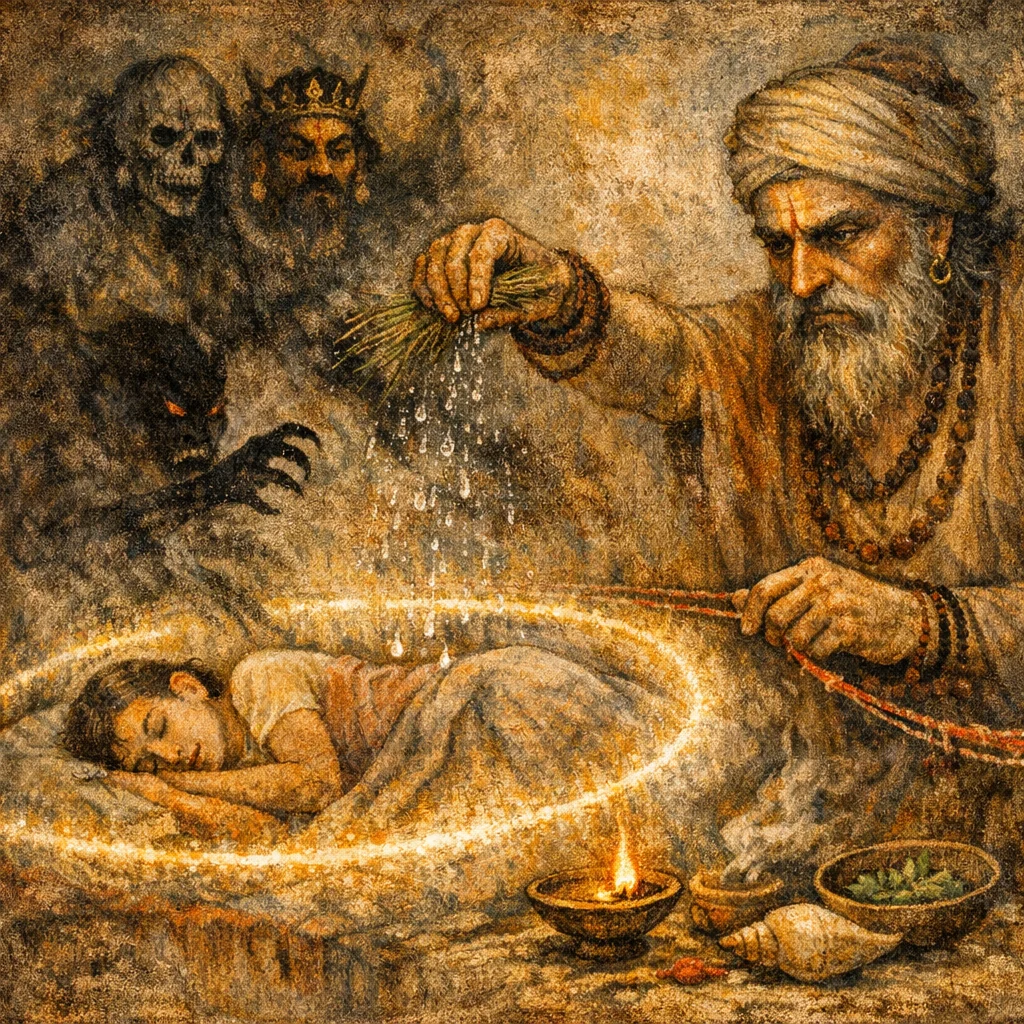
Sukta 5
Rishi: Atharvanic tradition (Svapna-hymn seer not uniformly fixed across ancillary lists)
Devata: Svapna (Dream), with implicit linkage to Yama/Mṛtyu
Chandas: Anuṣṭubh-like (Atharvanic mixed cadence; requires pada-count verification)
Mantras
Mantra 1
विद्म ते स्वप्न जनित्रं ग्राह्याः पुत्रोऽसि यमस्य करणः
We know thy birthplace, O Sleep; thou art to be seized: thou art the son of Yama, an instrument of his working.
Mantra 2
अन्तकोऽसि मृत्युरसि
Thou art the Ender; thou art Death.
Mantra 3
तं त्वा स्वप्न तथा सं विद्म स नः स्वप्न दुष्वप्न्यात् पाहि
Thee, O Dream, thus do we fully know; so, O Dream, from evil dreaming do thou guard us.
Mantra 4
विद्म ते स्वप्न जनित्रं निरृत्याः पुत्रोऽसि यमस्य करणः । अन्तकोऽसि मृत्युरसि । तं त्वा स्वप्न तथा सं विद्म स नः स्वप्न दुष्वप्न्यात् पाहि
We know, O Dream, thy birthplace: thou art Nirṛti’s son; thou art Yama’s instrument. Thou art the Ender; thou art Death. Thee, O Dream, thus do we fully know; so, O Dream, from evil dreaming do thou guard us.
Mantra 5
विद्म ते स्वप्न जनित्रमभूत्याः पुत्रोऽसि यमस्य करणः । अन्तकोऽसि मृत्युरसि । तं त्वा स्वप्न तथा सं विद्म स नः स्वप्न दुष्वप्न्यात् पाहि
We know, O Dream, thy birthplace: thou art Abhūti’s son; thou art Yama’s instrument. Thou art the Ender; thou art Death. Thee, O Dream, thus do we fully know; so, O Dream, from evil dreaming do thou guard us.
Mantra 6
विद्म ते स्वप्न जनित्रं निर्भूत्याः पुत्रोऽसि यमस्य करणः । अन्तकोऽसि मृत्युरसि । तं त्वा स्वप्न तथा सं विद्म स नः स्वप्न दुष्वप्न्यात् पाहि
We know, O Dream, thy birthplace: thou art Nirbhūti’s son; thou art Yama’s instrument. Thou art the Ender; thou art Death. Thee, O Dream, thus do we fully know; so, O Dream, from evil dreaming do thou guard us.
Mantra 7
विद्म ते स्वप्न जनित्रं पराभूत्याः पुत्रोऽसि यमस्य करणः । अन्तकोऽसि मृत्युरसि । तं त्वा स्वप्न तथा सं विद्म स नः स्वप्न दुष्वप्न्यात् पाहि
We know, O Dream, thy birthplace: thou art Parābhūti’s son; thou art Yama’s instrument. Thou art the Ender; thou art Death. Thee, O Dream, thus do we fully know; so, O Dream, from evil dreaming do thou guard us.
Mantra 8
विद्म ते स्वप्न जनित्रं देवजामीनां पुत्रोऽसि यमस्य करणः
We know thy birthplace, O Dream: thou art the son of the God-kin, the instrument of Yama.
Mantra 9
अन्तकोऽसि मृत्युरसि
Thou art the Ender; thou art Death.
Mantra 10
तं त्वा स्वप्न तथा सं विद्म स नः स्वप्न दुष्वप्न्यात् पाहि
Thee thus, O Dream, we fully know: so, O Dream, do thou protect us from evil dreaming.
Frequently Asked Questions
In Atharvanic thought, certain dreams are treated as carriers of death-omens and affliction. By naming Svapna as Antaka/Mṛtyu and Yama’s instrument, the hymn “unmasks” the danger so it can be ritually constrained and turned away.
No. Its focus is duṣvapnya—harmful, frightening, loss-bringing or death-portending dreams. The aim is to secure auspicious rest and safety, not to eliminate ordinary dreams.
It is recited before sleep, or after a frightening dream, with the intention of warding off evil dreaming. The key method is repeated identification (vidma/saṃ vidma) followed by a protective petition that Svapna guard the sleeper.