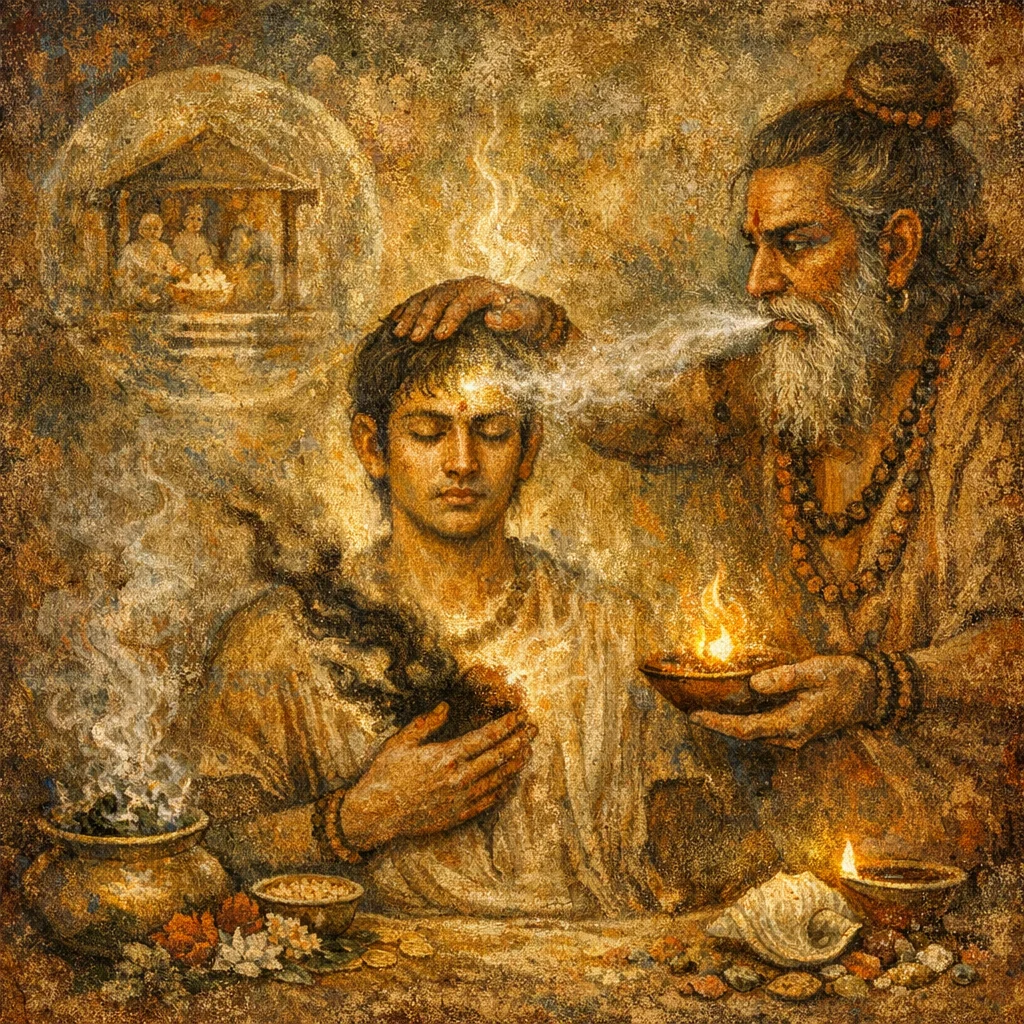
Sukta 3
Rishi: Atharvanic tradition (individual r̥ṣi not specified in the supplied excerpt)
Devata: Aiśvarya/Śrī-like prosperity principle (implicit); the mantra is self-referential (ātmastuti)
Chandas: Anuṣṭubh-like cadence (prose-leaning Atharvanic style)
Mantras
Mantra 1
मूर्धाहं रयीणां मूर्धा समानानां भूयासम्
May I be the head of riches; may I be the head among my equals.
Mantra 2
रुजश्च मा वेनश्च मा हासिष्टां मूर्धा च मा विधर्मा च मा हासिष्टाम्
Let not hurt, and let not craving, forsake me; let not headship, and let not right-ordinance, forsake me.
Mantra 3
उर्वश्च मा चमसश्च मा हासिष्टां धर्ता च मा धरुणश्च मा हासिष्टाम्
Let not wide room, and let not the cup, forsake me; let not the supporter, and let not the support, forsake me.
Mantra 4
विमोकश्च मार्द्रपविश्च मा हासिष्टामार्द्रदानुश्च मा मातरिश्वा च मा हासिष्टाम्
Let not release, and let not the moist-edged power, forsake me; let not the moist-giving stream, and let not Mātariśvan, forsake me.
Mantra 5
बृहस्पतिर्म आत्मा नृमणा नाम हृद्यः
Bṛhaspati is my very self—winning men’s minds, heart-pleasing indeed.
Mantra 6
असंतापं मे हृदयमुर्वी गव्यूतिः समुद्रो अस्मि विधर्मणा
Unscorched is my heart: broad is my pasture-range; I am the Ocean, by ordinance and established order.
Frequently Asked Questions
It aims to establish the reciter in prosperity and precedence—being the “head” among equals—while ensuring that supportive forces (release from constraints, refreshment, and vital wind) do not leave.
Mātariśvan represents vital movement (breath/wind and sustaining energy), while the “ārdra” (moist/refreshing) agencies symbolize life-sustaining coolness and continuity—together preventing decline and supporting flourishing.
While primarily paustika (prosperity/ascendancy), it also has a healing-shāntika turn: it cools and steadies the heart-mind and strengthens resilience through expansive self-identification (broad pasture, ocean).