Dashati 1
Agni’s manifold presence invoked to establish and empower the sacrifice
Agni
Invocatory and energizing—urgent ‘come-hither’ movement with ritual brightness
R̥ṣi attribution is not provided in the input; these verses are RV-derived in many recensions but dashati-level r̥ṣi identification should be taken from the Anukramaṇī of the relevant Sāmaveda śākhā.
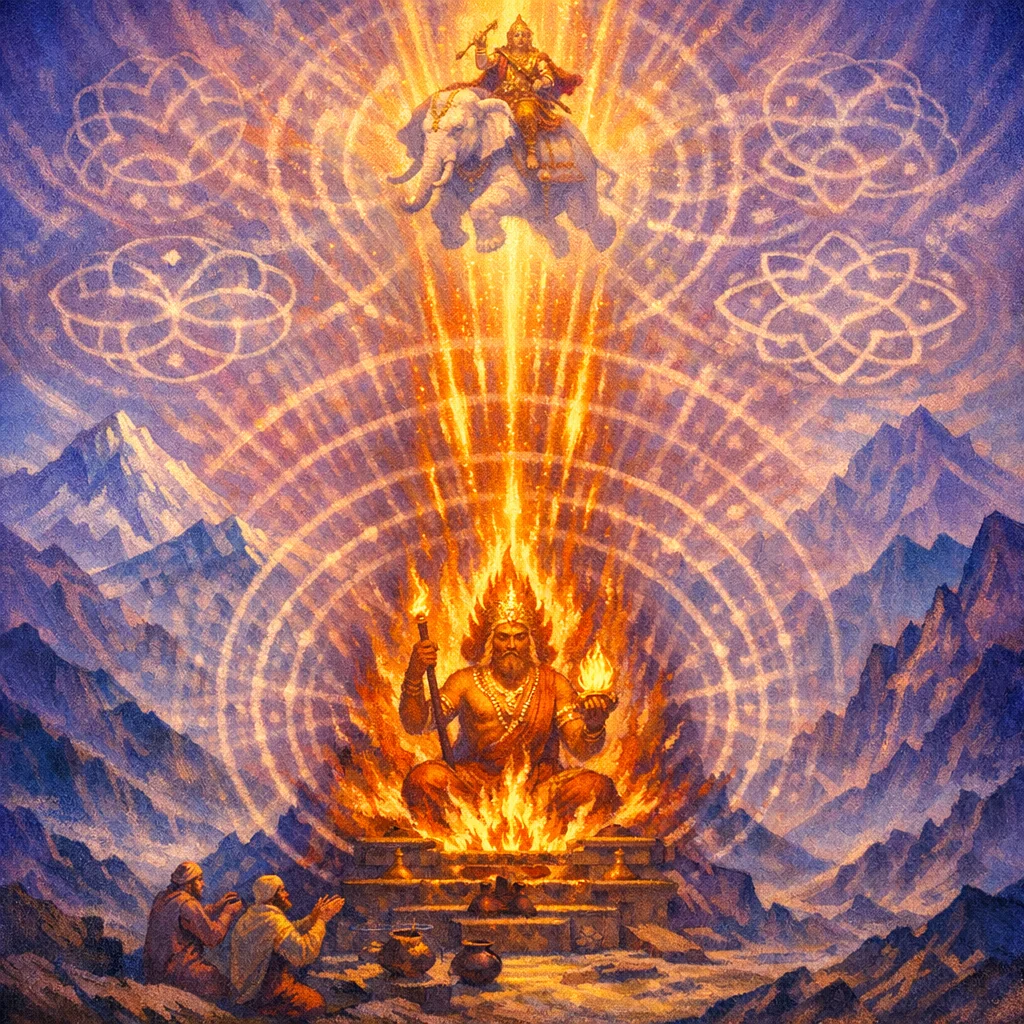
इस दशति का विषय यज्ञ को स्थापित और समर्थ बनाने हेतु अग्नि की बहुरूप उपस्थिति का आह्वान है। स्तुति और आहुति से प्रज्वलित यह प्राचीन, नित्य-नवीन अग्नि गार्हपत्य–आहवनीय–दक्षिण—इन अनेक यज्ञाग्नियों में एक ही देवता के रूप में प्रकट होती है। मंत्र-वाणी (वचस्/ब्रह्मन्) को प्रभावी यज्ञ-शक्ति मानते हुए, उसी के बल से अग्नि को विधि में प्रवेश कराने और हवि को सफल करने का आग्रह किया जाता है; साथ ही स्तुति-प्रेरित गति से इन्द्र को भी सहायक, स्तुति-प्रिय मित्र के रूप में बुलाया जाता है।
Mantras
Mantra 1
विश्वेभिरग्ने अग्निभिरिमं यज्ञमिदं वचः चनो घाः सहसा यहो
हे अग्नि, अपने समस्त अग्नियों के साथ इस यज्ञ में, इस हमारे वचन-स्तोत्र में आओ; हमारे लिए बल सहित आओ, हे वीर्यवान।
Mantra 2
ऊर्ज्जो नपातमा हुवे ऽग्निं पावकशोचिषम् अस्मिन्यज्ञे स्वध्वरे
मैं ऊर्जस्वी पोषक-वंशज, पावक-दीप्ति वाले अग्नि का आह्वान करता हूँ—इस यज्ञ में, इस सुव्यवस्थित स्वध्वर में उपस्थित हों।
Mantra 3
स नो मित्रमहस्त्वमग्ने शुक्रेण शोचिषा देवैरा सत्सि बर्हिषि
हे अग्ने, उपकारी मित्र! अपने उज्ज्वल शुक्ल शोचिषा के साथ, देवों सहित, हमारे कल्याण हेतु बर्हिषि पर आसीन हो।
Frequently Asked Questions
It repeatedly calls Agni to the sacrifice in all his forms and explains, by implication, that praise and offering make him present and powerful within the rite.
Indra is invited as a supportive, praise-delighting deity—his arrival is ‘carried’ by the hymn, complementing Agni who carries the oblations.
It points to Agni’s manifold manifestations used in sacrifice—especially the household and altar fires—understood as one divine Agni functioning in different stations.