Dashati 20
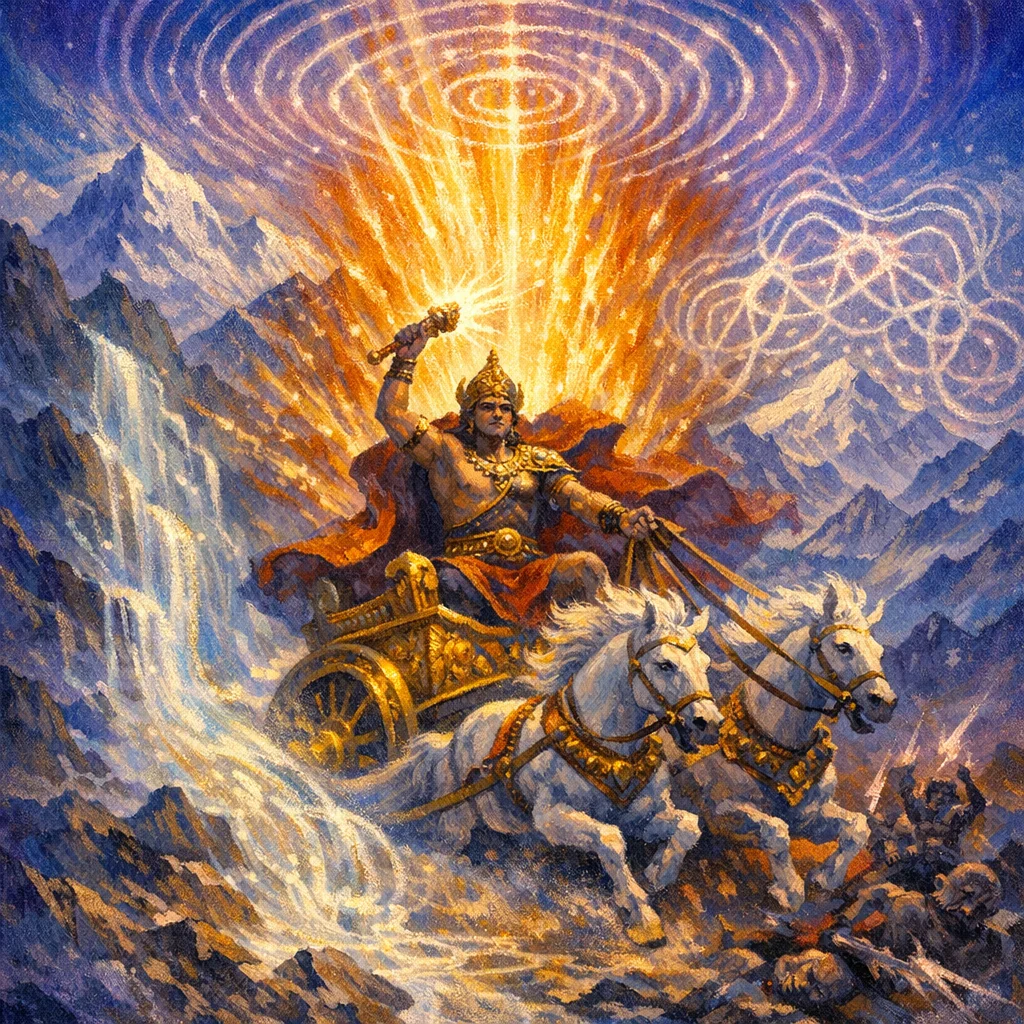
Indra empowered by Soma-exhilaration (mada/matsara) to grant victory and wealth
Indra
Exultant martial and triumphant—built on the imagery of surging Soma-power and battle-victory
Ṛṣi attribution and chandas are not supplied here; they require Rigvedic concordance for the underlying RV originals used by this Sāmavedic selection.
सोम-उत्साह (मद/मत्सर) से प्रबल हुए इन्द्र को यज्ञ में आमंत्रित किया जाता है कि वह सोम के बल से हमारे पास आए, यजमान को शक्ति दे, शत्रुबल और अव्रती-दस्यु विरोध को कुचलकर रण में विजय दिलाए, रथ को वीरतापूर्वक आगे बढ़ाए, और सहस्रों की प्राप्ति जैसी प्रचुर संपदा व दान-समृद्धि प्रदान करे।
Mantras
Mantra 1
मत्स्यपायि ते महः पात्रस्येव हरिवो मत्सरो मदः वृषा ते वृष्ण इन्दुर्वाजी सहस्रसातमः
हे हरिवन्! पात्र से उमड़ते हुए-से तेरे लिए यह महान् मत्सर (उन्मादक सोम-उत्साह) और तीव्र मद है। वृषभ-स्वरूप इन्द्र के लिए यह वृषभ-तुल्य इन्दु (सोम-बिन्दु) वाज (बल/विजय) देने वाला है, सहस्रों की प्राप्ति में सर्वाधिक विजयी।
Mantra 2
आ नस्ते गन्तु मत्सरो वृषा मदो वरेण्यः सहावां इन्द्र सानसिः पृतनषाडमर्त्यः
हमारे पास तेरी वह मत्सर-प्रेरणा आए—वृषभ-सा, वरेण्य (श्रेष्ठ) मद। हे इन्द्र! सहावान् (बलसम्पन्न), सानसि (लाभ-दाता), पृतनाषाड् (युद्ध-विजेता), अमर्त्य (अमर) — (हम पर) अवतर।
Mantra 3
त्वं हि शूरः सनिता चोदयो मनुषो रथम् सहावान्दस्युमव्रतमोषः पात्रं न शोचिषा
क्योंकि तू ही शूर है, सनिता (विजेता/प्राप्तिकर्ता); तू मनुष्य के रथ को प्रेरित करता है। सहावान्, दस्यु का नाशक, अव्रत का अपहर्ता—और तू तेज से पात्र की भाँति चमकता है।
Frequently Asked Questions
It celebrates Soma’s ritual exhilaration (mada/matsara) as the power that makes Indra victorious—bringing battle-success, protection, and abundant gains to the sacrificer.
The ‘pātra’ points to the Soma-cup used in the rite; the imagery stresses that Indra’s strength and the sacrificer’s benefits arise from a concrete sacrificial act, not from emotion alone.
They represent opponents of Vedic order—those without observance (a-vrata) and hostile forces (Dasyu). The hymn frames Indra’s victory as both martial and moral-ritual protection for the yajamāna.