Adhyaya 198
Monthly Vows (Māsa-vratāni) and Cāturmāsya Disciplines; Introduction of Kaumudī-vrata
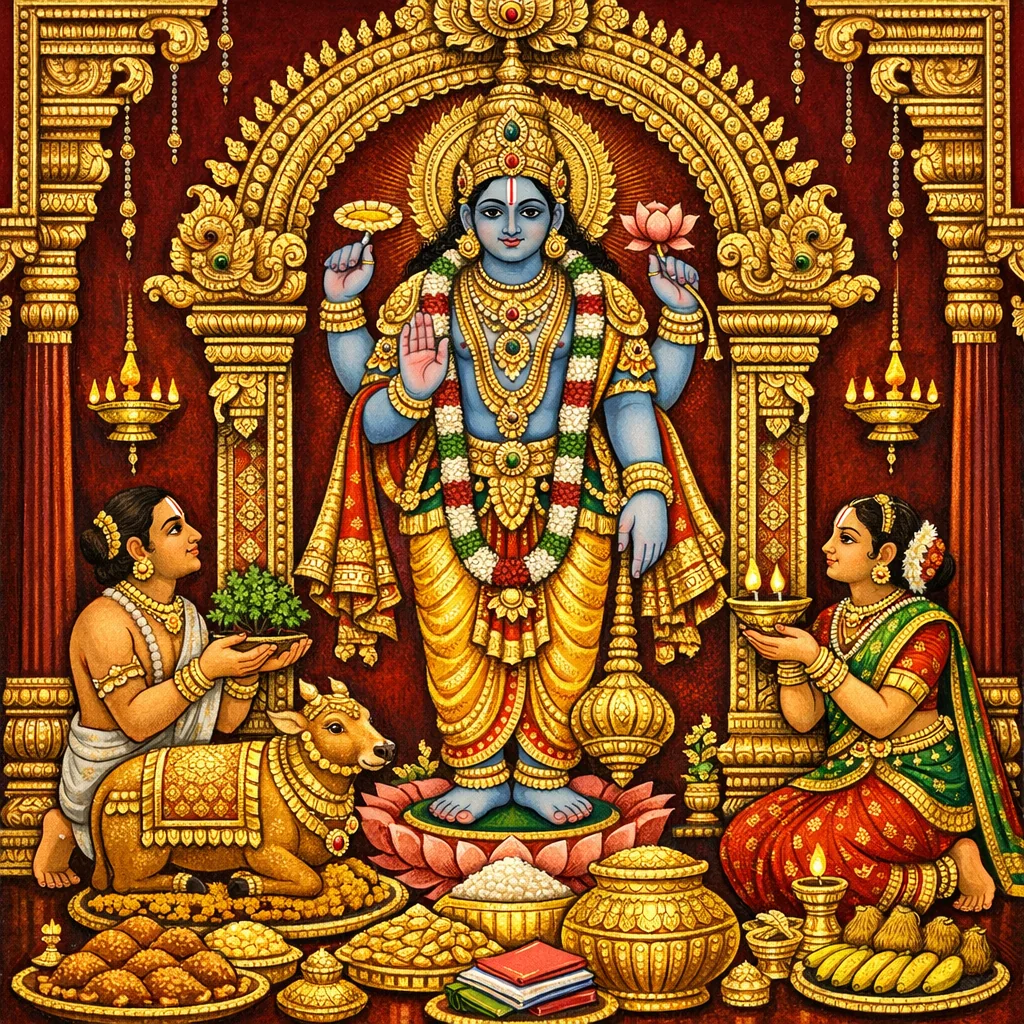
इस अध्याय में भगवान अग्नि मास-व्रतों को भुक्ति और मुक्ति देने वाला अनुशासित साधन बताते हैं। आरम्भ में चातुर्मास्य के नियम—विशेषतः पवित्र चार मास में तेल-अभ्यंग का त्याग—फिर प्रत्येक मास के अनुसार त्याग और दान (जैसे वैशाख में गोदान, माघ या चैत्र में गुड़-गाय का दान) वर्णित हैं। नक्त-भोजन, एकभक्त, फल-व्रत, एकांतर उपवास, मौन, चांद्रायण और प्राजापत्य आदि आहार-आचरण तप से स्वर्ग, विष्णुलोक और अंततः मोक्षाभिमुख पुण्य की क्रमिक प्राप्ति कही गई है। संकल्प और काल-निश्चितता से व्रत पूर्ण होता है—चातुर्मास्य की तैयारी, सूर्य के कर्क में प्रवेश पर हरि-पूजन, तथा मृत्यु बीच में हो जाए तो भी व्रत-पूर्ति गिनी जाए ऐसी प्रार्थना। अंत में आश्विन में कौमुदी-व्रत का परिचय है—द्वादशी को विष्णु की पुष्प, दीप, घृत तथा तिल-तेल से पूजा और ‘ॐ नमो वासुदेवाय’ मंत्र, जिससे चारों पुरुषार्थ सिद्ध होते हैं।
Shlokas
No shlokas available for this adhyaya yet.
Frequently Asked Questions
Renunciation of oil-anointing (abhyanga/taila-tyāga) during the four months beginning with Āṣāḍha, paired with dawn-bathing and devotion to Hari.
It repeatedly couples renunciation/fasting with formal gifts—especially go-dāna and guḍa-dhenu—presenting donation as the outward completion of inner restraint and a generator of merit and higher worlds.
The Kaumudī-vrata (Āśvina) is introduced: on Dvādaśī, worship Viṣṇu with lotus-type flowers, offer lamp and naivedya using ghee and sesame-oil, and recite ‘Om namo Vāsudevāya’.
By mapping regulated conduct (niyama), calendrical worship, and charitable giving to tangible outcomes (bhukti) while explicitly promising Viṣṇuloka/Vaikuṇṭha and liberation-oriented fruits (mukti), culminating in the fourfold puruṣārtha attainment through Kaumudī-vrata.