Adhyaya 185
Chapter 185 — नवमीव्रतानि (The Observances for Navamī)
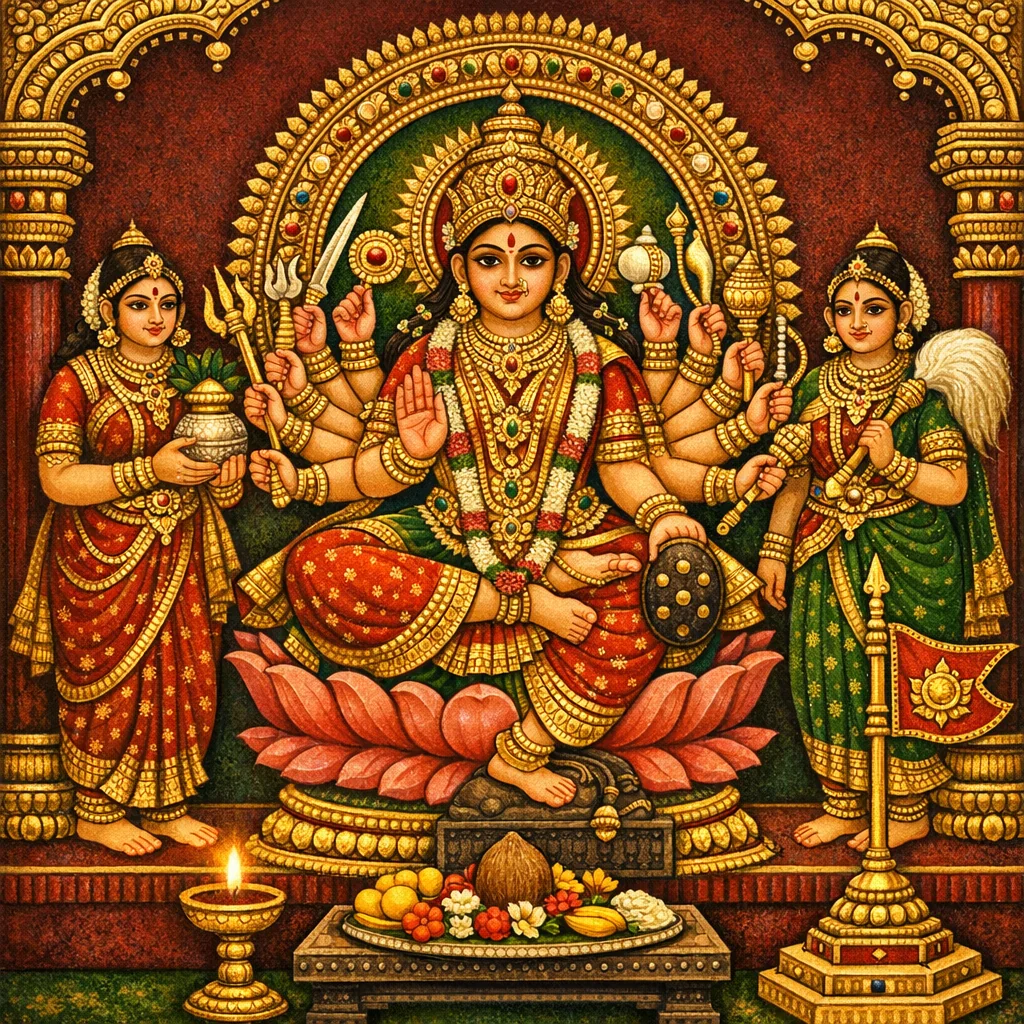
भगवान् अग्नि वसिष्ठ को गौरी/दुर्गा से सम्बद्ध नवमी-व्रत बताते हैं और भुक्ति तथा मुक्ति—दोनों प्रकार की सिद्धि का स्पष्ट आश्वासन देते हैं। नवमी को ‘पिष्टका’ कहा गया है; आश्विन शुक्ल नवमी का ठीक समय, नक्षत्र-शर्तें और देव-पूजन के बाद आटे/पिष्ट से बने पदार्थ के सेवन का विधान आता है। आगे महिषासुरमर्दिनी दुर्गा की राज-रक्षा हेतु पूजा-विधि दी है—देवी को नौ स्थानों में या एक ही मंदिर में स्थित मानकर, बहुभुज रूप का ध्यान विशेष आयुधों सहित। दशाक्षरी दुर्गा-रक्षा मंत्र, अन्य सूत्र, अंगूठे से कनिष्ठा तक न्यास, गोपनीयता और अविघ्न साधना पर बल है। आयुध-पूजा, उग्र नामों का जप, दिशाओं में बलि (कुछ पाठों में रक्त/मांस का उल्लेख), आटे की शत्रु-प्रतिमा को निष्प्रभ करना, रात्रि में मातृकाओं व उग्र रूपों की आराधना, पंचामृत स्नान, बलि तथा ध्वज-स्थापन और रथयात्रा जैसे उत्सव-चिह्न—भक्ति, प्रतिमा-ध्यान और राजधर्म-रक्षण को एक साथ जोड़ते हैं।
Shlokas
No shlokas available for this adhyaya yet.
Frequently Asked Questions
It is presented as siddhi-giving—supporting worldly accomplishment and protection (bhukti) while also generating merit conducive to liberation (mukti) through disciplined Durgā worship.
The chapter gives a ten-syllabled protective mantra: “Oṃ, O Durgā, O Durgā, protect (me)! Svāhā,” used as a rakṣā (protection) formula within the Navamī observance.
It includes a royal-protective procedure: in front of the invoked fire, the king bathes and ritually removes/neutralizes an enemy represented by a dough effigy, aligning goddess worship with victory and protection of the realm.
Durgā is visualized in multi-armed forms (notably eighteen-armed and sixteen-handed variants) and associated with a defined set of implements and weapons, which are themselves to be worshipped as part of the observance.