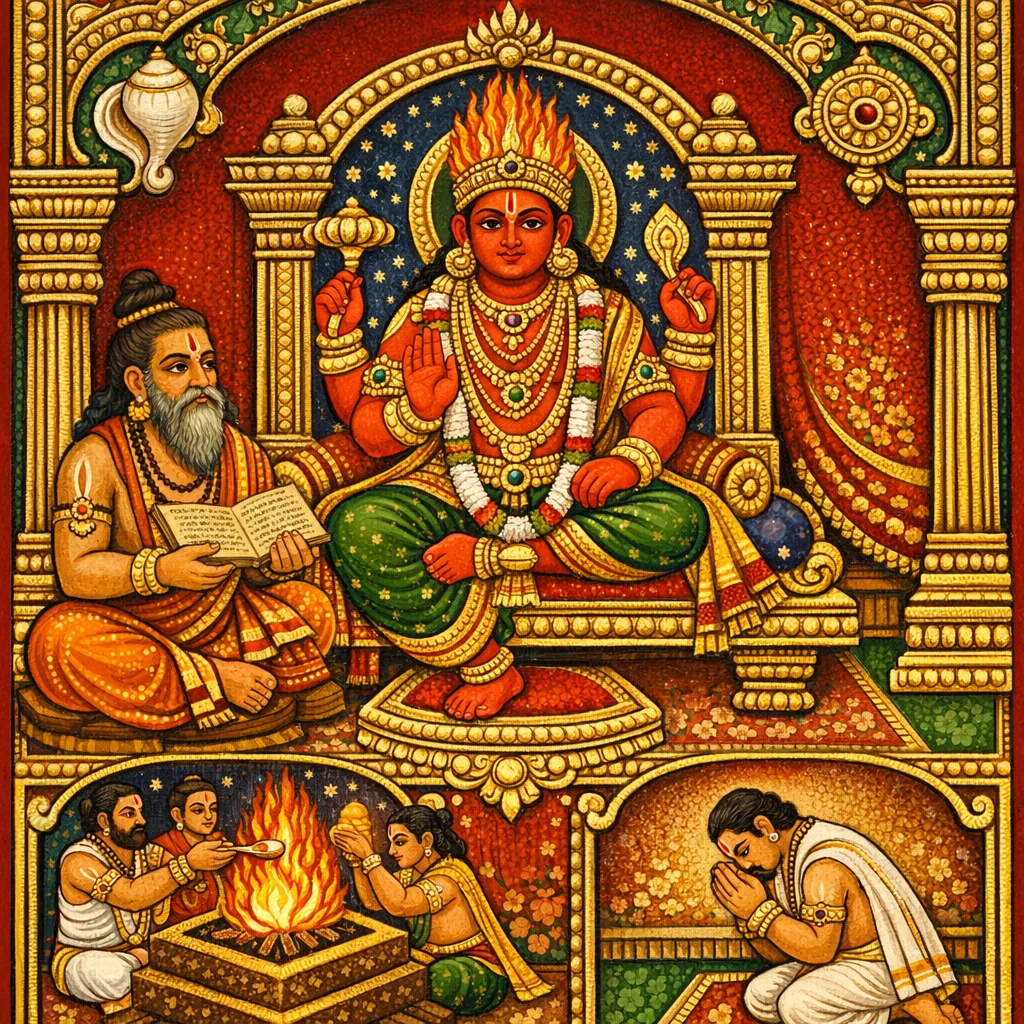
Adhyaya 353
Chapter 353: कारकं (Kāraka — Syntactic Relations) with Vibhakti-Artha (Case-Meaning Integration)
નપુંસકલિંગ રૂપોના વિષય પછી આ અધ્યાયમાં સુકંદ વચન આપે છે કે વિભક્તિઓના અર્થ સાથે કારક સમજાવશે. કર્તાને સ્વતંત્ર ગણાવી પ્રેરક-કર્તૃત્વનો ભેદ દર્શાવ્યો છે. કર્તા પાંચ પ્રકારનો અને કર્મ સાત પ્રકારનું—શ્રીસહિત વિષ્ણુને નમસ્કાર, હરિના શુભાર્થે પૂજન, વિષ્ણુ-નમસ્કારથી મોક્ષ જેવા વૈષ્ણવ ભાવવાળા ઉદાહરણો આપવામાં આવ્યા છે. ત્યારબાદ કરણ, સંપ્રદાન, અપાદાન અને અધિકરણ કારકોને વિભક્તિ-પ્રયોગ સાથે જોડીને વિશેષ રચનાઓ પણ કહે છે—કર્મપ્રવચનીય સાથે દ્વિતીયા, ‘નમઃ/સ્વાહા’ વગેરે સાથે ચતુર્થી, અને અનભિહિત પ્રસંગોમાં તૃતીયા તથા ષષ્ઠી. વૈષયિક અને સામીપ્યક દોષ, રૂઢ લોકેટિવ પ્રયોગ, ષષ્ઠીના ઉપયોગો અને કેટલાક તદ્ધિત નિર્માણોમાં ષષ્ઠી-નિષેધ પણ ઉલ્લેખિત છે. સમગ્ર વ્યાકરણને અગ્નેય વિદ્યા રૂપે ધર્મ, વિધાનની સ્પષ્ટતા અને ભક્તિ-કેન્દ્રિત અર્થ માટે ઉપકારક બતાવ્યું છે.
Shlokas
No shlokas available for this adhyaya yet.
Frequently Asked Questions
The chapter emphasizes kāraka–vibhakti integration: how agent, object, instrument, recipient, source, and locus relations are expressed through specific case-endings, including special rules for karmapravacanīyas, interjections (namaḥ/svāhā), and ‘anabhihita’ (unstated-sense) contexts.
By making linguistic roles and case-meanings precise, it safeguards correct understanding of śāstric injunctions and devotional statements; its examples explicitly point to Hari/Viṣṇu as the liberating refuge, aligning grammatical mastery (vidyā) with dharma-practice and mukti-oriented devotion.