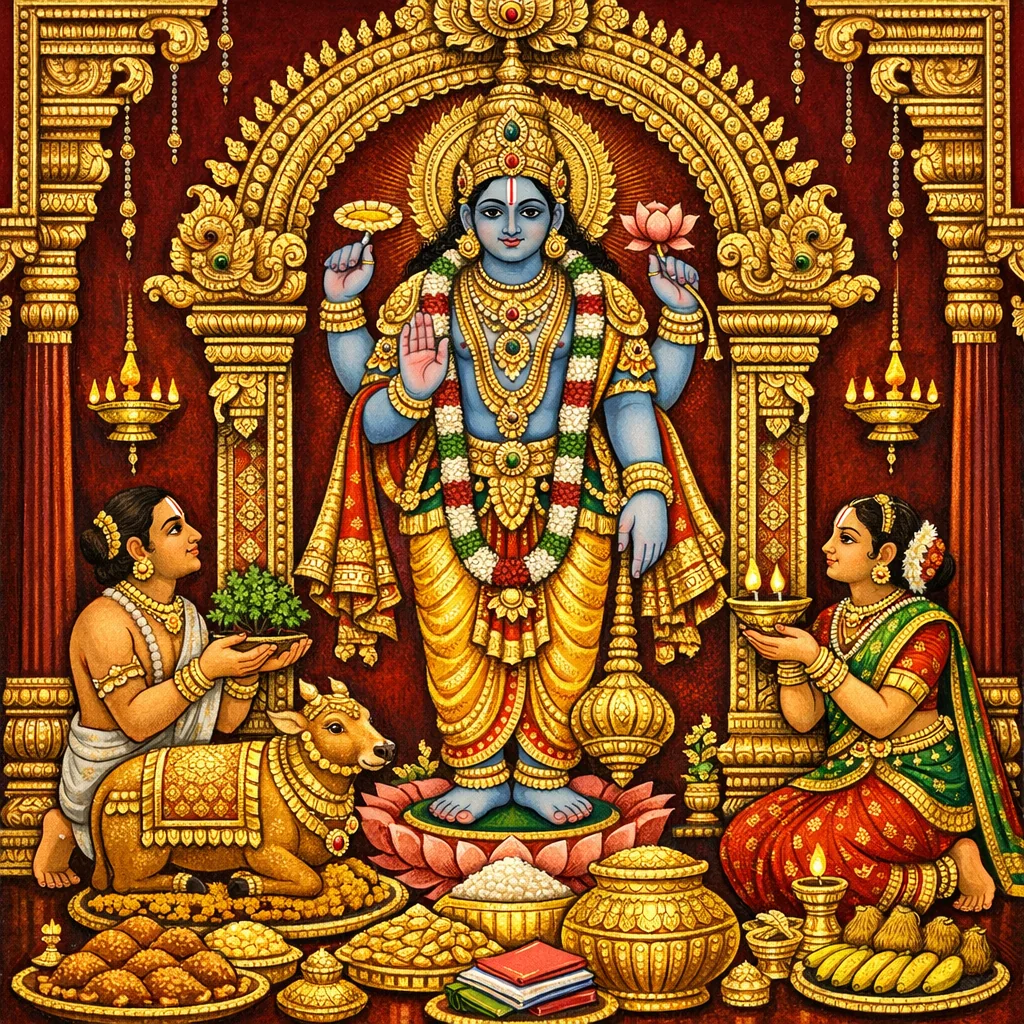
Adhyaya 198
Monthly Vows (Māsa-vratāni) and Cāturmāsya Disciplines; Introduction of Kaumudī-vrata
આ અધ્યાયમાં ભગવાન અગ્નિ માસ-વ્રતોને ભુક્તિ અને મુક્તિ આપનાર શિસ્તબદ્ધ સાધના તરીકે વર્ણવે છે. શરૂઆતમાં ચાતુર્માસ્યના નિયમો—ખાસ કરીને પવિત્ર ચાર માસમાં તેલ-અભ્યંગનો ત્યાગ—પછી માસ અનુસાર ત્યાગ અને દાન (જેમ કે વૈશાખમાં ગોદાન; માઘ અથવા ચૈત્રમાં ગોળ-ગાયનું દાન) જણાવ્યા છે. નક્તભોજન, એકભક્ત, ફળવ્રત, એક દિવસ છોડીને ઉપવાસ, મૌન, ચાંદ્રાયણ અને પ્રાજાપત્ય વગેરે તપોથી સ્વર્ગ, વિષ્ણુલોક અને અંતે મોક્ષાભિમુખ પુણ્યની ક્રમશઃ પ્રાપ્તિ કહે છે. સંકલ્પ અને કાળ-નિર્ધારણથી વ્રત પૂર્ણ થાય—ચાતુર્માસ્યની તૈયારી, સૂર્ય કર્ક રાશિમાં પ્રવેશે ત્યારે હરિપૂજન, અને વચ્ચે મૃત્યુ આવે તો પણ વ્રત પૂર્ણ ગણાય એવી પ્રાર્થના. અંતે આશ્વિનમાં કૌમુદી-વ્રત: દ્વાદશીએ વિષ્ણુપૂજા પુષ્પ, દીપ, ઘી અને તલતેલ અર્પણ સાથે, ‘ઓં નમો વાસુદેવાય’ મંત્ર; ચાર પુરુષાર્થની સિદ્ધિનું ફળશ્રુતિ।
Shlokas
No shlokas available for this adhyaya yet.
Frequently Asked Questions
Renunciation of oil-anointing (abhyanga/taila-tyāga) during the four months beginning with Āṣāḍha, paired with dawn-bathing and devotion to Hari.
It repeatedly couples renunciation/fasting with formal gifts—especially go-dāna and guḍa-dhenu—presenting donation as the outward completion of inner restraint and a generator of merit and higher worlds.
The Kaumudī-vrata (Āśvina) is introduced: on Dvādaśī, worship Viṣṇu with lotus-type flowers, offer lamp and naivedya using ghee and sesame-oil, and recite ‘Om namo Vāsudevāya’.
By mapping regulated conduct (niyama), calendrical worship, and charitable giving to tangible outcomes (bhukti) while explicitly promising Viṣṇuloka/Vaikuṇṭha and liberation-oriented fruits (mukti), culminating in the fourfold puruṣārtha attainment through Kaumudī-vrata.