Adhyaya 178
Tṛtīyā-vratāni (Vows for the Third Lunar Day): Lalitā Tṛtīyā, Mūla-Gaurī Vrata, and Saubhāgya Observances
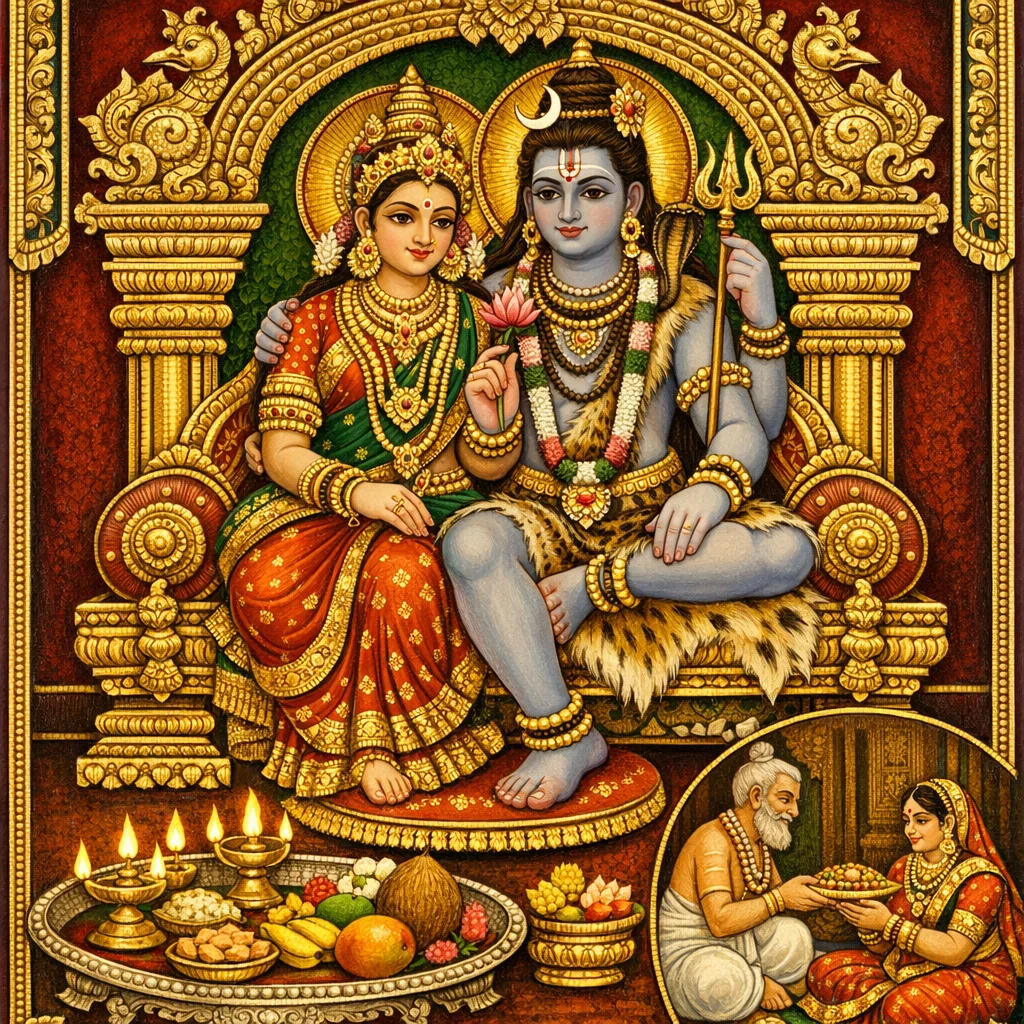
ભગવાન અગ્નિ દ્વિતીયા-વ્રતોથી તૃતીયા-વ્રતો તરફ પ્રવેશ કરી સ્પષ્ટ કરે છે કે તે ભુક્તિ અને મુક્તિ બન્ને આપે છે. ચૈત્ર શુક્લ તૃતીયાએ મૂળા-ગૌરી વ્રત—ગૌરીના હર (શિવ) સાથેના વિવાહનું સ્મરણ—તલસ્નાનથી શુદ્ધિ કરીને શરૂ થાય છે; પછી ગૌરીসহ શંભુનું સંયુક્ત પૂજન ‘સુવર્ણફળ’ વગેરે મંગલ અર્પણોથી કરવાનું કહે છે. ત્યારબાદ મંત્ર-ન્યાસ/અંગ-ન્યાસનો વિશાળ ભાગ—પગથી મસ્તક સુધી વિવિધ અંગોમાં દિવ્ય નામ-શક્તિઓનું સ્થાપન—દેહપૂજામાં શિવ-શક્તિ તત્ત્વને એકરૂપ કરે છે. પુષ્પો, સુગંધિત દ્રવ્યો, માસવાર અર્પણક્રમ અને અંતે દાનવિધિ—બ્રાહ્મણ દંપતીનું સન્માન, વસ્તુઓના સમૂહદાન, તેમજ ગાયો સાથે સુવર્ણ ઉમા–મહેશ્વર પ્રતિમાદાન—વર્ણવાય છે. વૈશાખ, ભાદ્રપદ/નાભસ્ય અને માર્ગશીર્ષમાં વિકલ્પ સમય, અને બીજા પ્રયોગમાં પુનઃપુન પૂજા સાથે મૃત્યુંજય જપનો પણ ઉપદેશ છે. અંતે સૌભાગ્ય-વ્રત (ખાસ કરીને ફાલ્ગુન તૃતીયાએ લવણત્યાગ) અને તૃતીયાઓ પર દેવીરૂપોની શ્રેણી કહી સૌભાગ્ય તથા સ્વર્ગફળનું વચન આપે છે.
Shlokas
No shlokas available for this adhyaya yet.
Frequently Asked Questions
The chapter primarily teaches Tṛtīyā-vratas, especially Lalitā Tṛtīyā and the Mūla-Gaurī vrata, including a detailed mantra-nyāsa and concluding dāna; it also introduces the Saubhāgya-vrata for marital prosperity.
By embedding limb-wise mantra-nyāsa (a technical ritual technology) within Śiva–Śakti worship and ethical-social duties (honoring a brāhmaṇa couple and dāna), the chapter frames embodied discipline and generosity as means toward both prosperity (bhukti) and liberation (mukti).
Caitra śukla tṛtīyā is highlighted for Lalitā/Mūla-Gaurī; alternative performance months include Vaiśākha, Bhādrapada (Nābhasya), and Mārgaśīrṣa, with additional mentions of Māgha and Bhādra for Tṛtīyā-vrata practice.