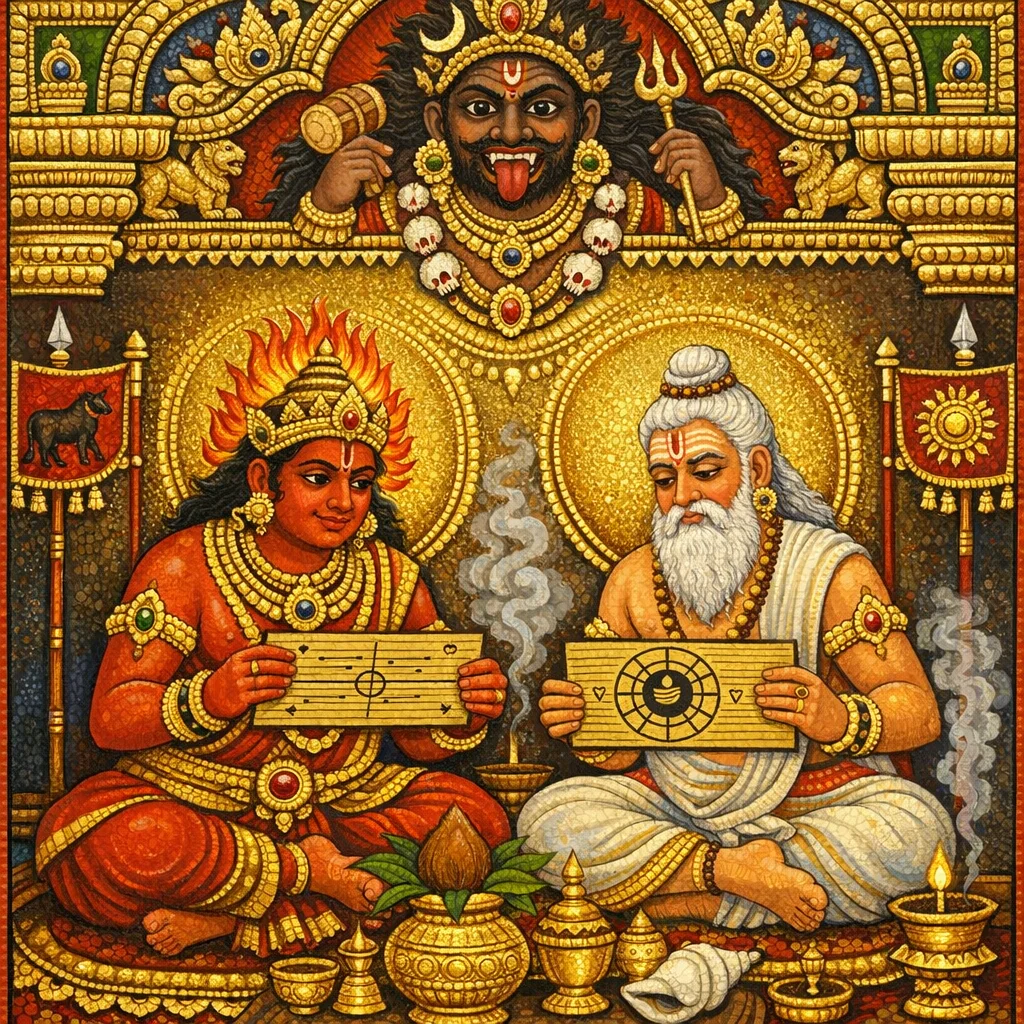
Adhyaya 123
युद्धजयार्णवीयनानायोगाः (Various Yogas from the Yuddha-jayārṇava)
પૂર્વ વિભાગમાં કાલ-ગણના (સમયગણિત) પૂર્ણ કરીને ભગવાન અગ્નિ ‘યુદ્ધજયાર্ণવ’માંથી સંકલિત યુદ્ધ-વિજયવિદ્યાનો સાર આરંભે છે. અહીં વર્ણો અને તિથિઓને નંદા વગેરે વર્ગોમાં વહેંચી કાર્ય-નિર્ણય કરવામાં આવે છે, અને અક્ષર-સમૂહોને ગ્રહાધિપતિઓ સાથે જોડીને ભાષિક-આકાશીય સંકેતજાળ રૂપે શકુન/દિવ્યજ્ઞાન સ્થાપિત થાય છે. નાડી-સ્પંદન, ઉચ્છ્વાસ અને પલ જેવા કાલમાનોથી દેહ-કાલ સંકેતો દ્વારા ફળ-નિર્ણય જણાવાયો છે. પછી સ્વરોદય-ચક્ર, શનિ-ચક્ર, કૂર્મ-ચક્ર અને રાહુ-ચક્રની વિભાગરચના, દિશા-સ્થાપના અને મૃત્યુદાયક ભાગો નિર્દિષ્ટ થાય છે; નક્ષત્ર-મુહૂર્ત નામોથી કયા સમયે કયું કર્મ યોગ્ય તે નક્કી થાય છે. અંતે ભૈરવ-મંત્રના રક્ષાત્મક પ્રયોગો—શિખા-બંધ, તિલક, અંજન, ધૂપ-લેપન—અને ધારણયોગ્ય ઔષધિઓ, વશીકરણ-યોગ, તિલક-લેપ તથા તેલ વગેરે વિજયાર્થે કહ્યા છે; આમ જ્યોતિષ, વિધિ-તંત્ર અને ઔષધપ્રયોગનો ધર્માનુગત સમન્વય પ્રગટ થાય છે।
Shlokas
No shlokas available for this adhyaya yet.
Frequently Asked Questions
A war-oriented Jyotiṣa toolkit: tithi and letter-to-graha mappings, multiple prognostic cakras (Svarodaya, Śani, Kūrma, Rāhu), and muhūrta-based prescriptions for what actions to perform or avoid.
They act as diagrammatic decision systems: divisions, directional placements, and specific ‘death-giving’ portions (notably linked with Śani) guide timing and risk assessment for actions related to conflict and protection.
The chapter treats victory as a synthesis of right timing (Jyotiṣa), protective rite (mantra and ritual acts like tilaka/añjana), and supportive materia medica—typical of the Agni Purana’s encyclopedic Agneya-vidyā approach.
Action-appropriateness: Raudra is prescribed for fierce acts, while Śveta is aligned with purification activities like bathing—demonstrating karmic regulation through time-quality.
Yes. Shloka 25 explicitly notes differences between manuscripts (e.g., a line absent in the Gha manuscript and alternate readings in the Kha manuscript), which is valuable for critical study.