Adhyaya 212
Meru-dānāni (Meru-Donations) — Kāmya-dāna, Month-wise Offerings, and the Twelvefold Meru Rite
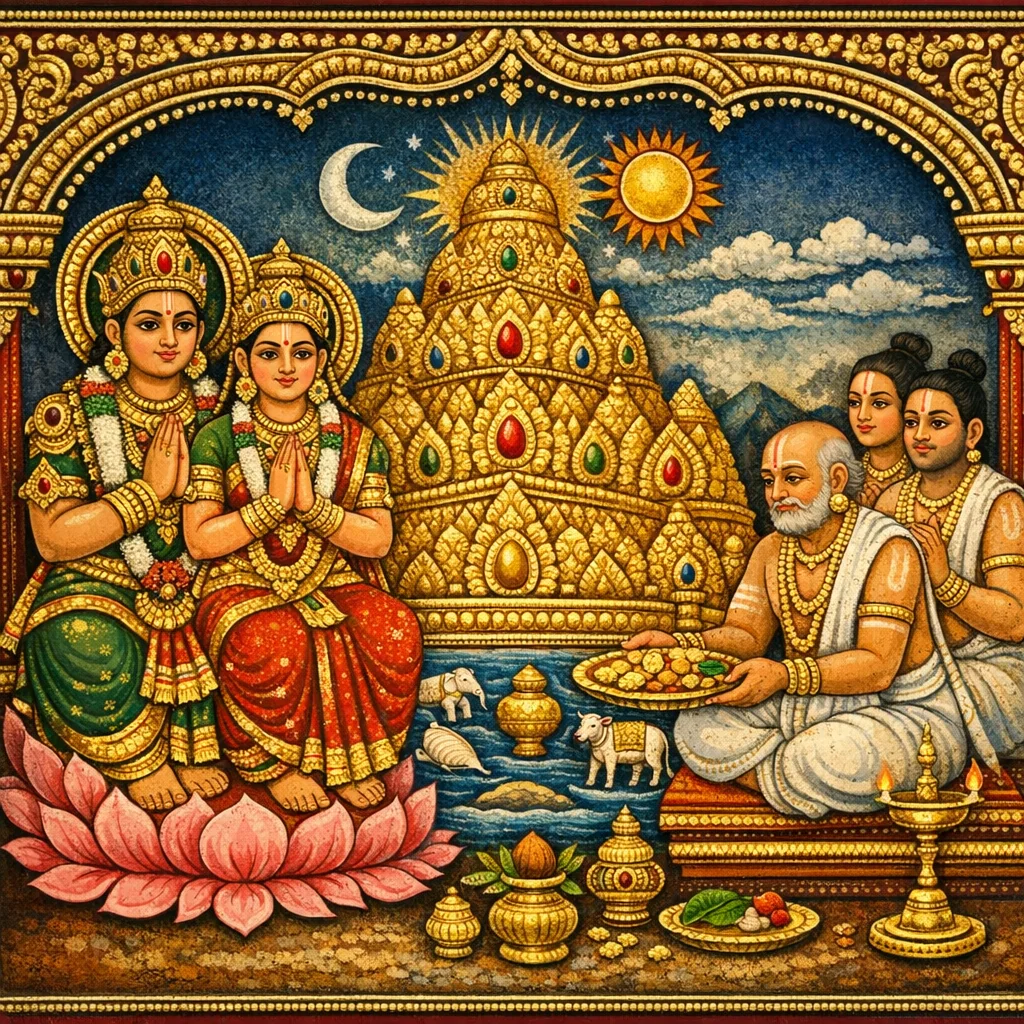
અગ્નિદેવ પૂર્વ અધ્યાયના દાન-વર્ણન પછી કામ્ય-દાનનું સુવ્યવસ્થિત નિરૂપણ કરે છે—માસવાર સતત પૂજા સાથેના અર્પણો, કેટલાક પિષ્ટકથી બનેલી પ્રતિમાઓરૂપે, તેમના ફળો, અને વર્ષાંત મહાવિધિ. ત્યારબાદ કાર્તિકમાં દ્વાદશવિધ ‘મેરુ-દાન’ વ્રત રજૂ થાય છે, જે ભુક્તિ અને મુક્તિ બંને આપનારું કહેવાય છે. નિશ્ચિત માપ અને સુવર્ણાદિ દ્રવ્યો વડે મેરુ રચી, પદ્મ-યંત્રમાં પ્રતિષ્ઠા કરી, મધ્યમાં બ્રહ્મા–વિષ્ણુ–ઈશ અને દિશાક્રમે નામિત પર્વતોની ગોઠવણી બતાવવામાં આવે છે. મંત્ર, ગોત્રોચ્ચાર સાથે દાન, કપટધનનો ત્યાગ જેવી દાન-નીતિ; સંક્રાંતિ, અયન, ગ્રહણ વગેરે શુભકાળ; તેમજ સુવર્ણ, રજત, અશ્વ, ગૌ, વસ્ત્ર, ઘૃત, ધાન્ય, તિલ, ખંડ-મેરુ વગેરે અનેક મેરુ-ભેદો વર્ણવાયા છે. અંતે મેરુને વિષ્ણુસ્વરૂપ માની સ્તુતિ અને નિવેદન—શુદ્ધિ, કુળોન્નતિ, સ્વર્ગલાભ અને અંતે હરિસાન્નિધ્ય માટે।
Shlokas
No shlokas available for this adhyaya yet.
Frequently Asked Questions
Regular monthly worship → year-end grand worship → Kārttika Meru-vrata with bathing/fasting → worship of Viṣṇu (or Śiva) → mantra-guided gifting of a constructed Meru to a brāhmaṇa (often gotra-addressed) → dedication (nivedana) for bhukti and mukti.
Ratna-meru (jeweled), Hema/Svarṇa-meru (gold), Rāupya-meru (silver), Hasti-meru (elephant-form), Aśva-meru (horses), Go-meru (cows), Vastra-meru (cloth), Ājya-parvata (ghee mountain), Dhānya-meru (grain), Tila-meru (sesame), and Khaṇḍa-meru (symbolic/segmented Meru).
It frames giving as a mokṣa-supporting discipline: purity through non-deceit, devotion-centered worship, cosmological visualization (Meru as Viṣṇu-form), lineage uplift, and final orientation toward Hari/Viṣṇuloka—thus integrating merit, devotion, and liberation.
Graded measurement logic (highest/middle/lower), prescribed weights (palas, khāras, prastha), construction rules (three peaks with Brahmā–Viṣṇu–Maheśvara), directional mountain placement, and calendrical triggers (Kārttika, saṅkrānti, ayana, grahaṇa).