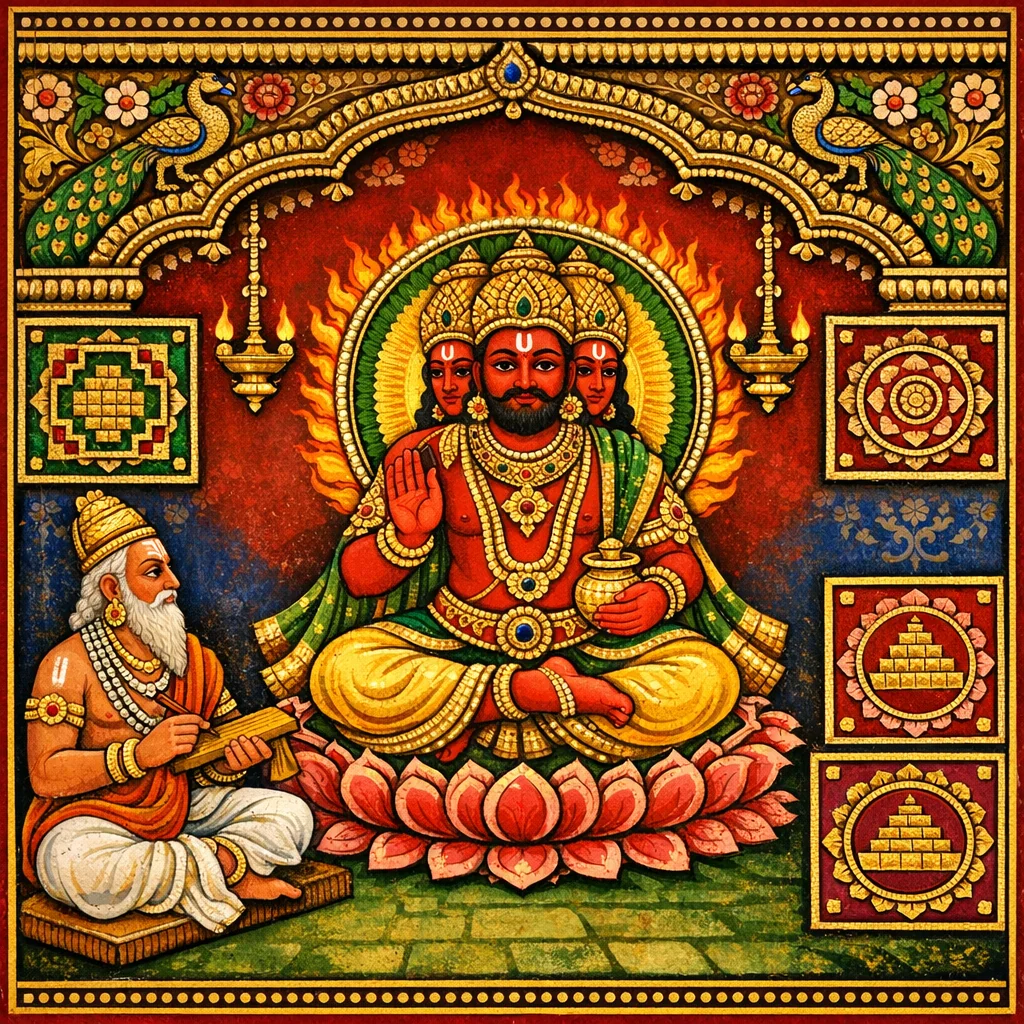
Adhyaya 328
Chandaḥ-sāra (Essence of Prosody) — Gāyatrī as the Root Metre and Syllabic Expansions
છંદ-અધિકારમાં ભગવાન અગ્નિ ગાયત્રીને વૈદિક છંદોની મૂળ-માતૃકા તરીકે નિરૂપે છે. ગાયત્રીને એકાક્ષર બીજરૂપે, પંદર-અક્ષર મંત્રરૂપે અને આઠ-અક્ષર પ્રાજાપત્ય-સંબંધિત રૂપે પણ ગ્રહણ કરી શકાય છે. વૈદિક પ્રયોગભેદે તેની અક્ષરમાત્રા બદલાય છે—યજુઃ સૂત્રોમાં 6, સામગાનમાં 12 અને ઋગ્વેદની ઋચાઓમાં 18; સામના છંદ બે-બે અક્ષરે વિસ્તરે એવો નિયમ છે. આગળના નિયમો મુજબ—ઋક્-માત્રામાં ‘ચતુર્થ’ વૃદ્ધિ પણ માન્ય, પ્રાજાપત્ય ચાર-ચારથી વિસ્તરે, અન્ય છંદો એક-એકથી વધે, જ્યારે ‘આતુર્યા’માં ક્રમશઃ લોપની વિશેષ પદ્ધતિ છે. ઉષ્ણિક્, અનુષ્ટુભ્, વૃહતી, પંક્તિ, ત્રિષ્ટુભ્, જગતી—આ ક્રમ ગાયત્રીના ક્રમિક પ્રકટનરૂપ અને બ્રાહ્મણ-સ્વભાવવાળો કહી છંદશાસ્ત્રને પાવન બનાવે છે. અંતે ‘ત્રણ અને ત્રણ’નું માનક ગોઠવણ, એકક એકમોને ‘આર્યા’ સંજ્ઞા, ઋગ-યજુઃ માટેના તકનીકી નામો અને 64-પદના ગ્રીડમાં લખવાની રીત દર્શાવવામાં આવે છે।
Shlokas
No shlokas available for this adhyaya yet.
Frequently Asked Questions
It codifies Gāyatrī’s multiple syllabic forms and gives rule-based procedures for metrical expansion across Vedic contexts (Yajus/Sāman/Ṛc), including special increment and omission rules (Prajāpatya by fours; Āturyā by sequential subtraction).
By identifying metrical order as brahmanic in nature, it frames disciplined speech-measure (chandas) as a dharmic practice—aligning recitation, cognition, and ritual precision with a sacred cosmological structure.