
Bhagavad Gita — Akshara Brahma Yoga, Shloka 11
Akshara Brahma Yoga
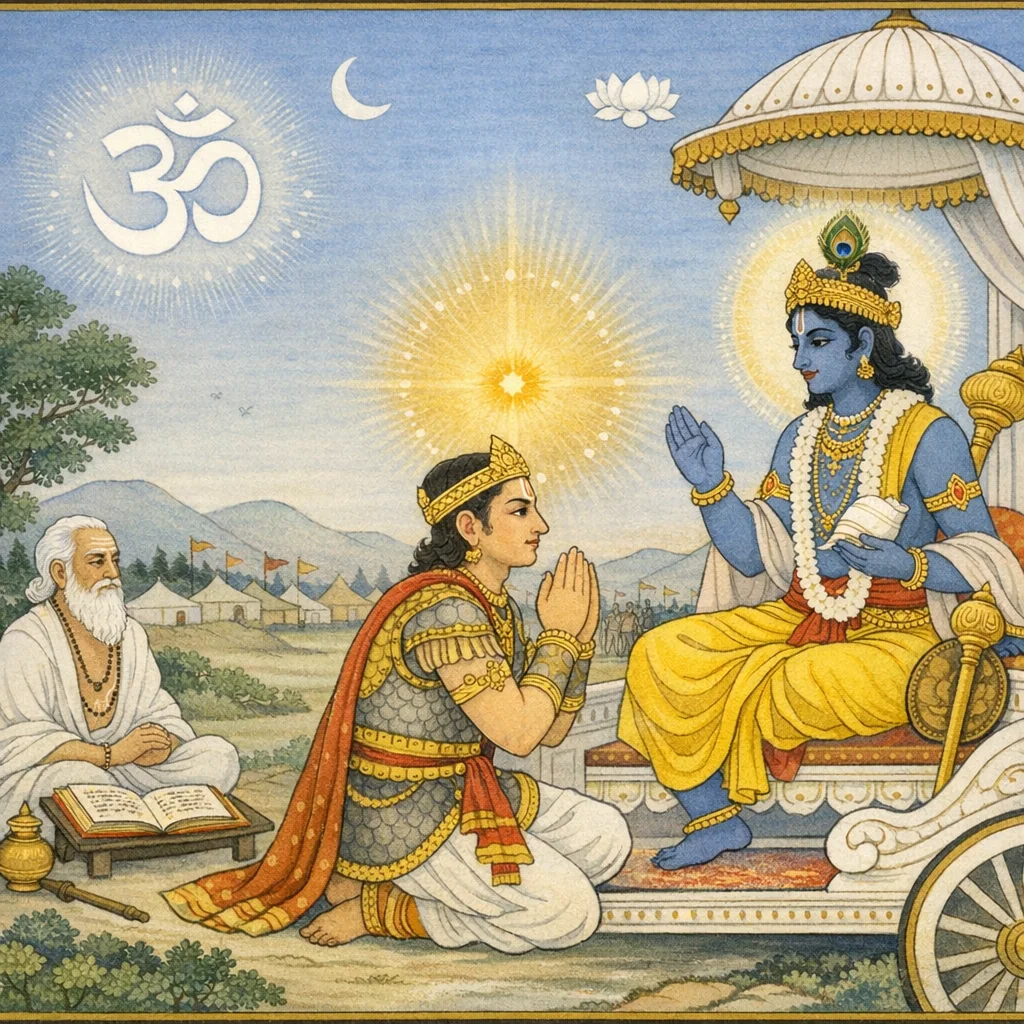
यदक्षरं वेदविदो वदन्ति विशन्ति यद्यतयो वीतरागाः । यदिच्छन्तो ब्रह्मचर्यं चरन्ति तत्ते पदं संग्रहेण प्रवक्ष्ये ॥ ८.११ ॥
yad akṣaraṁ vedavido vadanti viśanti yad yatayo vītarāgāḥ | yad icchanto brahmacaryaṁ caranti tat te padaṁ saṅgraheṇa pravakṣye || 8.11 ||

Ce que les connaisseurs des Védas appellent l’« Imperissable » (Akṣara), où entrent les ascètes libres d’attachement, et que désirant on observe le brahmacarya—ce séjour, je te l’exposerai brièvement.
वेद के जाननेवाले जिस ‘अक्षर’ (परम अविनाशी) को कहते हैं, रागरहित यति जिसमें प्रवेश करते हैं और जिसकी इच्छा से ब्रह्मचर्य का आचरण किया जाता है—उस पद को मैं तुम्हें संक्षेप से बतलाऊँगा।
That imperishable (akṣara) which the knowers of the Veda describe, which the passion-free ascetics enter, and desiring which people practice celibate discipline—of that goal I shall speak to you briefly.
‘अक्षर’ को वैष्णव परंपराओं में प्रायः परमेश्वर/परमधाम के रूप में और अद्वैत में निर्गुण ब्रह्म के रूप में पढ़ा जाता है; ‘विशन्ति’ (प्रवेश) को कुछ भाष्य ‘साक्षात्कार/अभेद-प्राप्ति’ तथा कुछ ‘धाम-प्राप्ति’ के रूप में व्याख्यायित करते हैं।
FAQs
Verse frames liberation as requiring desire-regulation and sustained discipline; ‘वीतराग’ suggests a mind less driven by craving, enabling stability and clarity.
It points to an imperishable reality (‘akṣara’) as the final aim, approached through inner purification and contemplative realization.
Introduces the object of meditation and the method of yogic departure at death, which the following verses detail.
Can be read as advocating commitment to a chosen highest value, supported by ethical restraint and attention training.