Adhyaya 206
Agastyārghyadāna-kathana (On the Giving of the Agastya Honor-Offering)
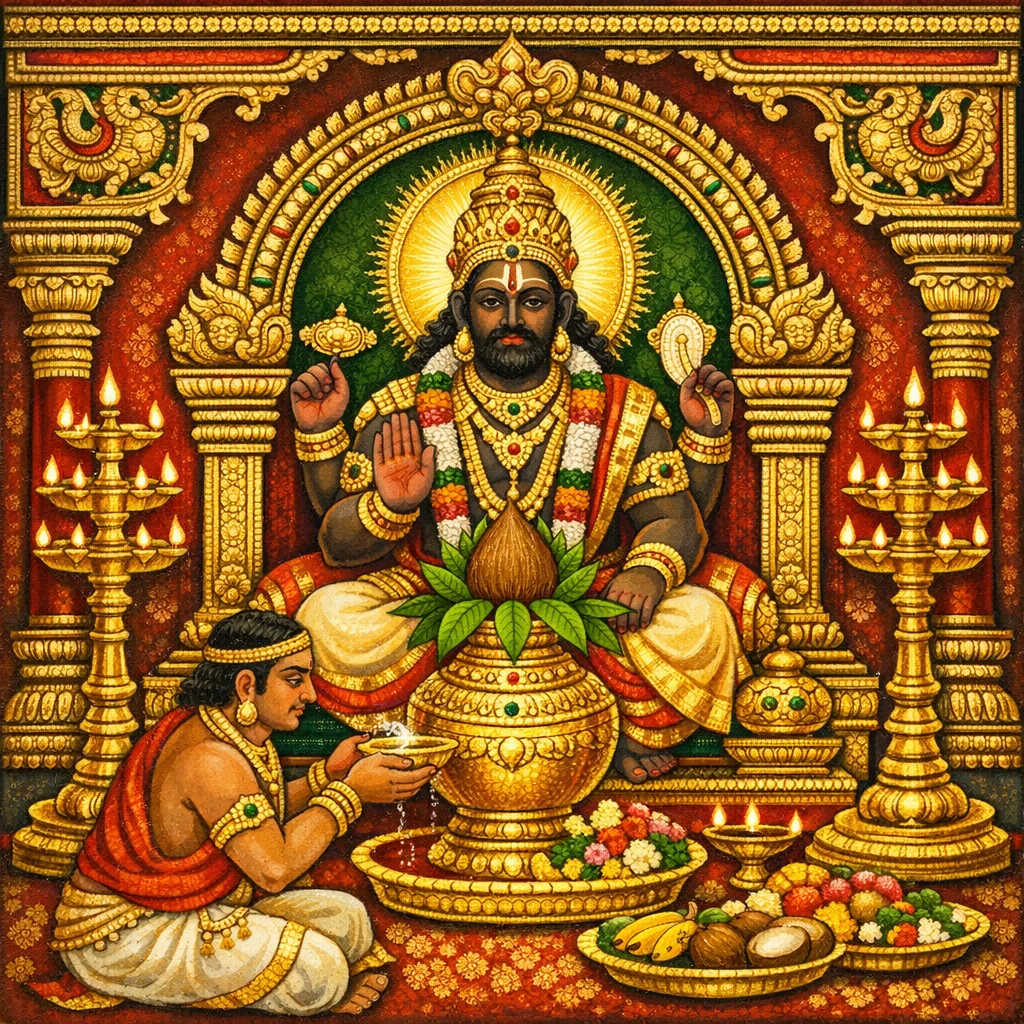
Le Seigneur Agni prescrit un culte de type vrata centré sur Agastya, explicitement identifié à Viṣṇu, reliant ainsi la vénération du sage à la sotériologie vaiṣṇava (atteindre Hari). Le rite est limité dans le temps et réglé: pendant trois jours, avant l’aube, l’officiant jeûne, adore et offre l’arghya à Agastya. À pradoṣa, on installe une effigie faite de fleurs de kāśa dans un pot d’eau (ghaṭa/kumbha), puis l’on observe une veille nocturne (prajāgara). Le matin, l’arghya est offert près d’un réservoir d’eau, avec des hymnes rappelant les hauts faits mythiques d’Agastya (assécher l’océan; détruire Ātāpi–Vātāpi) et des demandes de bienfaits et d’heureuse destinée après la mort. Le chapitre détaille les substances rituelles et l’ordonnancement des dons: santal, guirlandes, encens, étoffes, riz/céréales, fruits, or, et don d’un pot à un brāhmaṇa, ainsi que repas et dakṣiṇā (vache, vêtements, or). Il mentionne des variantes de récitation des mantras et une règle d’accessibilité: pour les femmes et les Śūdras, le rite se fait sans mantras védiques. Une observance prolongée (sept ans d’arghya) est dite procurer une prospérité complète—des fils aux sans-enfants et un époux royal à une jeune fille.
Shlokas
No shlokas available for this adhyaya yet.
Frequently Asked Questions
Fasting and worship precede the arghya; at pradoṣa a kāśa-flower image is placed in a ghaṭa/kumbha, followed by night vigil; in the morning the arghya is offered near water, then tyāga (grain, fruit, libation) and charitable gifts/feeding of brāhmaṇas conclude the rite.
Sandalwood, garlands, incense, cloth, rice/grains, fruits, gold (and in an expanded description: five gems, gold and silver, seven grains, curd, sandalwood), plus a pot-gift to a brāhmaṇa and dakṣiṇā including cow, garments, and gold.
The rite explicitly aims at attaining Hari through Agastya-worship (mukti-oriented devotion) while also promising dharma-anchored prosperity—health, fortune, desired boons, lineage, and marital success—thus integrating dharma, artha, kāma, and mokṣa.
It states that for women and Śūdras the rite is ‘non-Vedic,’ i.e., performed without Vedic mantras, indicating an inclusive procedural adaptation while preserving the devotional and charitable structure.
By giving the arghya for seven years, ‘all obtain everything’: a childless woman gains sons and good fortune, and a maiden gains a husband of royal birth; the arghya is also described in some readings as imperishable and mind-fulfilling.