Adhyaya 204
Chapter 204 — मासोपवासव्रतम् (The Vow of Month-long Fasting)
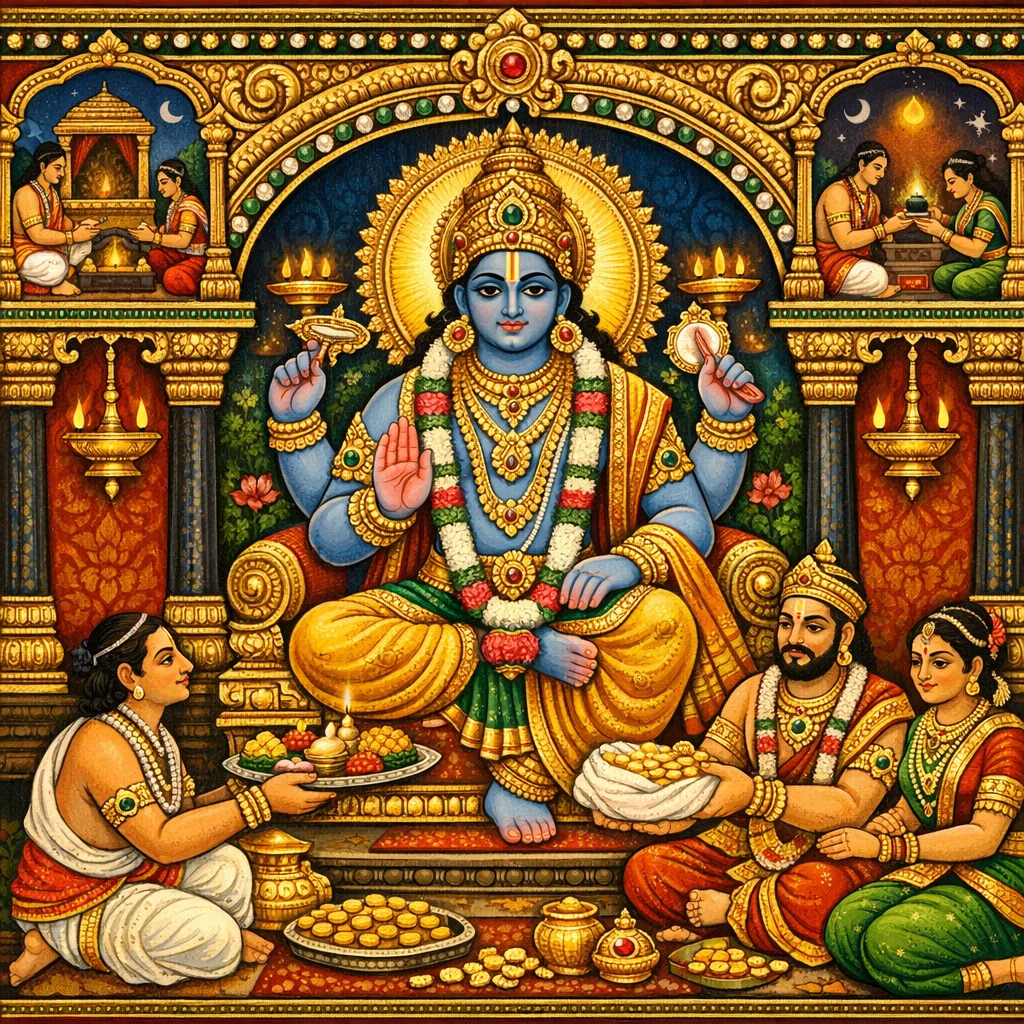
Le Seigneur Agni enseigne à Vasiṣṭha le māsopavāsa-vrata (vœu de jeûne d’un mois) comme le plus excellent des vœux, à entreprendre après un sacrifice vaiṣṇava et avec l’autorisation du guru. Le pratiquant évalue sa capacité par des austérités préparatoires (telles que le kṛcchra) et l’éligibilité est étendue aux vānaprastha, aux ascètes et aux femmes, y compris explicitement les veuves. Le vœu commence durant la quinzaine claire d’Āśvina, après le jeûne d’Ekādaśī, et se poursuit trente jours, conçu comme un culte rendu à Viṣṇu jusqu’à son Utthāna (réveil). Le vœuant accomplit trois fois par jour la Viṣṇu-pūjā avec triple bain, offrandes, récitation et méditation, tout en observant une stricte discipline de la parole, le non-attachement et des restrictions de contact et de conduite. À Dvādaśī, le vœu s’achève par l’adoration, le repas offert aux brāhmaṇa, le don de dakṣiṇā et la pāraṇa accomplie correctement. Le chapitre énumère des dons normés (notamment par séries de treize) et promet les fruits : purification, élévation des lignées familiales et accès à Viṣṇuloka ; par compassion, le lait et le ghee sont permis en cas d’évanouissement, car tenus pour un havis approuvé par les brāhmaṇa.
Shlokas
No shlokas available for this adhyaya yet.
Frequently Asked Questions
It is undertaken in the bright fortnight of Āśvina, after fasting on Ekādaśī, and is maintained for up to thirty days, oriented toward worship of Viṣṇu until his Utthāna.
After assessing personal capacity via austerities like kṛcchra, the vow is prescribed for vānaprasthas, ascetics (yatis), and women—explicitly including widows.
Thrice-daily worship of Viṣṇu, triple bathing, offering fragrance and flowers, recitation of Viṣṇu hymns/praises, and meditation, accompanied by restraints on speech and desire for gain.
The vow is completed by worship, feeding brāhmaṇas on Dvādaśī, giving dakṣiṇā and prescribed gifts, and then performing pāraṇa—the regulated, proper breaking of the fast.
No. The chapter states that milk and ghee given to a fainting vow-holder do not violate the vow, as they are treated as havis (an oblation) approved by brāhmaṇas.