Adhyaya 176
Pratipadā-vratāni (Vows Observed on the Lunar First Day)
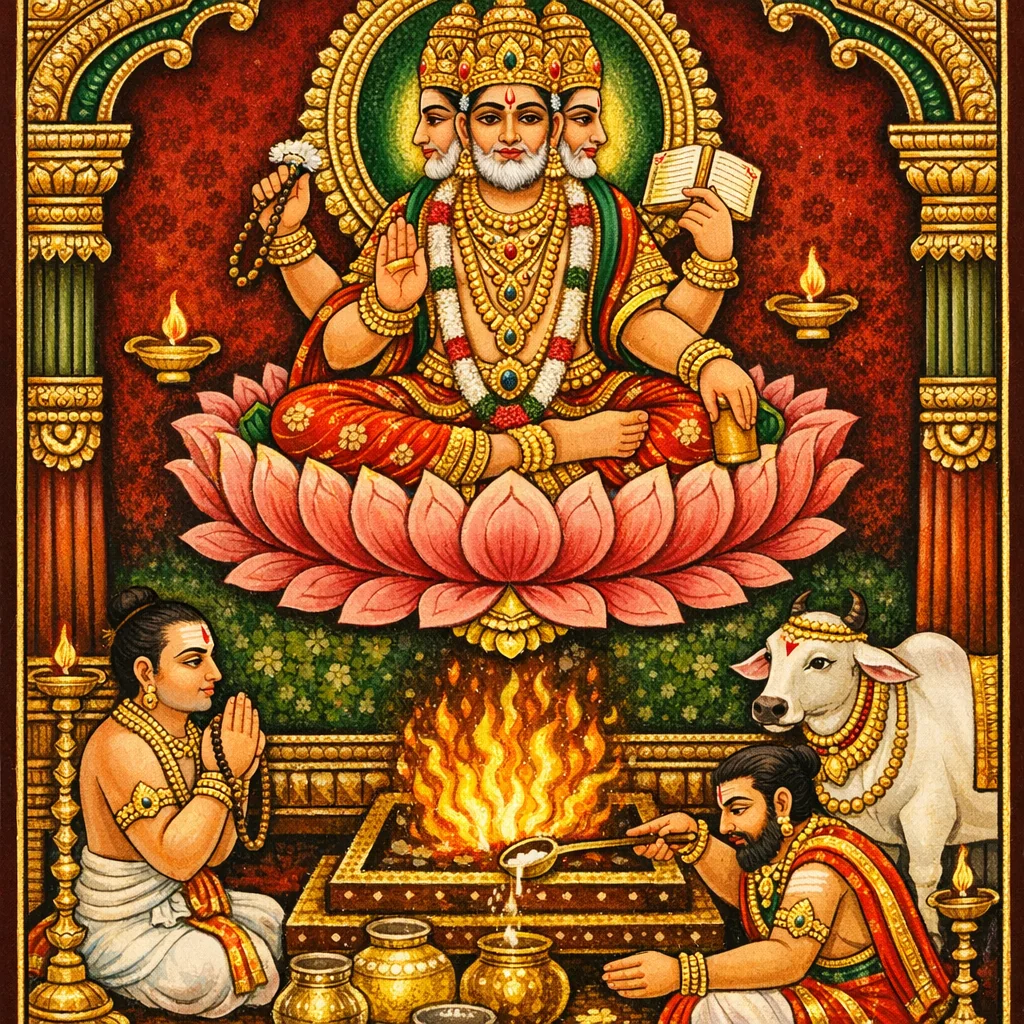
Le Seigneur Agni commence une présentation structurée des vratas fondés sur Pratipadā, en montrant le premier jour lunaire comme une entrée rituellement puissante vers des disciplines d’une année entière. Il identifie Pratipadā en Kārttika, Āśvayuja et Caitra comme le tithi de Brahmā, reliant ainsi le temps du calendrier à un centre de dévotion précis. Le chapitre expose la « technologie » du vrata : règles de jeûne (abstinence prolongée et prises alimentaires contrôlées), japa du mantra « Oṃ tat sat brahmaṇe namaḥ » avec la Gāyatrī, et visualisation iconographique claire de Brahmā (doré, cheveux nattés, tenant l’akṣamālā et des louches rituelles, avec le kamaṇḍalu). Le dāna est intégré comme résultat éthique mesurable—don de lait « selon ses moyens »—avec des fruits annoncés : purification, jouissance céleste et prospérité mondaine pour un brāhmaṇa. Un second volet présente le Dhanya-vrata en Mārgaśīrṣa, avec discipline nakta (manger la nuit) et homa, puis l’adoration d’Agni pendant un an et, en conclusion, le don d’une vache fauve. Le chapitre se clôt en nommant le Śikhī-vrata et son fruit : l’obtention de l’état/demeure de Vaiśvānara, reliant la pratique des vratas à la fois à la bhukti (prospérité) et aux destinations spirituelles élevées.
Shlokas
No shlokas available for this adhyaya yet.
Frequently Asked Questions
Kārttika, Āśvayuja, and Caitra are identified as months where Pratipadā is regarded as Brahmā’s tithi.
The chapter prescribes the mantra “Oṃ tat sat brahmaṇe namaḥ” together with Gāyatrī, maintained as a year-long observance.
Brahmā is described as golden and matted-haired, with akṣamālā and a ladle (śruva) in the right hand, and a sacrificial ladle (śruc) and kamaṇḍalu in the left, with a long tuft/brush-like emblem (lambakūrca).
Milk is to be donated according to capacity with the resolve “May Brahmā be pleased,” yielding purification, heavenly enjoyment, and wealth on earth (for a brāhmaṇa). The Dhanya/Agni-oriented year observance culminates in gifting a kapilā (tawny) cow.
By mapping time-discipline (tithi), mantra, and dāna into repeatable observances culminating in destinations like Vaiśvānara pada, it frames vrata as a sādhana that integrates ethical action and higher spiritual attainment (bhukti-mukti samanvaya).