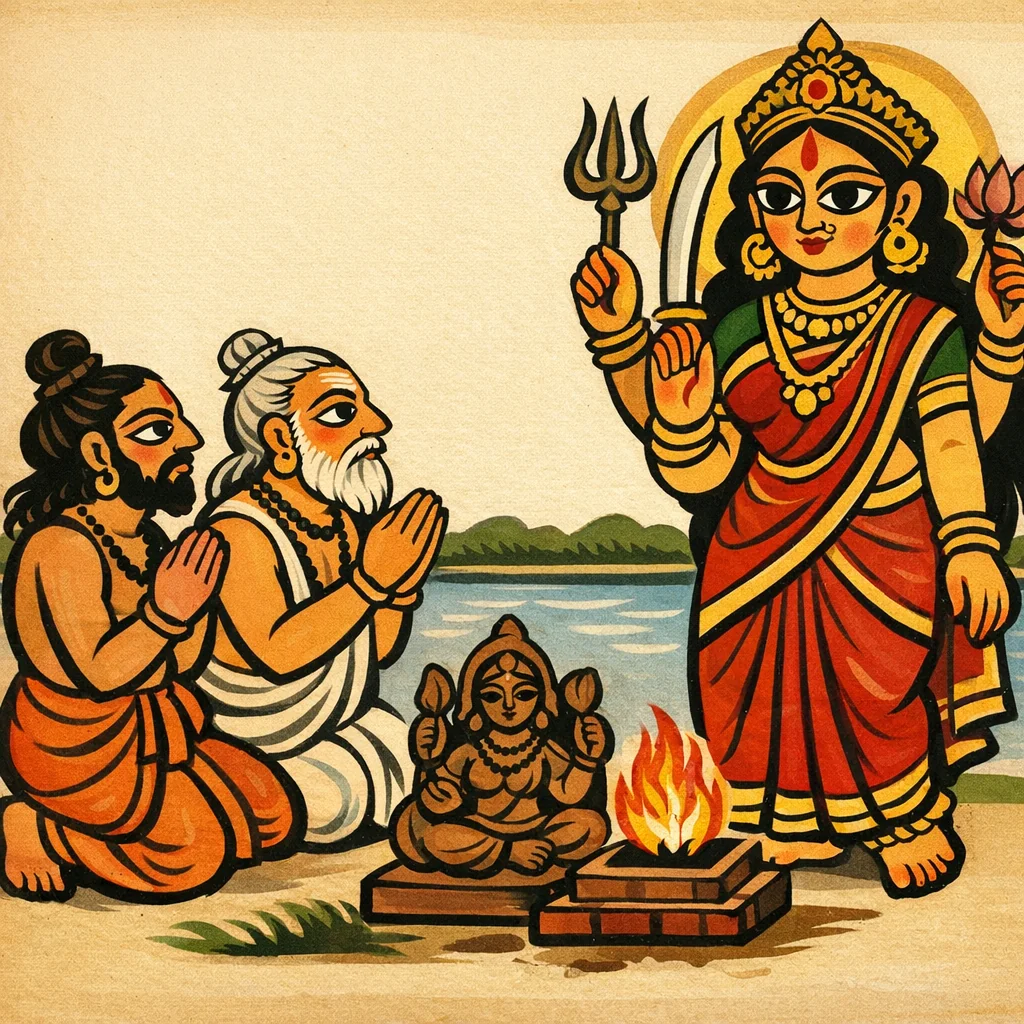
Adhyaya 93: The Goddess’s Boons to Suratha and the Merchant (Conclusion of the Devi Mahatmyam)
देवीवाक्यं (Devīvākyaṃ)
Conclusion
En la conclusión del Devi Mahatmyam, la Diosa se manifiesta y pronuncia su Devīvākya ante Suratha y el mercader. Les concede dones: a Suratha le devuelve su reino y le anuncia un futuro nacimiento como Manu (Sāvarṇi); al mercader le otorga discernimiento, desapego y el sendero del dharma que conduce a la liberación. La Diosa promete además amparar y responder a quienes la alaben y la recuerden con sincera devoción. El relato culmina en gratitud, consuelo y firme fe en la Madre divina.
Divine Beings
Celestial Realms
Key Content Points
Focus Keywords
Shlokas in Adhyaya 93
Verse 1
इति श्रीमार्कण्डेयपुराणे सावर्णिके मन्वन्तरे देवीमाहात्म्ये देवीवाक्यं नाम द्विनवतितमोऽध्यायः त्रिनवतितमोऽध्यायः- ९३ । ऋषिरुवाच एतत्ते कथितं भूूप देवीमाहात्म्यमुत्तमम् । एवंप्रभावा सा देवी ययेदं धार्यते जगत् ॥
Así, en el Śrī Mārkaṇḍeya Purāṇa, en el Sāvarṇika Manvantara, en el Devī Māhātmya (la sección llamada «Devī-vākya»)—el capítulo noventa y dos. Comienza el capítulo noventa y tres: El Ṛṣi dijo: «Oh rey, te ha sido narrado este supremo Devī Māhātmya. Tal es el poder de esa Diosa por quien este mundo es sostenido».
Verse 2
विद्या तथैव क्रियते भगवद्विष्णुमायया । तथा त्वमेेष वैश्यश्च तथैवान्ये विवेकिनः । मोह्यन्ते मोहिताश्चैव मोहमेेष्यन्ति चापरे ॥
También el conocimiento es producido por la māyā del Bienaventurado Señor Viṣṇu. Así ocurre contigo, con este vaiśya y asimismo con otras personas perspicaces: son engañadas, y, una vez engañadas, harán que otros también caigan en el engaño.
Verse 3
तामुपैहि महाराज शरणं परमेश्वरीम् । आराधिता सैव नृणां भोगस्वर्गापवर्गदा ॥
Oh gran rey, acógete como refugio a la Diosa Suprema. Cuando es adorada, ella sola concede a los seres humanos el goce en este mundo, el cielo y la liberación (mokṣa).
Verse 4
मार्कण्डेय उवाच इति तस्य वचः श्रुत्वा सुरथः स नराधिपः । प्रणिपत्य महाभागं तमृषिं शंसितव्रतम् ॥
Dijo Mārkaṇḍeya: Al oír esas palabras, Suratha, señor de los hombres, se inclinó ante aquel sabio dichoso, célebre por sus votos.
Verse 5
निर्विण्णोऽतिममत्वेन राज्यापहरणेन च । जगाम सद्यस्तपसे स च वैश्यो महामुने ॥
Hastiado de la vida mundana por un apego excesivo y porque su reino le había sido arrebatado, partió de inmediato a practicar austeridades—junto con aquel mercader también, oh gran sabio.
Verse 6
संदर्शनार्थमम्बायाः नदीपुलिनसंस्थितः । स च वैश्यस्तपस्तेपे देवीसूक्तं परं जपन् ॥
Para obtener la visión (darśana) de la Madre Devī, establecido en la ribera de un río, aquel mercader practicó austeridades, recitando el himno supremo a la Diosa.
Verse 7
तौ तस्मिन् पुलिने देव्याः कृत्वा मूर्ति महीमयीम् । अर्हणां चक्रतुस् तस्याः पुष्पधूपाग्नितर्पणैः ॥
Allí, en aquella ribera, ambos hicieron una imagen de la Diosa con tierra, y realizaron su culto con flores, incienso, fuego y libaciones/oblaciones (āhuti).
Verse 8
निराहारौ यतात्मानौ तन्मनस्कौ समाहितौ । ददतुस् तौ बलिं चैव निजगात्रासृगुक्षितम् ॥
Ayunando, dueños de sí mismos, enteramente entregados a Ella y concentrados, ambos ofrecieron también un bali, rociándolo con la sangre de sus propios cuerpos.
Verse 9
एवं समाराधयतोस् त्रिभिर्वर्षैर्यतात्मनोः । परितुष्टा जगद्धात्री प्रत्यक्षं प्राह चण्डिका ॥
Así, mientras los dos devotos autocontenidos adoraban durante tres años, Caṇḍikā, Sostenedora del mundo, complacida, les habló en forma visible.
Verse 10
श्रीदेव्युवाच यत्प्रार्थ्यते त्वया भूप त्वया च कुलनन्दन । मत्तस्तत्प्राप्यतां सर्वं परितुष्टा ददामि तत् ॥
Dijo la Diosa Bienaventurada: «Oh rey, y tú, deleite de tu linaje: cuanto deseéis de mí, que todo ello os sea obtenido. Satisfecha, lo concedo».
Verse 11
मार्कण्डेय उवाच ततो वव्रे नृपो राज्यं अविभ्रंश्यन्यजन्मनि । अत्रैव च निजं राज्यं हतशत्रुबलं बलात् ॥
Dijo Mārkaṇḍeya: Entonces el rey eligió como don un reino inconmovible en otro nacimiento, y también aquí mismo su propio reino, con las fuerzas enemigas destruidas por el poder.
Verse 12
सोऽपि वैश्यस्ततो ज्ञानं वव्रे निर्विण्णमानसः । ममेति अहमिति प्राज्ञः सङ्गविच्युतिकारकम् ॥
Entonces aquel mercader también, con la mente desengañada, eligió el conocimiento—pues era sabio—que hace caer el apego arraigado en el «mío» y el «yo».
Verse 13
श्रीदेव्युवाच स्वल्पैरहोभिर्नृपते स्वं राज्यं प्राप्स्यते भवान् । हत्वा रिपूनस्कलितं तव तत्र भविष्यति ॥
La Bienaventurada Diosa dijo: «Oh rey, en pocos días recobrarás tu propio reino. Tras dar muerte a tus enemigos, tu dominio allí permanecerá firme e inconmovible».
Verse 14
मृतश्च भूयः सम्प्राप्य जन्म देवाद्विवस्वतः । सावर्णिको नाम मनुर्भवान् भुवि भविष्यति ॥
«Y después de morir, obteniendo un nuevo nacimiento del dios Vivasvat (el Sol), llegarás a ser en la tierra el Manu llamado Sāvarṇi».
Verse 15
वैश्यवर्य त्वया यश्च वरोऽस्मत्तोऽभिवाञ्छितः । तं प्रयच्छामि संसिद्ध्यै तव ज्ञानं भविष्यति ॥
«Oh el mejor de los mercaderes, el don que has deseado de mí—te lo concedo. Para tu plena realización, surgirá en ti el conocimiento verdadero».
Verse 16
मार्कण्डेय उवाच इति दत्त्वा तयोर्देवी यथाभिलषितं वरम् । बभूवान्तर्हिता सद्यो भक्त्या ताभ्यामभिष्टुता ॥
Mārkaṇḍeya dijo: «Así, habiendo concedido a ambos el don que deseaban, la Diosa desapareció de inmediato, después de haber sido alabada por ellos con devoción».
Verse 17
एवं देव्याः वरं लब्ध्वा सुरथः क्षत्रियर्षभः । सूर्याज्जन्म समासाद्य सावर्णिर्भविता मनुः ॥
Así, Suratha—toro entre los kṣatriyas—habiendo obtenido el don de la Diosa, más tarde, al nacer del Sol, llegó a ser el Manu llamado Sāvarṇi.
Frequently Asked Questions
It examines why discerning persons still fall under delusion (māyā) and presents śaraṇāgati to the Supreme Goddess as the practical and theological resolution, showing how devotion can culminate either in restored dharmic kingship or in detachment-based liberating knowledge.
It explicitly links Suratha’s boon to Manvantara chronology by prophesying his rebirth as Sāvarṇi Manu (in the Sāvarṇika manvantara tradition), thereby integrating the Devīmāhātmya’s shaktic episode into the Purāṇic succession of Manus.
As the Devīmāhātmya’s closing adhyāya, it culminates the text’s shaktic theology with a direct theophany of Caṇḍikā and the doctrinal claim that the Goddess is the giver of bhoga (worldly enjoyment), svarga (heavenly fruition), and apavarga (liberation), validating both royal and renunciant aims through her grace.