
Shloka 12
Karma Yoga — Karma Yoga
इष्टान्भोगान्हि वो देवा दास्यन्ते यज्ञभाविताः । तैर्दत्तानप्रदायैभ्यो यो भुङ्क्ते स्तेन एव सः ॥ ३.१२ ॥
iṣṭān bhogān hi vo devā dāsyante yajñabhāvitāḥ | tair dattān apradāyaibhyo yo bhuṅkte stena eva saḥ || 3.12 ||

Los devas, nutridos por el yajña, os concederán los goces deseados. Pero quien disfruta de lo que ellos dan sin ofrecer nada a cambio, ése es en verdad un ladrón.
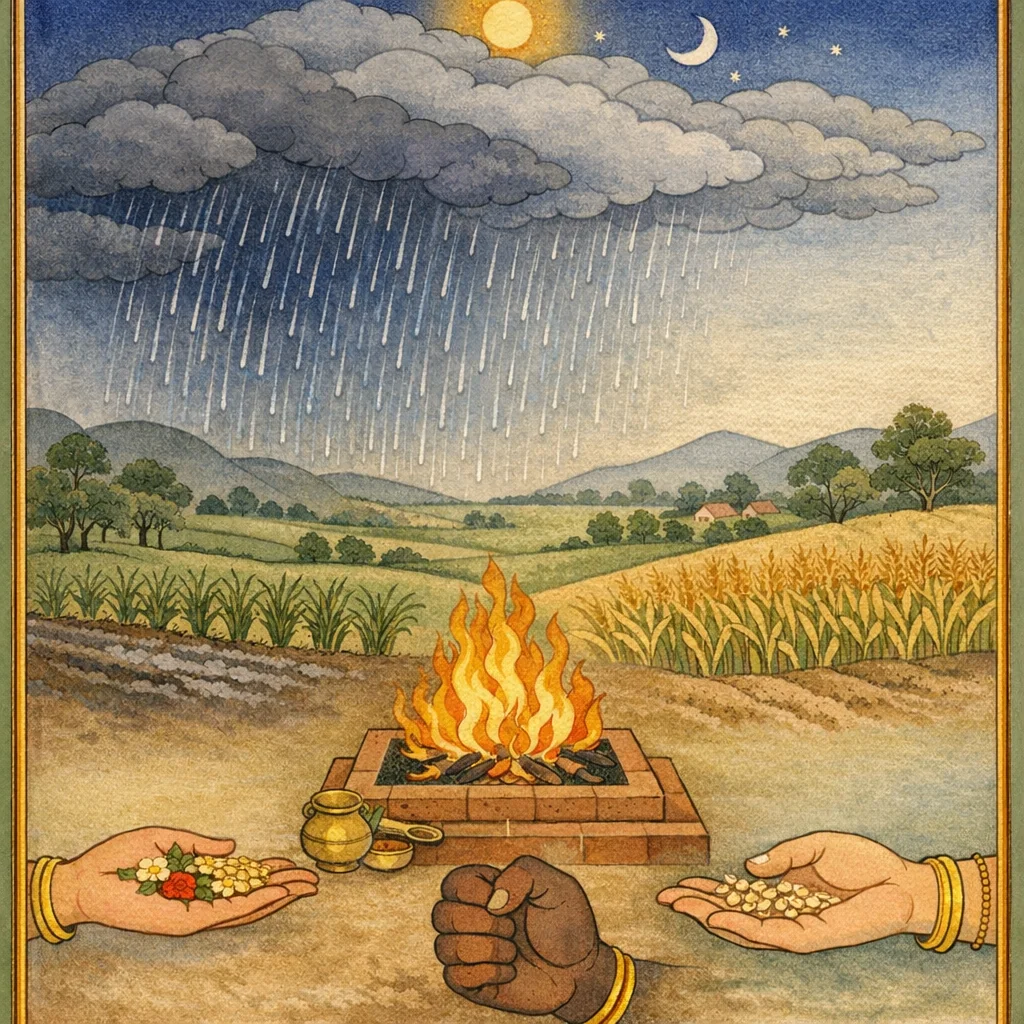
For the gods, nourished by sacrifice, will give you desired enjoyments. He who enjoys what is given by them without offering in return is indeed a thief.
For the devas, strengthened by yajña, will grant you desired enjoyments. One who consumes what is given by them without giving back is, indeed, a ‘thief.’
‘Stena’ is a moral-legal metaphor: taking benefits without reciprocal contribution. Some commentators emphasize ritual reciprocity; modern academic readings often generalize it to social and ecological ethics (consumption without restitution).
FAQs
The verse critiques entitlement: receiving benefits without acknowledgment or contribution can reinforce self-centered habits. Reciprocal giving supports gratitude and social trust.
It assumes a moral structure to the world where benefits arise through participation in sustaining practices; failing to reciprocate disrupts alignment with that order.
Krishna strengthens the case for yajña-oriented action by adding an ethical warning: enjoyment is legitimate when embedded in reciprocity rather than appropriation.
Applied broadly, it supports responsible consumption: repay what one takes from society and nature through fair exchange, service, stewardship, and support of common goods.