
Shloka 2
Dhyana Yoga — Atma Samyama Yoga
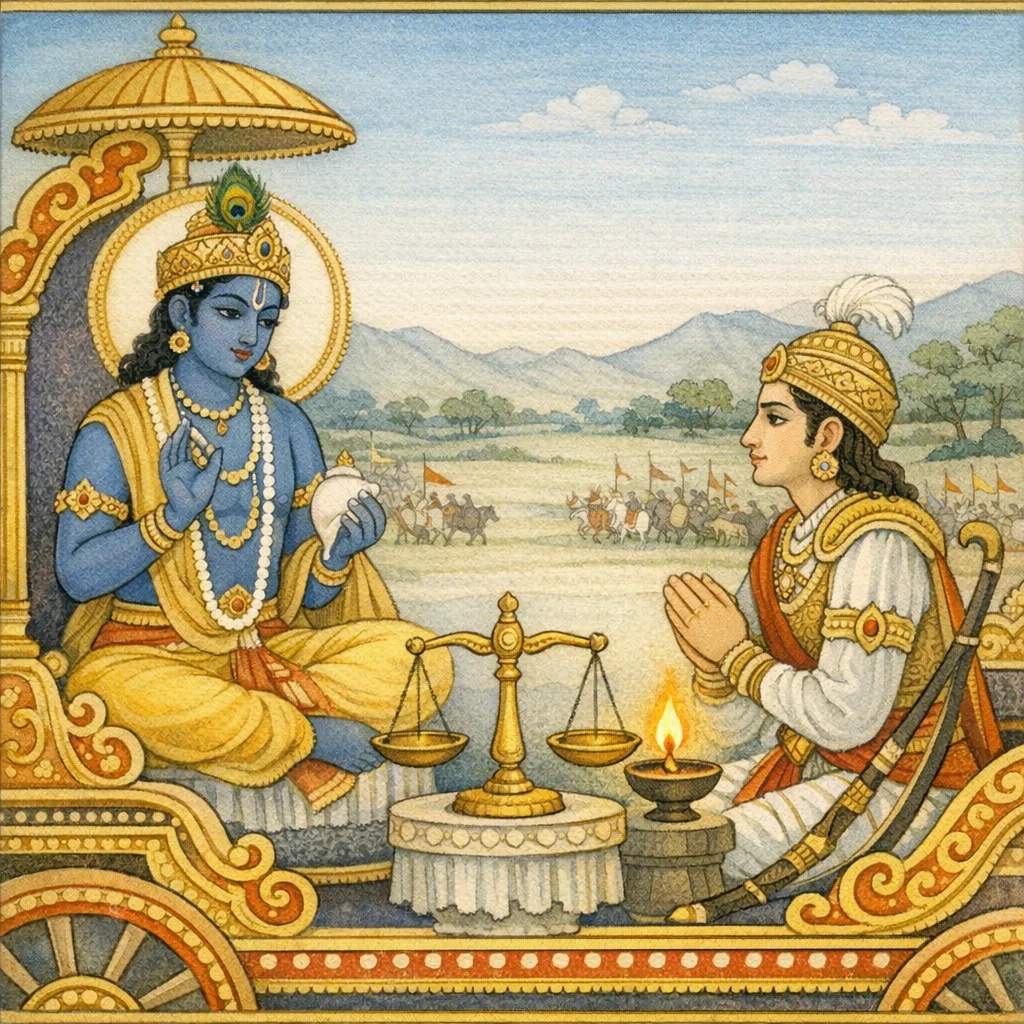
यं संन्यासमिति प्राहुर्योगं तं विद्धि पाण्डव । न ह्यसंन्यस्तसंकल्पो योगी भवति कश्चन ॥ ६.२ ॥
yaṁ saṁnyāsam iti prāhur yogaṁ taṁ viddhi pāṇḍava | na hy asaṁnyasta-saṅkalpo yogī bhavati kaścana || 6.2 ||

Sabe, oh Pāṇḍava, que lo que se llama renuncia (sannyāsa) es eso mismo lo que debe conocerse como yoga; pues nadie llega a ser yogui sin abandonar las determinaciones mentales (saṅkalpa).
हे पाण्डव! जिसे संन्यास कहते हैं, उसे ही योग जानो; क्योंकि संकल्पों का त्याग किए बिना कोई भी योगी नहीं बनता।
O Pāṇḍava, know that what they call renunciation is that very yoga; for no one becomes a yogin without renouncing intentions/volitional constructions (saṅkalpa).
“Saṅkalpa” is variously interpreted as (a) desire-driven plans, (b) mental projections, or (c) ritualistic resolves. The philosophical emphasis typically falls on relinquishing egoic, fruit-oriented volitions rather than abandoning practical planning.
FAQs
It targets compulsive mental scripting—plans driven by craving or fear—suggesting that sustained well-being requires loosening such volitional fixation.
The verse equates yoga with inner renunciation: the mind’s tendency to construct self-centered aims is treated as the main obstacle to liberating knowledge.
It clarifies that meditation is not isolated technique but rests on ethical-intentional purification; this frames the practical instructions that follow in Chapter 6.
Applicable to reducing over-planning and attachment: set goals responsibly but practice flexibility and non-possessiveness about outcomes.