
Shloka 12
Dhyana Yoga — Atma Samyama Yoga
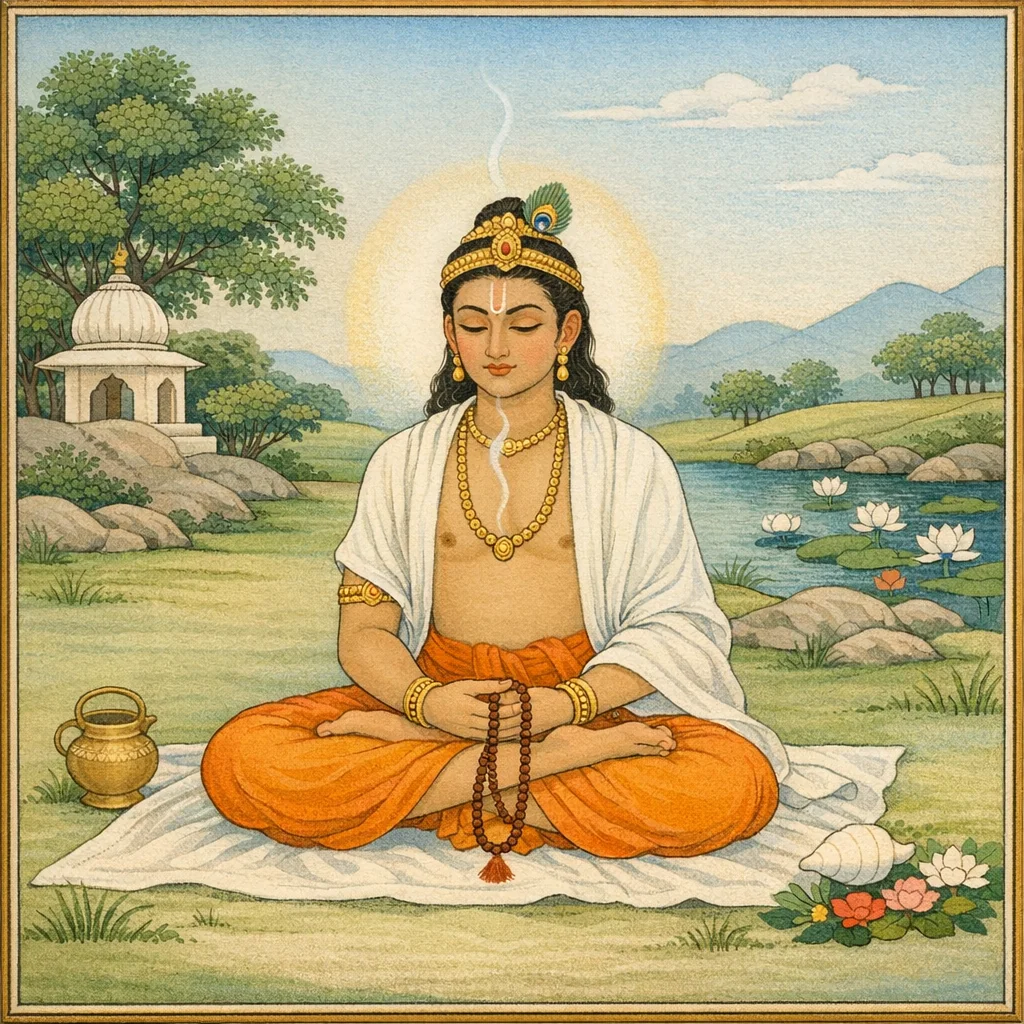
तत्रैकाग्रं मनः कृत्वा यतचित्तेन्द्रियक्रियः । उपविश्यासने युञ्ज्याद्योगमात्मविशुद्धये ॥ ६.१२ ॥
tatraikāgraṃ manaḥ kṛtvā yata-cittendriya-kriyaḥ | upaviśyāsane yuñjyād yogam ātma-viśuddhaye || 6.12 ||

Allí, haciendo la mente unificada, dominando las actividades de la mente y de los sentidos, que se siente en el asiento y practique el yoga para la purificación del ser interior.
वहाँ आसन पर बैठकर, मन को एकाग्र करके तथा चित्त और इन्द्रियों की क्रियाओं को वश में करके, आत्मशुद्धि के लिये योग का अभ्यास करे।
There, having made the mind one-pointed and having restrained the activities of mind and senses, seated on the seat he should practice yoga for self-purification.
‘Ātma-viśuddhi’ is interpreted devotionally as ‘purification for God-realization’ or ethically as ‘inner purification’; academically it denotes a disciplined refinement of the practitioner’s psycho-moral apparatus enabling concentration and insight.
FAQs
It outlines attentional training: narrowing focus (one-pointedness) and reducing impulsive sensory engagement, which together cultivate sustained concentration and emotional steadiness.
Purification is a prerequisite for clearer discernment of Self versus mental fluctuations; meditation is presented as both ethical-psychological refinement and a pathway to insight.
This verse links external preparation (seat/place) to internal method (focus and restraint), forming a coherent practice sequence in the chapter.
Use a single meditation object (breath, mantra) and minimize multitasking; treat practice as gradual training rather than immediate suppression of thoughts.