
Shloka 11
Dhyana Yoga — Atma Samyama Yoga
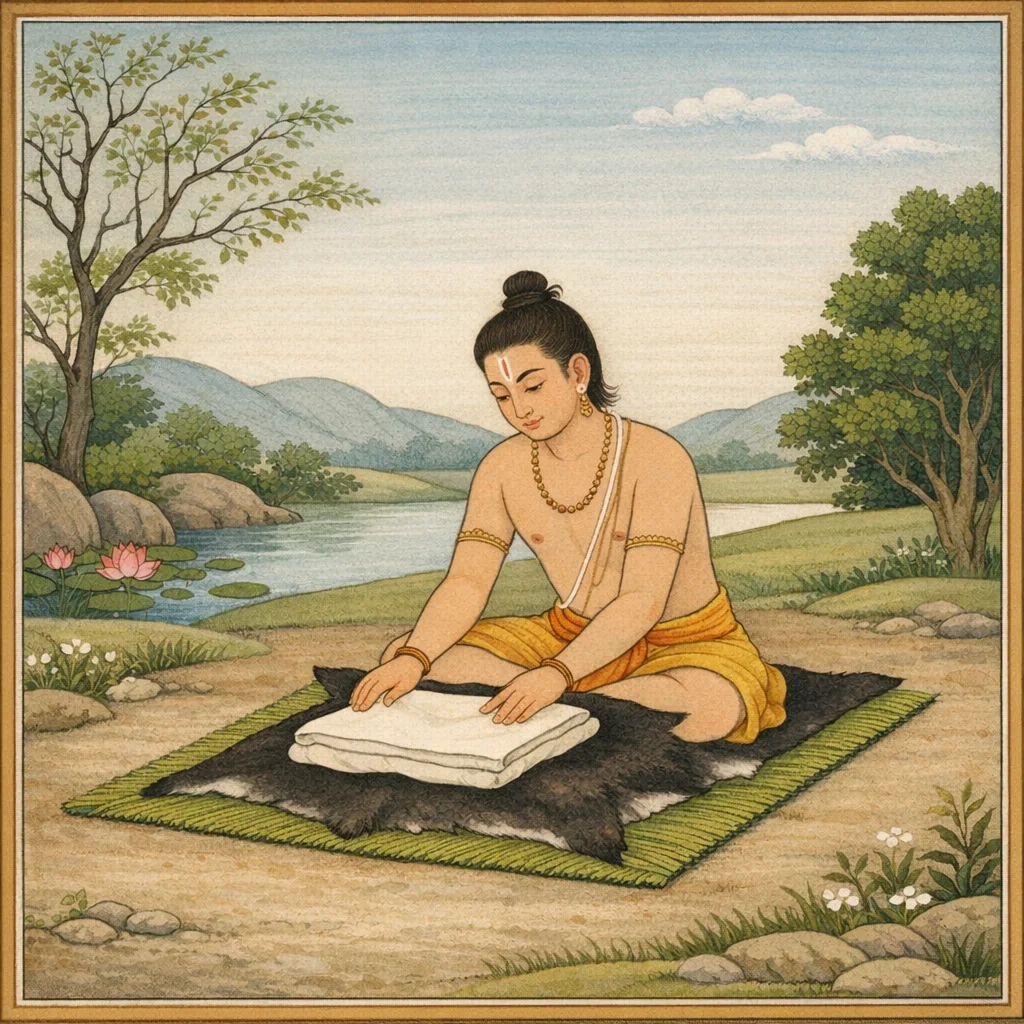
शुचौ देशे प्रतिष्ठाप्य स्थिरमासनमात्मनः । नात्युच्छ्रितं नातिनीचं चैलाजिनकुशोत्तरम् ॥ ६.११ ॥
śucau deśe pratiṣṭhāpya sthiram āsanam ātmanaḥ | nāty-ucchritaṃ nāti-nīcaṃ cailājina-kuśottaram || 6.11 ||

En un lugar puro, que disponga para sí un asiento firme, ni demasiado alto ni demasiado bajo, cubierto con tela, piel de ciervo y kuśa (hierba sagrada).
शुद्ध स्थान में अपने लिये स्थिर आसन स्थापित करके—जो न बहुत ऊँचा हो, न बहुत नीचा हो—और जिस पर वस्त्र, मृगचर्म तथा कुश (घास) बिछे हों।
Having set up for himself a firm seat in a clean place—neither too high nor too low—with cloth, skin, and kuśa-grass as its covering.
‘Ajina’ (skin) reflects ancient ascetic material culture and may be read historically as insulation/hygiene. Some modern translations omit it or generalize to ‘a mat,’ but the layered construction is explicit in the text.
FAQs
A stable, comfortable seat reduces bodily discomfort, which otherwise competes for attention. Clean, orderly surroundings can lower cognitive load and support sustained focus.
Purity and order are presented as supportive conditions for inner clarity; they are preparatory rather than ultimate, facilitating concentration leading toward self-knowledge.
The verse situates meditation within ancient Indian ascetic practice, emphasizing that technique includes environmental and bodily factors, not only mental intention.
Use a consistent, quiet spot and a supportive cushion/chair; prioritize stability and moderation over elaborate setups, while keeping the space clean and minimally distracting.