Adhyaya 7
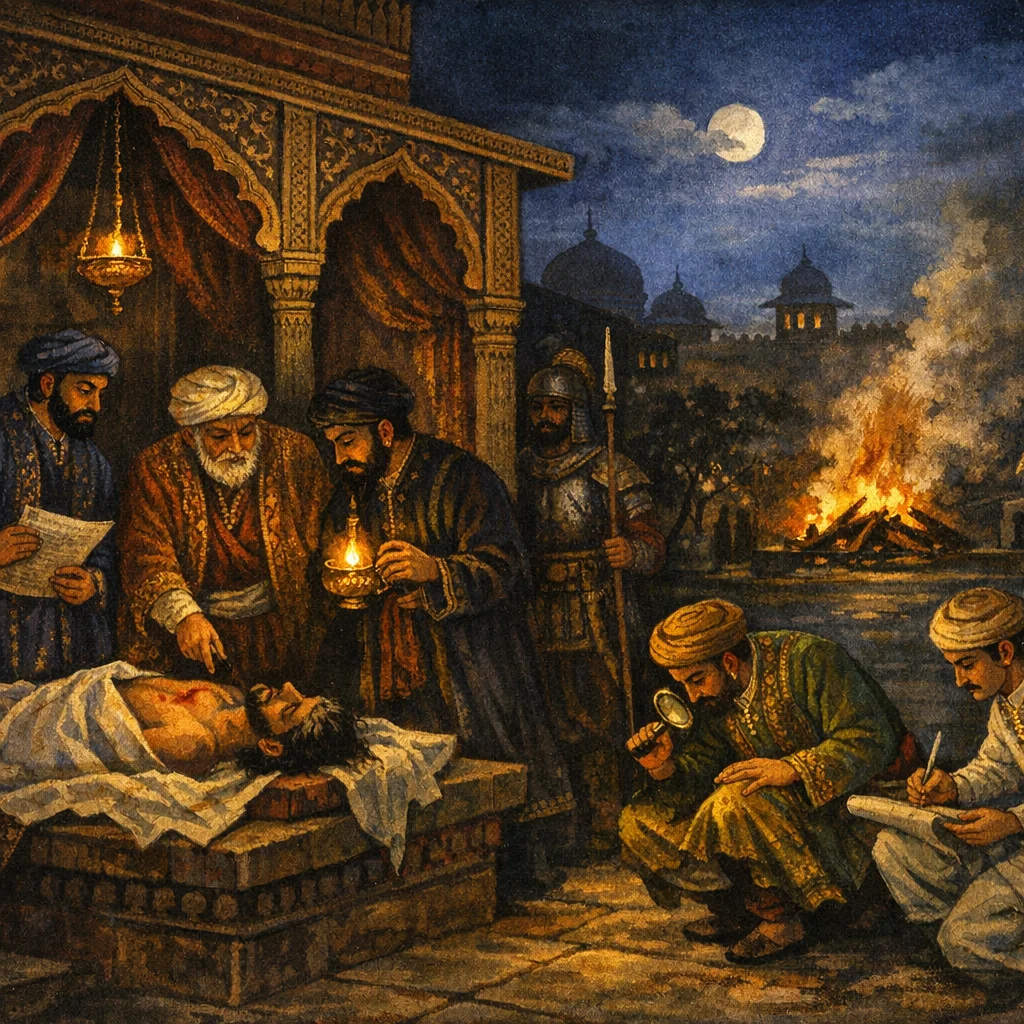
El capítulo 4.7 convierte la investigación de la muerte en un protocolo estatal: hay que probar la forma de muerte antes de castigar, para que el danda real siga siendo eficaz, creíble y estabilizador. Transforma la indignación en prueba mediante una inspección estandarizada del cadáver y la lectura de indicios. Crea una tipología de muertes (estrangulación, ahorcamiento, ahogamiento, veneno, paliza, herida de arma) para orientar la pesquisa. Ordena a los investigadores centrarse en el conjunto de sospechosos de mayor probabilidad: quienes tenían proximidad, palancas por dependencia, ganancia por herencia o enemistad familiar. Evita castigos guiados por rumores que desencadenan represalias faccionales y desorden político. Protege a los inocentes (yogakṣema) a la vez que mejora la precisión de las condenas y el efecto disuasorio. Refuerza la legitimidad del rey al vincular la coerción con un procedimiento demostrable, sosteniendo la obediencia y la estabilidad social.
Sutras
Sutra 5
निस्तब्धगुदाक्षं संदष्टजिह्वमाध्मातोदरमुदकहतं विद्यात् ॥ कZ_०४.७.०५ ॥
One should identify death by water (drowning) when the anus and eyes are rigid, the tongue is clenched/bitten, and the abdomen is distended.
Sutra 6
शोणितानुसिक्तं भग्नभिन्नगात्रं काष्ठैरश्मभिर्वा हतं विद्यात् ॥ कZ_०४.७.०६ ॥
One should identify death by beating when the body is drenched in blood and the limbs are broken or split—(as if) struck with sticks or stones.
Sutra 7
सम्भग्नस्फुटितगात्रमवक्षिप्तं विद्यात् ॥ कZ_०४.७.०७ ॥
One should identify a body as ‘thrown down’ (death by being cast/fallen) when the limbs are extensively broken and fractured.
Sutra 8
श्यावपाणिपाददन्तनखं शिथिलमांसरोमचर्माणं फेनोपदिग्धमुखं विषहतं विद्यात् ॥ कZ_०४.७.०८ ॥
One should identify death by poison when the hands, feet, teeth, and nails are darkened; the flesh, hair, and skin are slack; and the mouth is smeared with foam.
Sutra 9
तमेव सशोणितदंशं सर्पकीटहतं विद्यात् ॥ कZ_०४.७.०९ ॥
That same condition, when accompanied by a bleeding bite-mark, should be identified as death caused by a snake or insect.
Sutra 10
विक्षिप्तवस्त्रगात्रमतिवन्तविरिक्तं मदनयोगहतं विद्यात् ॥ कZ_०४.७.१० ॥
One should identify death due to a ‘madana-compound’ (intoxicant/aphrodisiac preparation) when the clothing and body are disordered and there is excessive discharge/evacuation.
Sutra 11
अतोऽन्यतमेन कारणेन हतं हत्वा वा दण्डभयादुद्बद्धनिकृत्तकण्ठं विद्यात् ॥ कZ_०४.७.११ ॥
Or, when killed by some other cause—or after killing someone—if (the person) out of fear of punishment is found hanged or with the throat cut, it should be recognized (as such).
Sutra 12
विषहतस्य भोजनशेषं वयोभिः परीक्षेत ॥ कZ_०४.७.१२ ॥
In a case of death by poison, the remaining food should be examined by birds (as test-feeders).
Sutra 13
हृदयादुद्धृत्याग्नौ प्रक्षिप्तं चिटिचिटायदिन्द्रधनुर्वर्णं वा विषयुक्तं विद्यात्दग्धस्य हृदयमदग्धं दृष्ट्वा वा ॥ कZ_०४.७.१३ ॥
After removing the heart and throwing it into fire, if it crackles or shows rainbow-like coloration, one should know it is poisoned; likewise, if in a burnt body the heart is seen unburnt.
Sutra 14
तस्य परिचारकजनं वाग्दण्डपारुष्यातिलब्धं मार्गेत दुःखोपहतमन्यप्रसक्तं वा स्त्रीजनं दायवृत्तिस्त्रीजनाभिमन्तारं वा बन्धुम् ॥ कZ_०४.७.१४ ॥
One should investigate that person’s attendants for those who had received harsh verbal punishment or abuse; (also) the household women—those distressed or attached elsewhere; and any relative who stands to gain inheritance, or who harbors hostility toward the women of the household.
Sutra 15
तदेव हतोद्बद्धस्य परीक्षेत ॥ कZ_०४.७.१५ ॥
Del mismo modo, debe investigar el caso de quien ha sido muerto después de haber sido ahorcado (es decir, un ahorcamiento simulado o una muerte vinculada al ahorcamiento).
Sutra 16
स्वयमुद्बद्धस्य वा विप्रकारमयुक्तं मार्गेत ॥ कZ_०४.७.१६ ॥
O bien, en el caso de quien se ha ahorcado, debe buscar una incongruencia: algo impropio o que no encaje en la manera/circunstancias.
Sutra 17
सर्वेषां वा स्त्रीदायाद्यदोषः कर्मस्पर्धा प्रतिपक्षद्वेषः पण्यसंस्थासमवायो वा विवादपदानामन्यतमद्वा रोषस्थानम् ॥ कZ_०४.७.१७ ॥
Para cualquier persona, las bases del agravio (fuentes de hostilidad) pueden ser: disputas relativas a mujeres o a herencias y similares; rivalidad en el trabajo; odio hacia la parte contraria; colusión/asociación dentro de gremios u organismos comerciales; o cualquier otro motivo reconocido de disputa.
Sutra 18
रोषनिमित्तो घातः ॥ कZ_०४.७.१८ ॥
El homicidio (a menudo) se produce por agravio/ira como motivo.
Sutra 19
स्वयं आदिष्टपुरुषैर्वा चोरैरर्थनिमित्तं सादृश्यादन्यवैरिभिर्वा हतस्य घातमासन्नेभ्यः परीक्षेत ॥ कZ_०४.७.१९ ॥
Debe averiguar, a partir de quienes están cerca del asunto, si la muerte del difunto fue causada (i) personalmente, (ii) mediante agentes instruidos, (iii) por ladrones por lucro, o (iv) por otros enemigos, atendiendo a la semejanza/adecuación con enemistades previas y las circunstancias.
Sutra 20
येनाहूतः सह स्थितः प्रस्थितो हतभूमिमानीतो वा तमनुयुञ्जीत ॥ कZ_०४.७.२० ॥
Debe interrogar a la persona que llamó a la víctima, con quien se quedó, con quien partió, o quien la llevó al lugar donde fue asesinada.
Sutra 21
ये चास्य हतभूमावासन्नचरास्तानेकैकशः पृच्छेत्केनायमिहानीतो हतो वा कः सशस्त्रः संगूहमान उद्विग्नो वा युष्माभिर्दृष्टः इति ॥ कZ_०४.७.२१ ॥
Y a quienes merodeaban cerca del lugar del homicidio—debe interrogarlos uno por uno: «¿Quién lo trajo aquí? ¿O quién lo mató? ¿A quién vieron armado, ocultándose/encubriéndose, o mostrando agitación?»
Sutra 22
ते यथा ब्रूयुस्तथानुयुञ्जीत ॥ कZ_०४.७.२२ ॥
Según lo que ellos digan, así debe seguir interrogando (siguiendo sus declaraciones como pistas).
Sutra 23
वस्त्रं वेषं विभूषां वा दृष्ट्वा तद्व्यवहारिणः ॥ कZ_०४.७.२३च्द् ॥
Tras observar la ropa, el atuendo o los adornos, (debe localizar) a quienes comerciaron con él/ellos (es decir, los comerciantes, artesanos, vendedores o asociados vinculados a tales objetos).
Sutra 24
कर्म च व्यवहारं च ततो मार्गणमाचरेत् ॥ कZ_०४.७.२४च्द् ॥
Luego debe indagar sobre la conducta/ocupación de la persona y sus tratos; después de ello, debe proceder a un registro/investigación formal.
Sutra 25
घातयेत्स्वयमात्मानं पापेन मोहिता ॥ कZ_०४.७.२५च्द् ॥
—o una mujer, engañada por el mal obrar, provoca su propia muerte.
Sutra 26
न श्मशानविधिस्तेषां न सम्बन्धिक्रियास्तथा ॥ कZ_०४.७.२६च्द् ॥
Para ellos no hay rito del crematorio, ni tampoco los ritos acostumbrados realizados por los parientes.
Sutra 27
तद्गतिं स चरेत्पश्चात्स्वजनाद्वा प्रमुच्यते ॥ कZ_०४.७.२७च्द् ॥
—después incurre en el mismo estatus/destino que ellos, o bien queda liberado/expulsado de su propio grupo de parientes.
Sutra 28
याजनाध्यापनाद् यौनात्तैश्चान्योऽपि समाचरन् ॥ कZ_०४.७.२८च्द् ॥
Por oficiar sacrificios para ellos, por enseñarles, por mantener relaciones sexuales con ellos—y asimismo por otras asociaciones comparables—uno también incurre en la caída.
Sutra 31
तैलाभ्यक्तमाशुमृतकं परीक्षेत ॥ कZ_०४.७.०१ ॥
Sutra 32
निष्कीर्णमूत्रपुरीषं वातपूर्णकोष्ठत्वक्कं शूनपादपाणिमान्मीलिताक्षं सव्यञ्जनकण्ठं पीटननिरुद्धोच्छ्वासहतं विद्यात् ॥ कZ_०४.७.०२ ॥
Sutra 33
तमेव संकुचितबाहुसक्थिमुद्बन्धहतं विद्यात् ॥ कZ_०४.७.०३ ॥
Sutra 34
शूनपाणिपादोदरमपगताक्षमुद्वृत्तनाभिमवरोपितं विद्यात् ॥ कZ_०४.७.०४ ॥
Frequently Asked Questions
It prevents wrongful punishment and retaliatory feuds by making death-investigation evidence-based; this stabilizes households, protects vulnerable dependents, and increases trust in royal justice—thereby sustaining social order and economic continuity.
Implied rather than enumerated here: officials who fail to investigate properly or who misclassify deaths invite disciplinary danda for negligence/abuse; proven killers (including poisoners/stranglers) are punishable under the homicide and assault provisions of Book 4 according to the determined cause and intent.