Adhyaya 20
Śāṃtanu—Peace through a Pre-eminent Deed (Śānti-prada-sparśa) within Vaṁśa Narrative
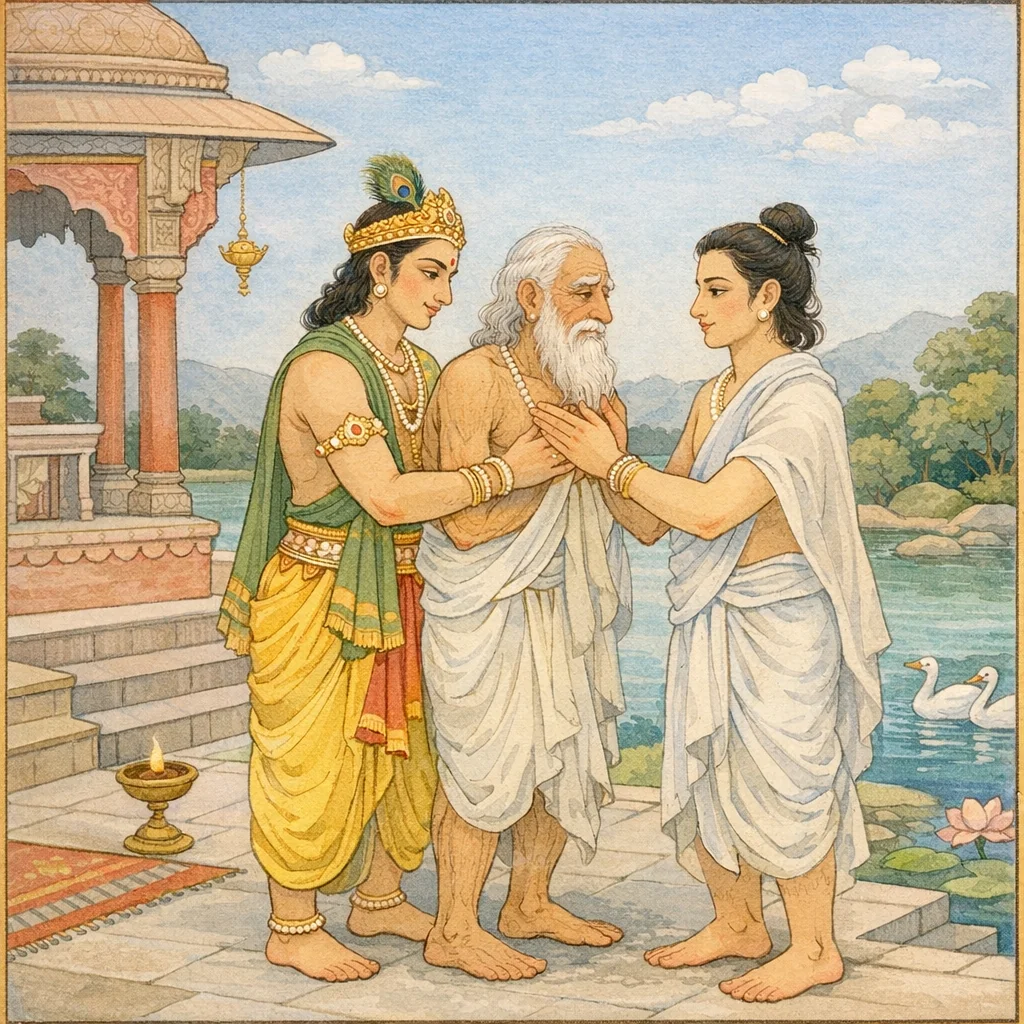
Parāśara, teaching Maitreya, praises a wondrous trait of King Śāṃtanu: by the touch of his two hands, the aged become youthful, and those touched attain an exalted peace (agrayā śānti). The episode teaches that Purāṇic royal greatness is measured not merely by conquest but by dharma-filled potency that restores and pacifies. It also explains his name—he is called “Śāṃtanu” because of this pre-eminent deed—linking nāma (name), karma (action), and phala (fruit). Implicitly, such power is situated within Viṣṇu’s sovereignty as Jagat-kāraṇa: extraordinary capacities arise in the Lord’s ordered cosmos, and peace is ultimately a divine bestowal mediated through dharmic agency.
Shlokas
Frequently Asked Questions
Parāśara states he is known as Śāṃtanu because of a pre-eminent deed: his touch grants rejuvenation and confers exalted peace (śānti), making the name an index of his defining action and its beneficent effect.
It models dharma as restorative and pacifying; such royal potency is meaningful within Viṣṇu’s cosmic order, indicating that true kṣātra excellence serves well-being and points back to the Lord as the ultimate source of śānti.