Adhyaya 8
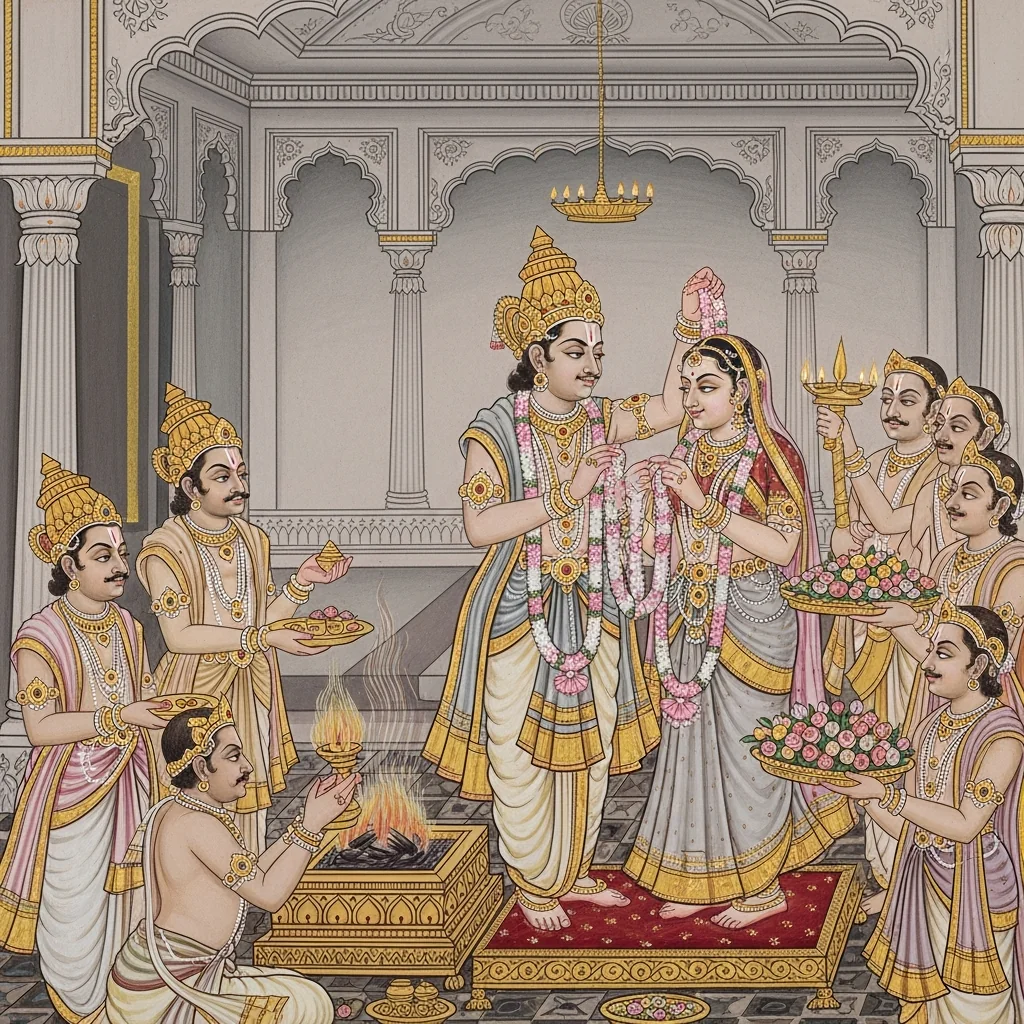
Narrated by Śrīvarāha, this chapter unfolds as a complete ceremonial sequence. Śrīnivāsa summons Lakṣmī and appoints her to oversee the wedding preparations. Personified virtues and Vedic categories—Śruti, Smṛti, Dhṛti, Śānti, Hrī, Kīrti—arrive bearing ritual requisites such as fragrant oils, garments, ornaments, a mirror, musk, and royal insignia, forming a symbolic inventory of dharma-ordered adornment. Lakṣmī performs the anointing and bathing rites with scented waters gathered from celestial sources and sacred tīrthas, then dresses and ornaments the Lord. Śrīnivāsa applies the ūrdhva-puṇḍra and mounts Garuḍa. A joyous public procession proceeds to Nārāyaṇapurī, the city of Ākāśarāja, accompanied by devas, sages, Gandharvas, and Apsarases with auspicious recitations. The marriage with Padmāvatī is completed through the threefold exchange of garlands, entry into the auspicious house, and the standard wedding rites, including the tying of the maṅgalya-sūtra and the lājā-homa. Thereafter, gifts (prābhṛta) are cataloged at length—grains, ghee, dairy, fruits, textiles, gold, gems, livestock, horses, elephants, and attendants—presenting royal generosity as a dharmic offering. Śrīnivāsa grants Ākāśarāja the boon of unwavering devotion and a mind fixed upon the divine feet; the gods return to their abodes, and the Lord remains near Svāmipuṣkariṇī, continuing to receive worship.
Shlokas
No shlokas available for this adhyaya yet.