Adhyaya 7
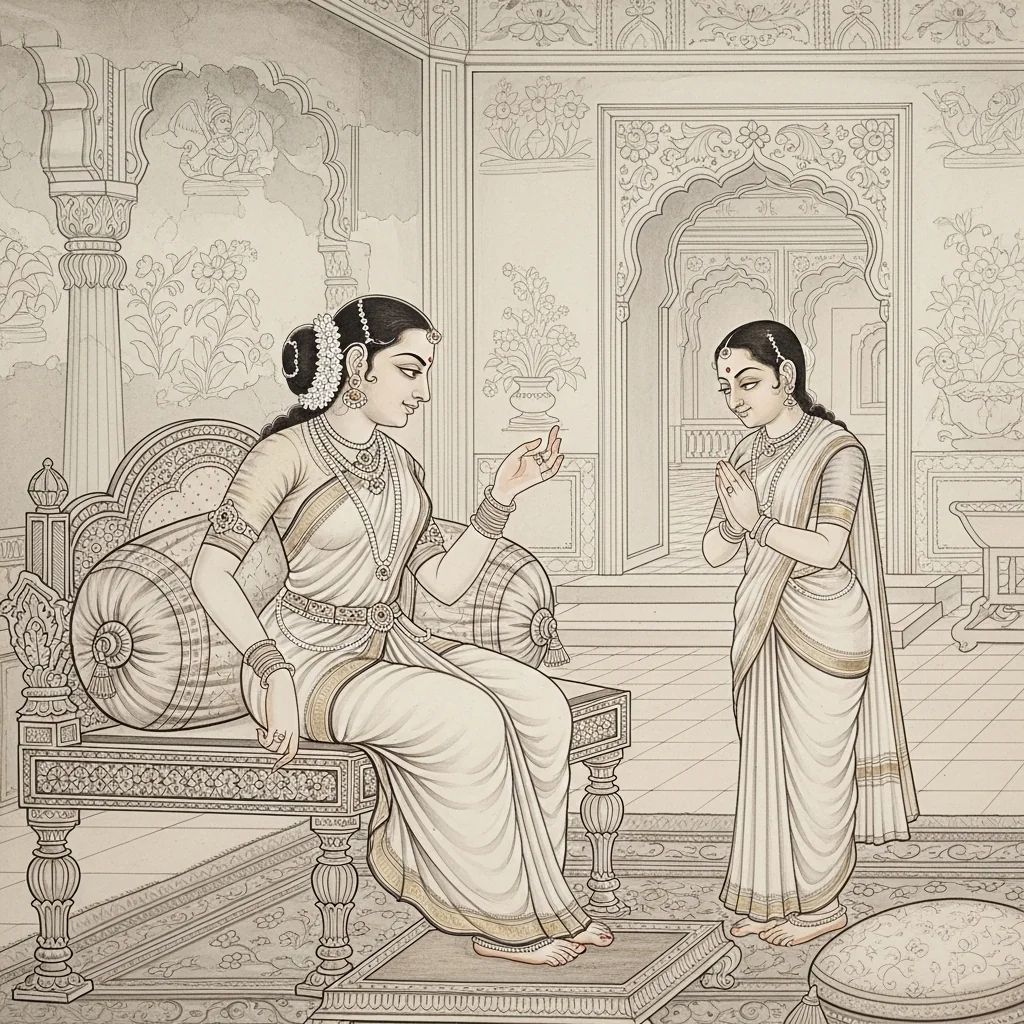
This chapter traces a diplomatic movement from court to temple, formally situating the Padmāvatī–Śrīnivāsa marriage story within ritual and royal administration. It begins with Queen Dharaṇī questioning the identity and purpose of the divine attendant Bakula-mālikā, thereby establishing standards of inquiry and trust. Bakula-mālikā recounts Śrīnivāsa’s course on Veṅkaṭādri—encounters in the forest and the meeting with King Śaṅkha at Svāmitīrtha—where ascetic discipline and the founding of shrines are affirmed as valid forms of devotion. Śrīnivāsa gives route-specific instructions, such as honoring Viṣvaksena and bathing at Svāmipuṣkariṇī, linking sacred geography with authorized practice. The narrative then turns to royal decision: Ākāśarāja consults ministers and the priestly-astrological authority Bṛhaspati, who fixes the wedding time (Uttaraphālgunī; Vaiśākha). A civic-cosmic celebration follows—Viśvakarmā adorns the city, Indra sends a rain of flowers, and other deities contribute—portraying auspicious order as a shared ritual ecology. Finally, Bakula-mālikā and the parrot-messenger (śuka) return to Śrīnivāsa with Padmāvatī’s petition. Śrīnivāsa signals acceptance by sending a garland, and preparations begin, along with royal hospitality protocols for the Lord’s arrival.
Shlokas
No shlokas available for this adhyaya yet.