Adhyaya 40
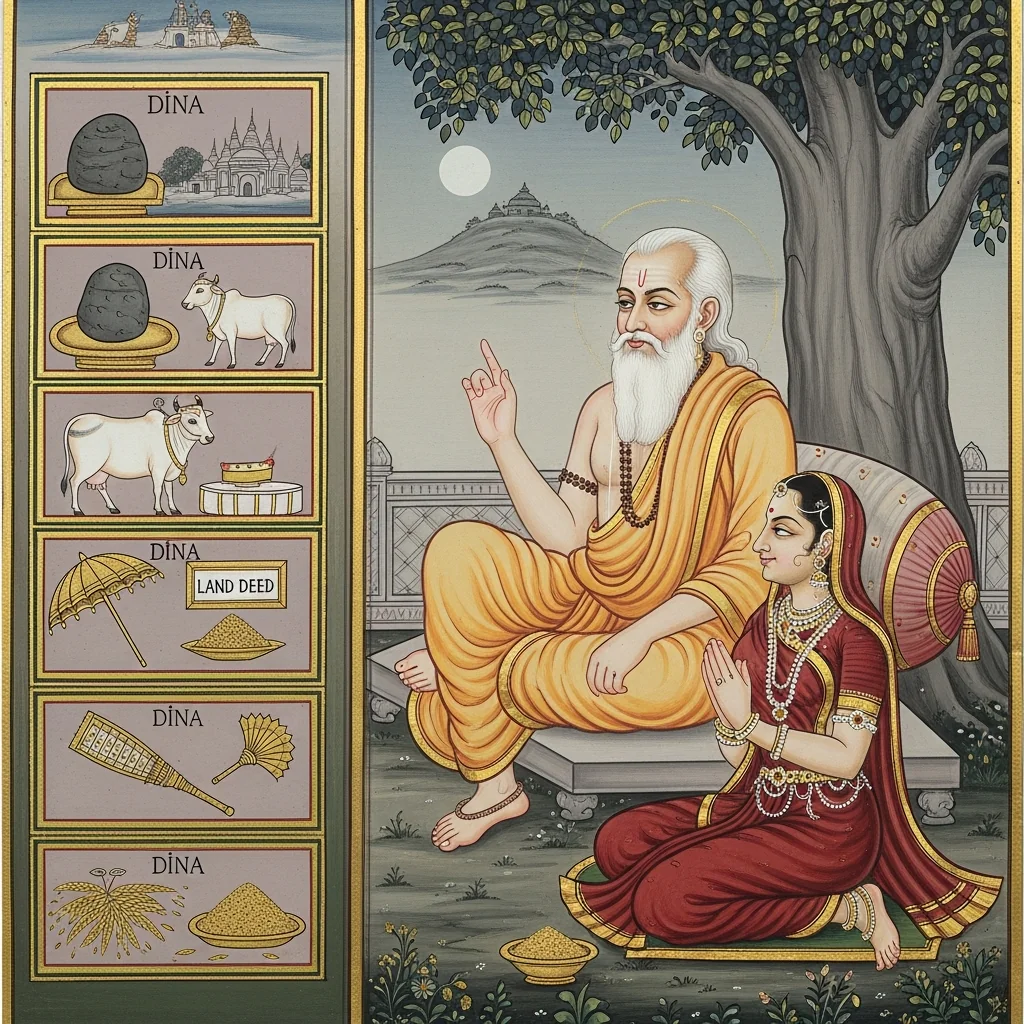
This chapter presents ritual and ethical instruction through dialogue. Sūta describes how Añjanā, accompanied by her husband, meets Brahmā and other deities; with their assent, Vyāsa is authorized as the chief teacher. Vyāsa addresses Añjanā for the “benefit of all,” connecting Matanga Ṛṣi’s earlier words to her destiny: her son will be born only after intense austerities at Veṅkaṭa. The chapter then lays down a kāla-nirṇaya (determination of the proper time) for bathing in the Ākāśagaṅgā/Veṅkaṭa tīrtha complex. On Añjanā’s “manifest day” (pratyakṣa-divasa), the Gaṅgā and other tīrthas are said to converge, with special emphasis on the sanctity of Swāmi Puṣkariṇī. A particular calendrical conjunction is noted (full-moon day, linked with Meṣa and Pūṣan, with a nakṣatra reference), and its merit is likened to bathing for a long period at all Gaṅgā-adjacent holy places. The discourse turns to prescribed dāna at Veṅkaṭādri: gifts of food and cloth are praised, and śrāddha for one’s father is singled out as especially weighty. A graded catalogue of gifts—gold, śālagrāma, cows, land, giving a maiden in marriage, water-shelter, sesame, grain, perfumes and flowers, umbrellas and fans, betel, and more—is mapped to rising fruits: heavenly enjoyment, sovereignty, brahminhood with scriptural mastery, and finally liberation through the grace of Cakrapāṇi (Viṣṇu). The closing phalaśruti declares that regular hearing or recitation purifies sins, grants Viṣṇuloka, and extends benefit to one’s descendants.
Shlokas
No shlokas available for this adhyaya yet.