Adhyaya 4
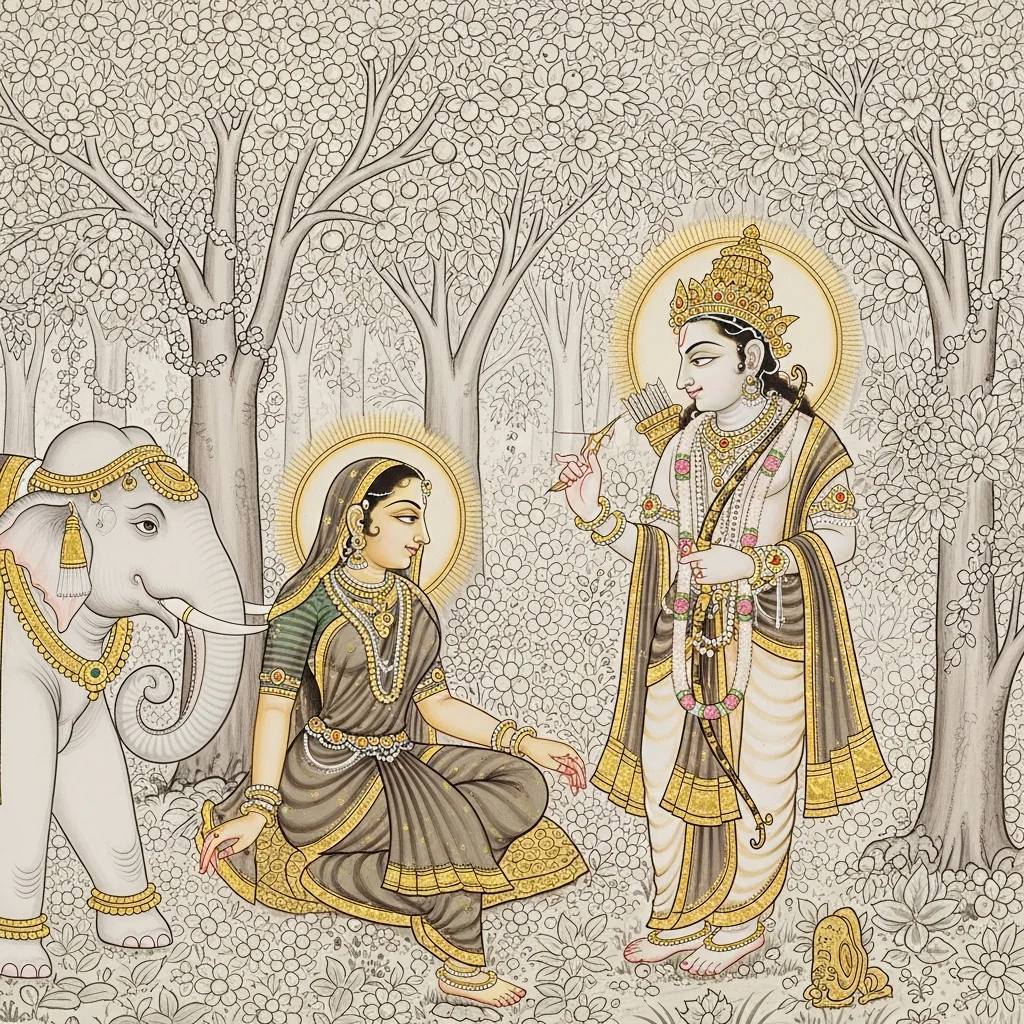
Chapter 4 unfolds through layered narration: Sūta reports Dharaṇī’s question, and Varāha replies by recounting how Ākāśarāja named the Earth-born daughter “Padminī.” The scene then shifts to Padmāvatī’s garden-forest dwelling, where the sage Nārada arrives unexpectedly. At Padmāvatī’s request, Nārada gives a detailed catalogue of auspicious bodily marks (lakṣaṇa) and interprets her form as “Viṣṇu-yogya” (suited for Viṣṇu), likening her to Lakṣmī. After Nārada vanishes, Padminī/Padmāvatī and her companions enter the Puṣpāṭavī to gather spring flowers; many blossoms are named, and the forest is framed as a sacred, ritual-aesthetic space. A threatening elephant appears and fear rises, but the narrative turns with the arrival of a radiant horseman bearing a bow—Śrīnivāsa, the dweller of Veṅkaṭādri—who, in this local idiom, identifies himself as “Kṛṣṇa” of the Sūrya lineage. The women deny seeing the sought ‘īhāmṛga,’ challenge his entry into the protected royal forest, and question his identity. He says he came hunting, then admits he was drawn to Padmāvatī at first sight; warned of royal punishment, he departs swiftly toward the mountain with his attendants.
Shlokas
No shlokas available for this adhyaya yet.