Adhyaya 38
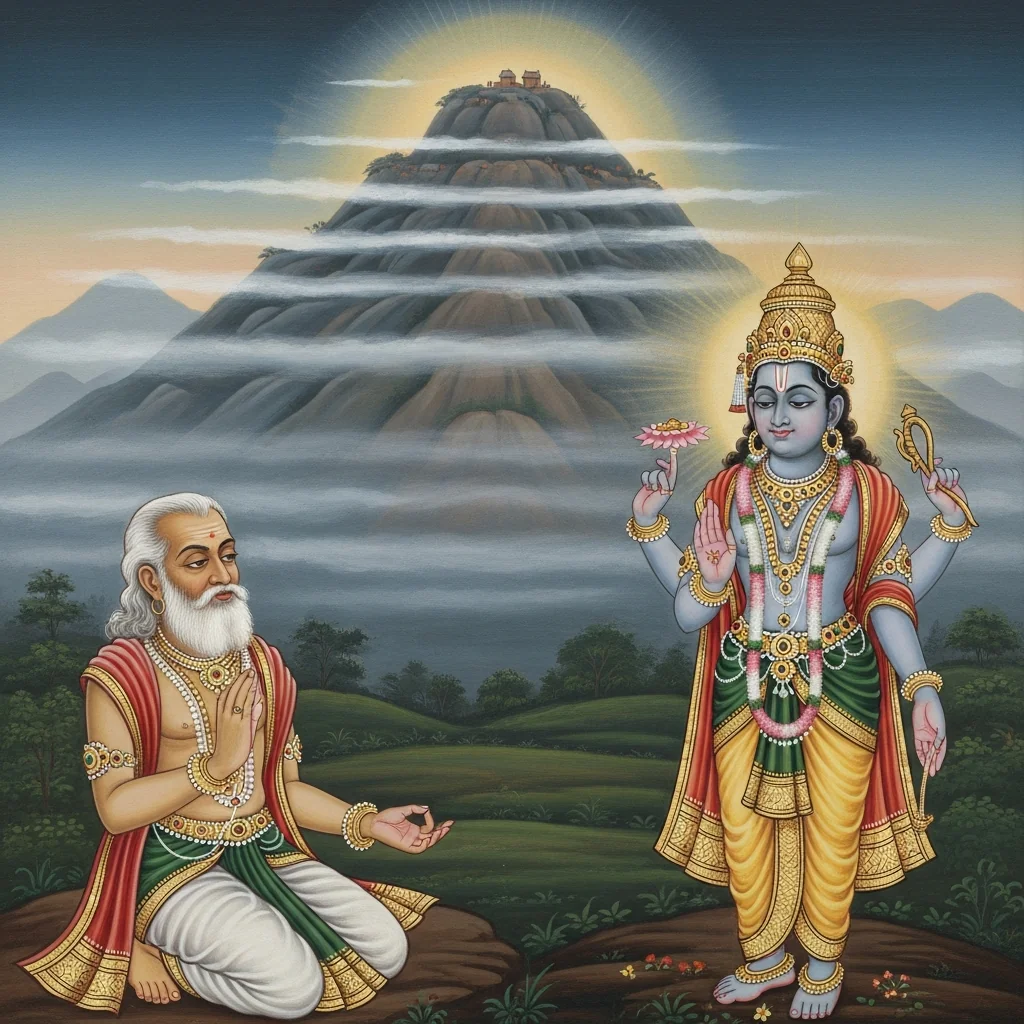
Bharadvāja relates that devotees absorbed in worship of Jagannātha spend their days in hymns and rites; on the third night they behold, in an auspicious dream, four-armed Puruṣottama bearing conch, discus, and mace. After ritual bathing in Svāmipuṣkariṇī and completing morning observances, they resume worship, whereupon an extraordinary radiance appears—like a cosmic concentration of light. A formidable theophany is perceived, and Brahmā with other deities arrives to praise Nārāyaṇa’s transcendence; out of fear they request a śānta, peaceful form. The Lord assents, reappearing in a gentle, pleasing form upon a jeweled vimāna, and offers boons to Agastya. Agastya declares his austerities fulfilled and asks for unwavering devotion, and that the river Suvarṇamukharī near the Lord’s mountain become a sin-destroying tīrtha, granting bhukti and mukti to those who bathe and then behold the Lord at Veṅkaṭa. Śrī Bhagavān grants this, proclaims His permanent presence on the Vaikuṇṭha-named hill at Agastya’s request, and enumerates merits for pilgrims and even for those who remember Him from anywhere. He then bestows upon King Śaṅkha an exalted posthumous destiny and withdraws. Bharadvāja concludes with a phalaśruti praising Veṅkaṭādri, Svāmipuṣkariṇī, and the salvific power of hearing and remembering this māhātmya.
Shlokas
No shlokas available for this adhyaya yet.