Adhyaya 36
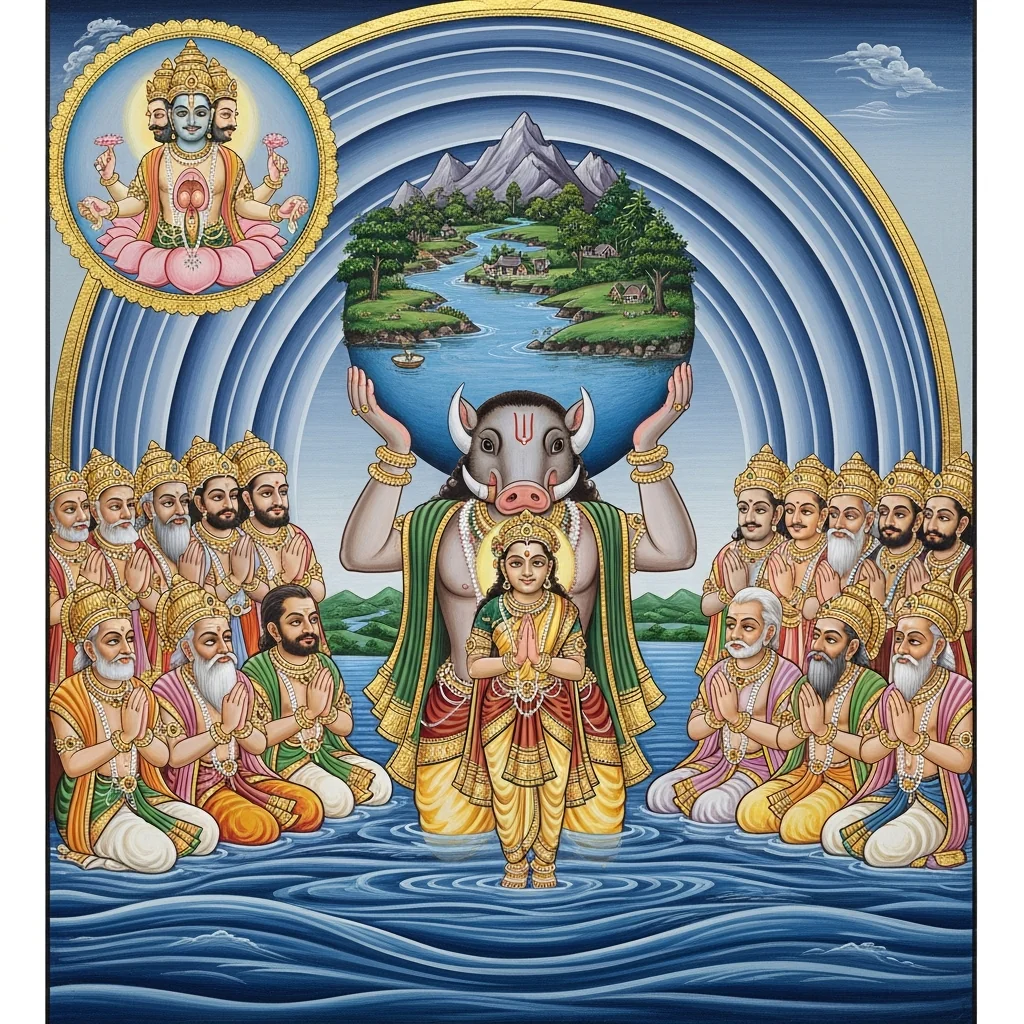
This adhyāya unfolds as a theological dialogue in which Bharadvāja recounts how Viṣṇu, taking the Varāha (Boar) form, recovers and raises the Earth (Vasumatī) after the cosmic inundation. Realizing that without Earth no being can bear the burden of creatures, the Lord finds her submerged in the nether realms and assumes a yajña-maya Varāha body, with Vedic meters, sacred fires, and ritual implements symbolically mapped upon His limbs. Varāha plunges into the waters, dispels darkness, subdues the abyss, and lifts Earth upon His tusk amid the sages’ praises; the ocean’s tumult is portrayed as auspicious sound and offering-like imagery. Arjuna then asks how Earth endures during pralaya and what supports her beneath the seven pātālas, and Bharadvāja explains Purāṇic measures of time (nāḍikā, day, month, year), the yuga–manvantara framework, and the succession of Manus in the Śvetavarāha kalpa. The chapter further describes pralaya: drought and heat, then years of rain and a world-flood; Brahmā rests in yoganidrā upon the lotus from Viṣṇu’s navel, and creation begins anew by divine command. Finally, it localizes the avatāra memory: in this kalpa Viṣṇu appeared as the White Varāha, later came to Veṅkaṭācala and dwelt near Svāmipuṣkariṇī; at Brahmā’s request He resumes a divine form and becomes difficult to perceive directly, prompting Arjuna to ask how humans may reach Him through devotion and the hearing of sacred narration.
Shlokas
No shlokas available for this adhyaya yet.