Adhyaya 34
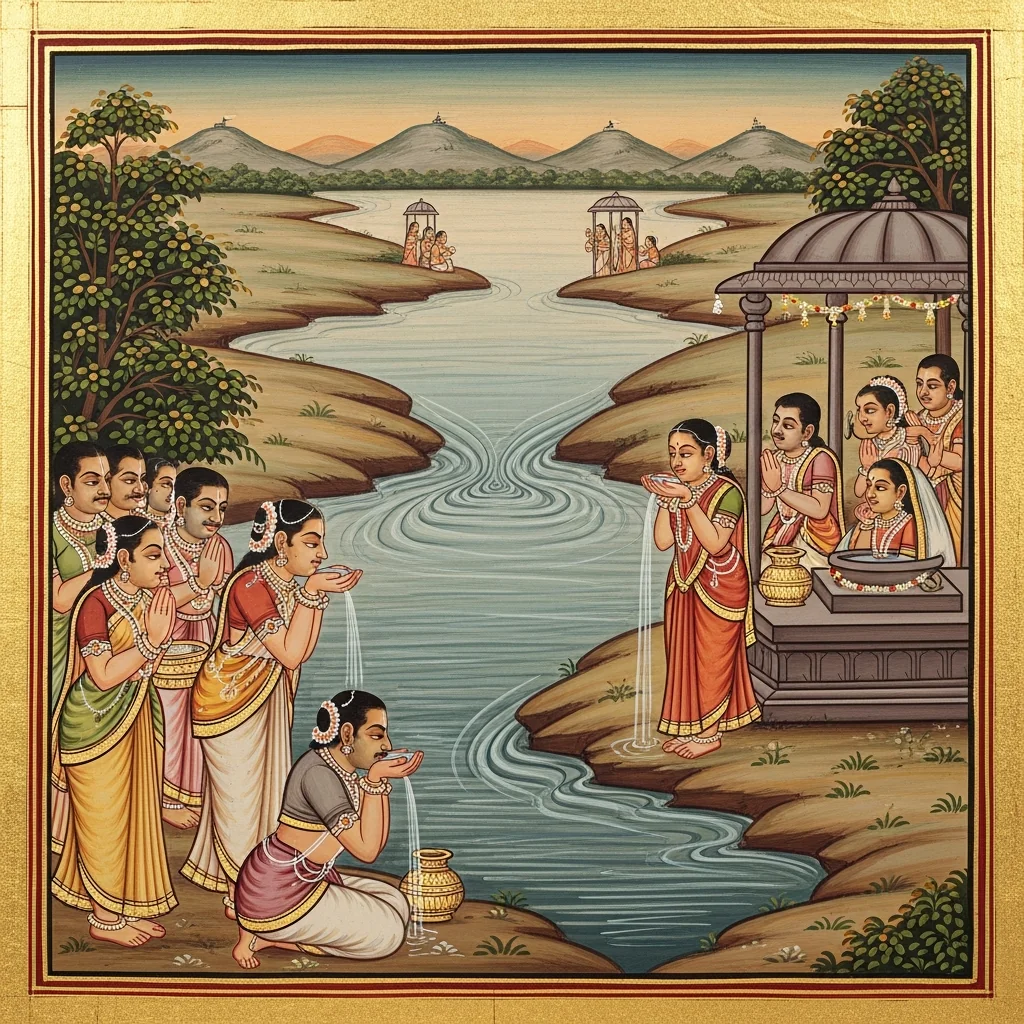
The chapter unfolds as a question-and-answer guide to sacred geography and rite. Arjuna, eager to hear more, asks the sage to list the tīrthas along the river, the confluences (saṅgama), and the particular merits of bathing and worship at each. Bharadvāja replies in sequence, beginning with Agastya Tīrtha, said to purify even grave wrongdoing, and then describing Agastyeśvara, the liṅga installed by Ṛṣi Agastya; worship after river-bathing is praised as yielding sacrifice-like merit. A calendrical note marks an auspicious bathing season connected with the Sun’s entry into Makara, and Agastyeśa-darśana is enjoined at that time. The narrative then identifies the Deva–Ṛṣi–Pitṛ triad of tīrthas, where proper bathing and tarpaṇa are declared to remove the “three debts” (ṛṇa-traya). Next, the river’s movements and meeting points are mapped: Suvarṇamukharī joins Veṇā, and Suvarṇamukharī joins Vyāghrapadā, each saṅgama extolled as a merit-amplifying node. Finally, Śaṅkha Tīrtha and Śaṅkheśa (installed by the sage Śaṅkha) are introduced, emphasizing the combined efficacy of darśana, snāna, and pāna (ritual drinking) as a devotional itinerary toward the Vṛṣabhācala region.
Shlokas
No shlokas available for this adhyaya yet.