Adhyaya 33
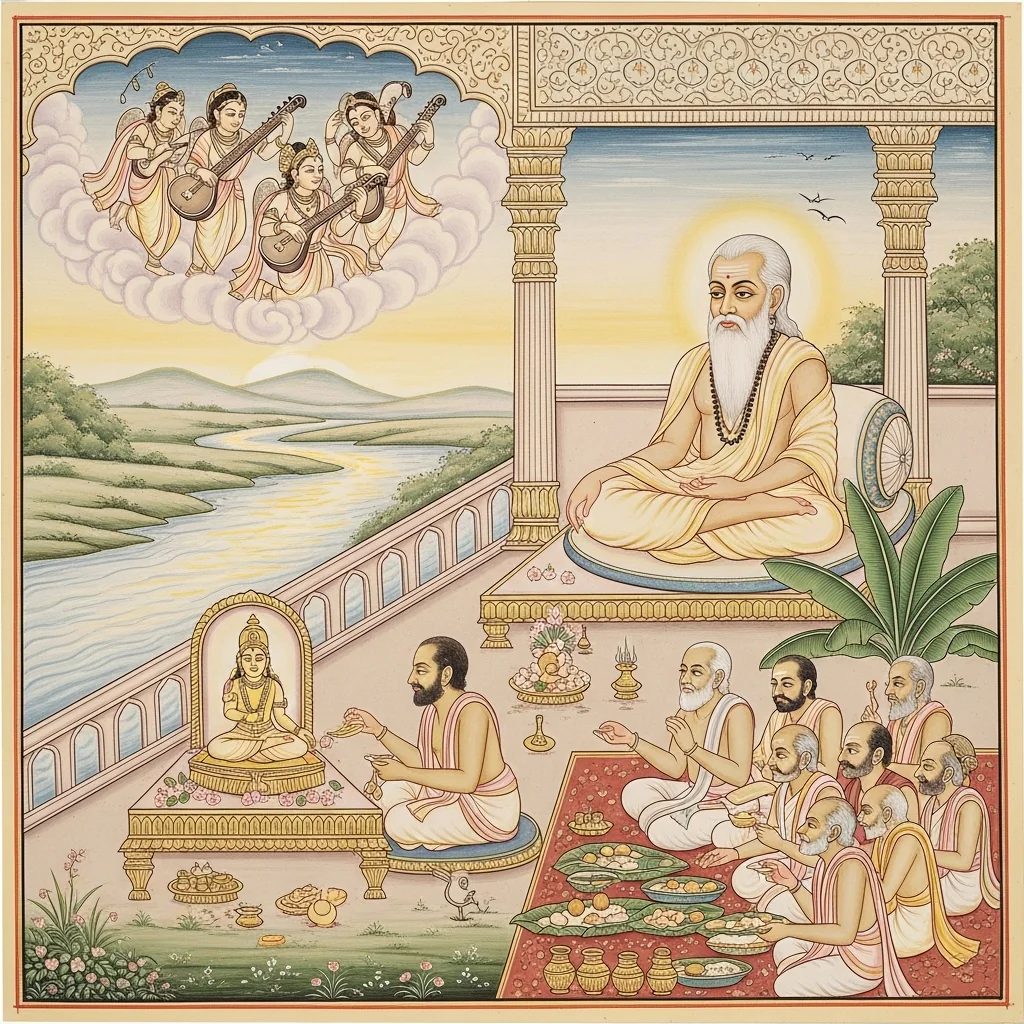
Chapter 33 recounts the manifestation, naming, and ritual-theological standing of the Suvarṇamukharī River within the Veṅkaṭācalamāhātmya. Bharadvāja describes how the devas led by Śakra, along with assemblies of sages, siddhas, cāraṇas, and gandharvas, extol the river as it accompanies Agastya. Vāyu then explains its origin and renown: brought down to earth by Agastya, it is destined to be praised as “Suvarṇamukharī,” foremost among rivers and worthy of devoted service. An extended māhātmya follows: remembrance (smaraṇa) and sacred bathing (snāna) destroy sin; immersion of bones aids ascent; and rites performed on its banks gain multiplied efficacy. A dense phalaśruti lists benefits for health, removal of obstacles, ancestral rites, and calendrical observances such as eclipses and saṅkrānti. Finally, an annual vow is prescribed for Agastya’s rising day—crafting and gifting a golden image of Agastya with ritual honor, feeding brāhmaṇas, and dedicating the merit—promising release from accumulated faults and enduring spiritual fruit.
Shlokas
No shlokas available for this adhyaya yet.