Adhyaya 32
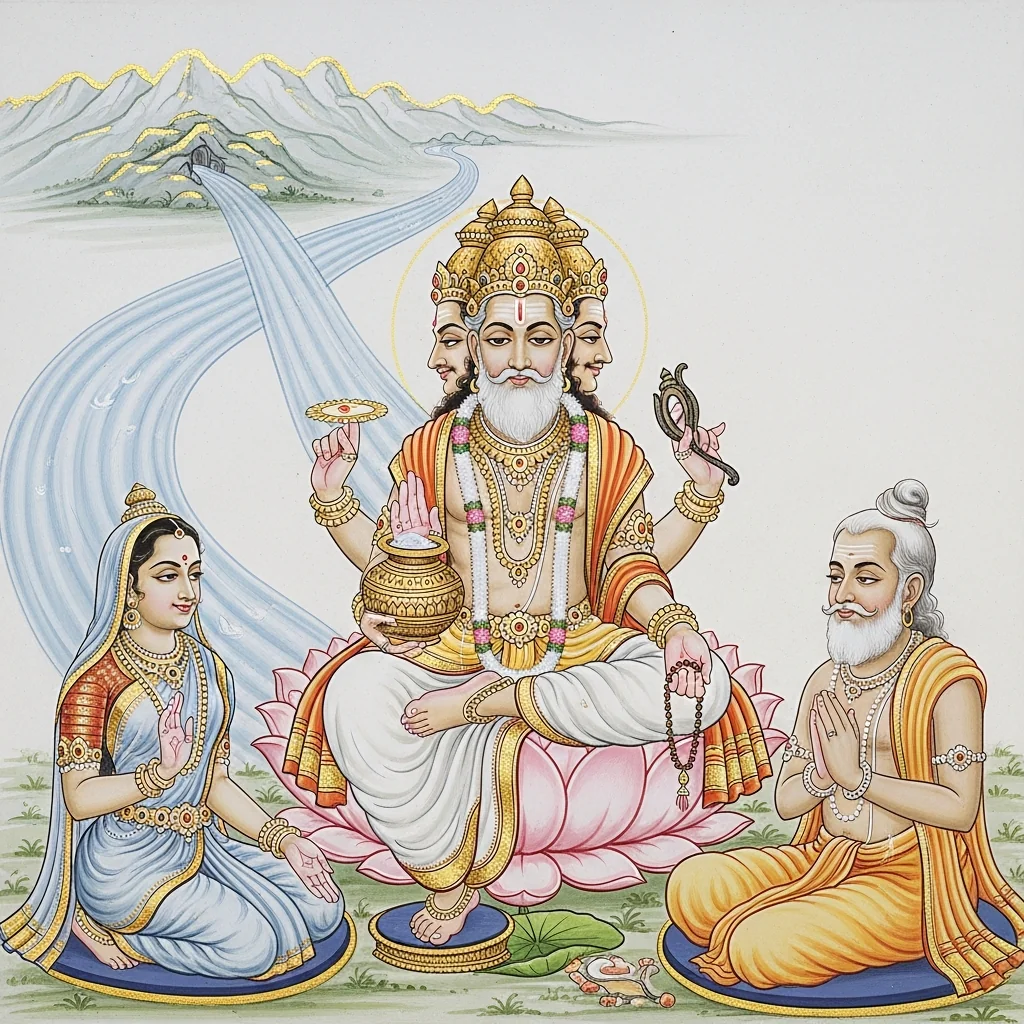
This adhyāya offers an etiological theological account of how a sacred river is established in a land without rivers for the welfare of all beings. Bharadvāja relates that Agastya, after completing his morning rites and worship, hears an unseen divine proclamation from the sky (ākāśavāṇī) declaring that a riverless country lacks ritual and cultural radiance, and urging him to set in motion a beneficent river that dispels fear born of deep moral affliction. Agastya consults the assembled sages, who praise his earlier extraordinary deeds and request that he bring forth a great river so that sacred bathing and purification may be possible. He then undertakes intense tapas, strengthening his disciplines through harsh seasons; the power of his austerity disturbs the cosmos and fills beings with dread. The devas appeal to Brahmā, who appears at Agastya’s hermitage, grants a boon, and hears his petition. Agastya asks that the land be sanctified and protected by a mighty river. Brahmā summons Gaṅgā and instructs her to descend by a partial emanation (svāṃśa), becoming a river that purifies the people and is continually served by sages and divine beings. Gaṅgā reveals a radiant form born of her own portion and promises fulfillment; Agastya indicates the course, and the chapter concludes with him leading this river-form from the mountain heights along the desired path, establishing the sacred foundation of the Suvarṇamukharī.
Shlokas
No shlokas available for this adhyaya yet.