Adhyaya 31
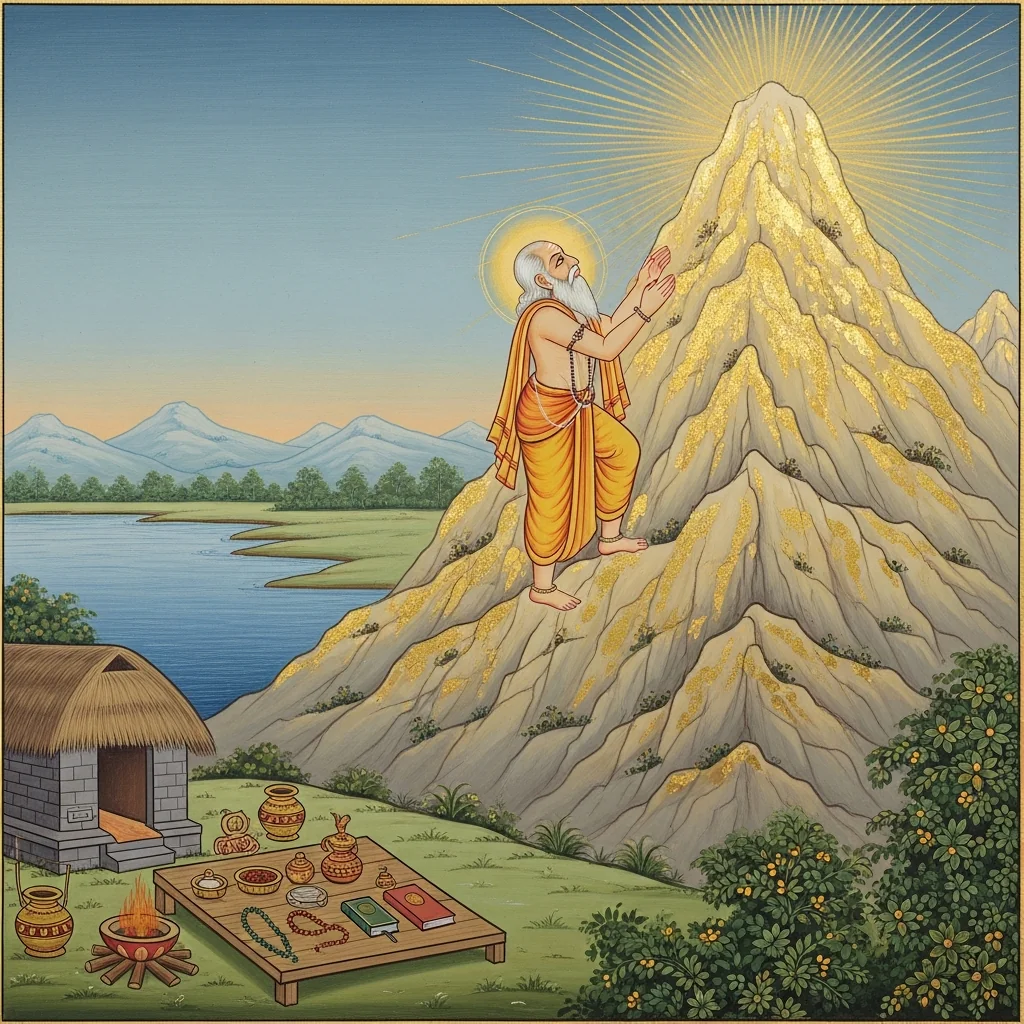
The chapter begins in the Purāṇic frame: after completing his evening observances, Arjuna reverently approaches the sage Bhāradvāja and asks about the origin of a great river and the merits gained by bathing and giving gifts there. Bhāradvāja praises Arjuna’s virtues and lineage and introduces a purifying “divine account” which, when heard with attentive mind, is said to ease the suffering born of wrongdoing. The narration then turns to a cosmological and ritual episode connected with Śaṅkara’s (Mahādeva’s) marriage. As beings and gods gather to celebrate, the earth becomes overburdened and unstable. Perceiving the imbalance, Mahādeva commissions Agastya—born of divine potency and devoted to protecting the world—to journey south and restore equilibrium. Agastya crosses the Vindhya range, the earth regains balance, and the celestials praise him. Agastya then beholds an exalted mountain, radiant like a fashioned sun, ascends it, and establishes an āśrama near a beautiful lake on its northern bank. There he worships the ancestors, the gods, the sages, and the Vāstu-deities according to rule. Thus the chapter weaves together dialogic inquiry, sacred-geographic origins, and an ethical model of ascetic action that stabilizes the world.
Shlokas
No shlokas available for this adhyaya yet.