Adhyaya 30
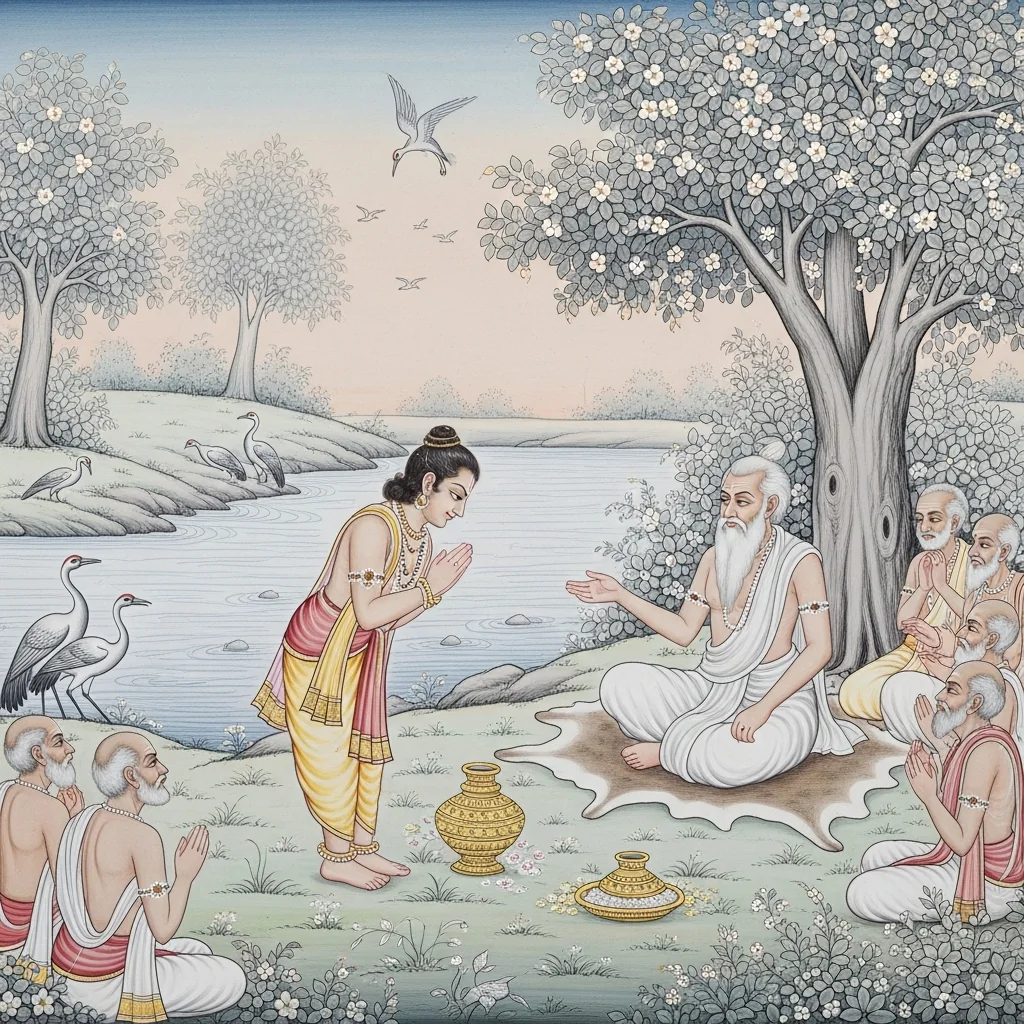
In Sūta’s narrative frame, this chapter offers a lyrical, topographical praise of the Suvarṇamukharī river—its cooling breezes, rippling waves, lotuses, waterfowl, and the sanctity of a tīrtha. The river is exalted as a holy power that nourishes fields and sustains ascetic settlements, its natural beauty signaling spiritual potency. Arjuna then beholds the famed mountain linked with Kālahastī, bathes in the river, and performs darśana and worship of Kālahastīśvara (Śiva), feeling the rite brought to completion. Traveling onward, he observes siddhas, gandharvas, yogins, tranquil hermitages, and disciplined muni communities, revealing an ethical ecology where landscape and spiritual practice reinforce one another. The narrative turns to Arjuna’s approach to Bharadvāja’s āśrama, richly portrayed with groves, flowering trees, birds, and serene lakes. Bharadvāja receives him with formal hospitality (arghya, seating, inquiry into wellbeing), and the wish-fulfilling cow is recalled to provide food. The chapter ends with Arjuna’s curiosity about the river’s wondrous origin and power, setting up the next explanation.
Shlokas
No shlokas available for this adhyaya yet.