Adhyaya 3
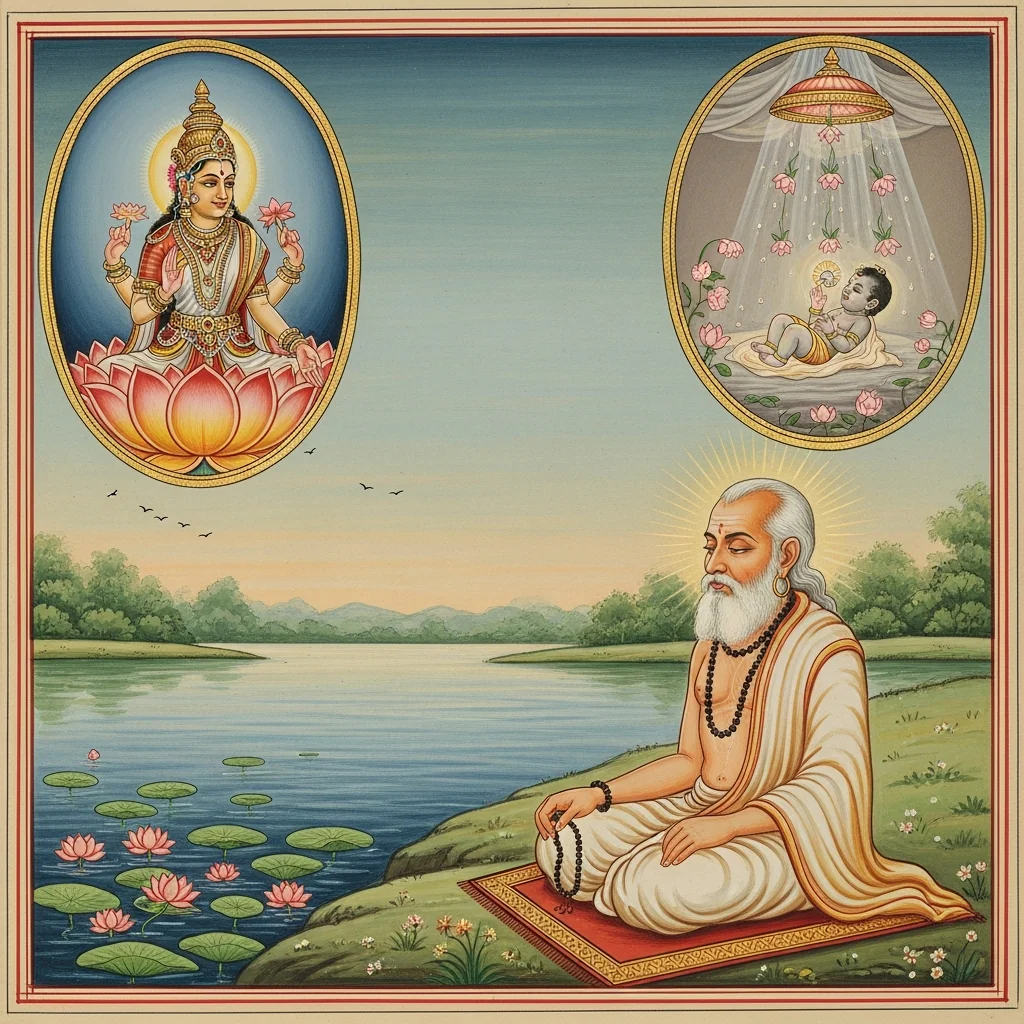
Chapter 3 is framed as a dialogue in which Śrīvarāha recounts to Dharaṇī (Earth) an ancient episode. First, Śrīnिवāsa/Harī is described as dwelling near Svāmipuṣkariṇī on Veṅkaṭācala within a sublime vimāna—remaining unseen to mortals until the end of an aeon, yet, by divine ordinance, becoming the rightful object of worship. Dharaṇī raises a ritual-theological doubt: if the Lord is “invisible” to human beings, how can public worship endure? Śrīvarāha answers by telling of the sage Agastya’s twelve-year devotion (ārādhana) and his petition that the Lord become visible to all embodied beings. The Lord grants this universal visibility while preserving the vimāna’s exceptional sanctity. The narrative then turns to dynastic origins: the rise of King Mitravarmā and the lineage leading to Ākāśarāja. In an etiological episode, Padmāvatī is found arising from the earth during ritual ploughing, accepted as a daughter, and entrusted to Queen Dharaṇī; thereafter Dharaṇī conceives and gives birth to Vasudāna amid auspicious signs, and his training in weapons and disciplines is summarized to establish royal virtue, legitimacy, and the region’s sacred history.
Shlokas
No shlokas available for this adhyaya yet.