Adhyaya 29
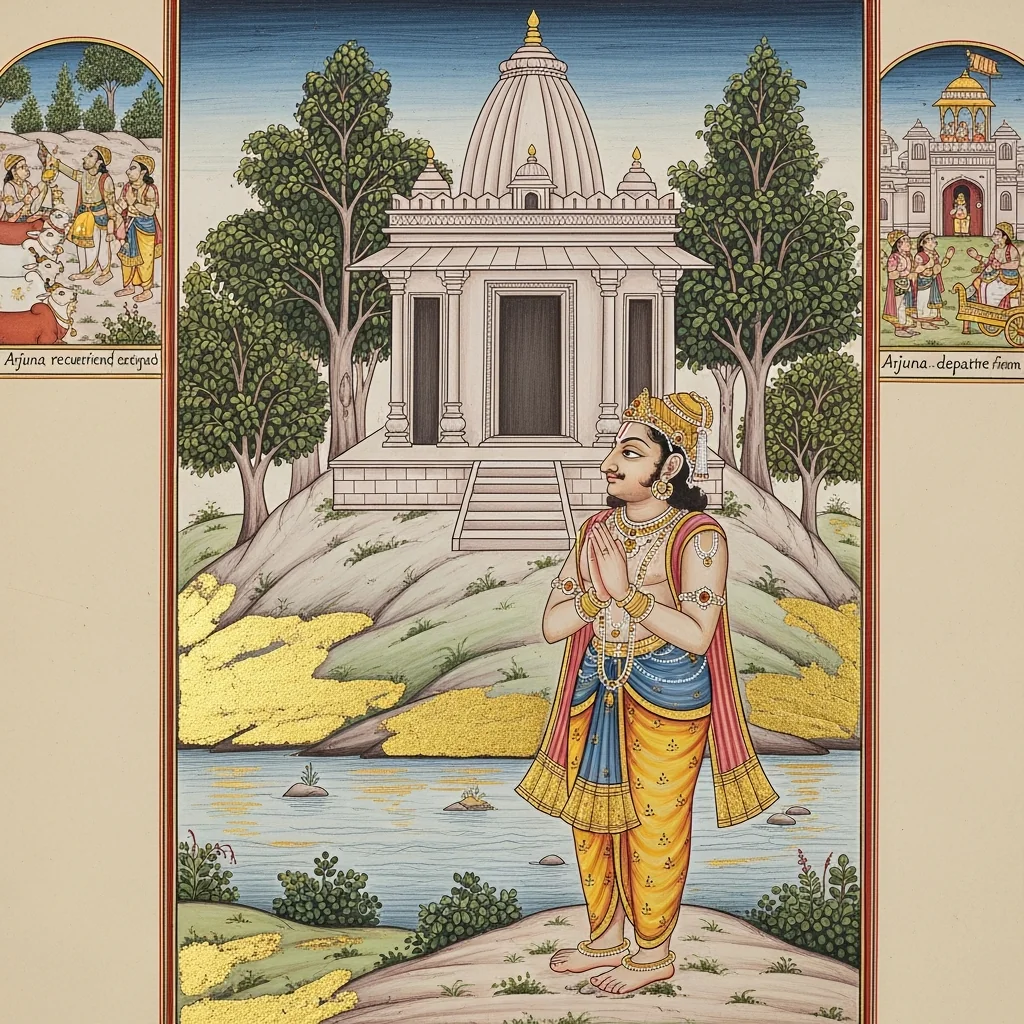
The chapter begins with sages asking for fuller details on the origin and sacred efficacy of the Suvarṇamukharī river and its connected tīrtha-complex. After invocatory salutations, Sūta relates an account attributed to Bharadvāja and turns to an epic-linked narrative: the Pāṇḍavas’ life at Indraprastha and the household vow-arrangement concerning Draupadī. A condition of the vow is stated: if any brother encounters Draupadī in another brother’s residence, he must undertake a year-long pilgrimage. A civic incident follows—Arjuna restores a stolen cow to a brāhmaṇa, but must enter the weapons-house where Draupadī and Yudhiṣṭhira are present, thereby incurring the vow’s consequence. A dharma debate ensues: Yudhiṣṭhira deems the act ethically defensible as protection of a brāhmaṇa and property, while Arjuna insists that vow-integrity must be upheld lest honor and moral order collapse. With royal consent, Arjuna departs with attendants and resources, visits major tīrthas—Gaṅgā, Prayāga, Kāśī, the southern ocean, Purī/Puruṣottama, Siṃhācala, Godāvarī, and other rivers—and finally reaches Śrīparvata and Veṅkaṭācala. There he worships Hari on the summit and beholds the Suvarṇamukharī, said to have been brought by the pot-born sage Agastya, grounding the river’s sanctity in authoritative ascetic power.
Shlokas
No shlokas available for this adhyaya yet.