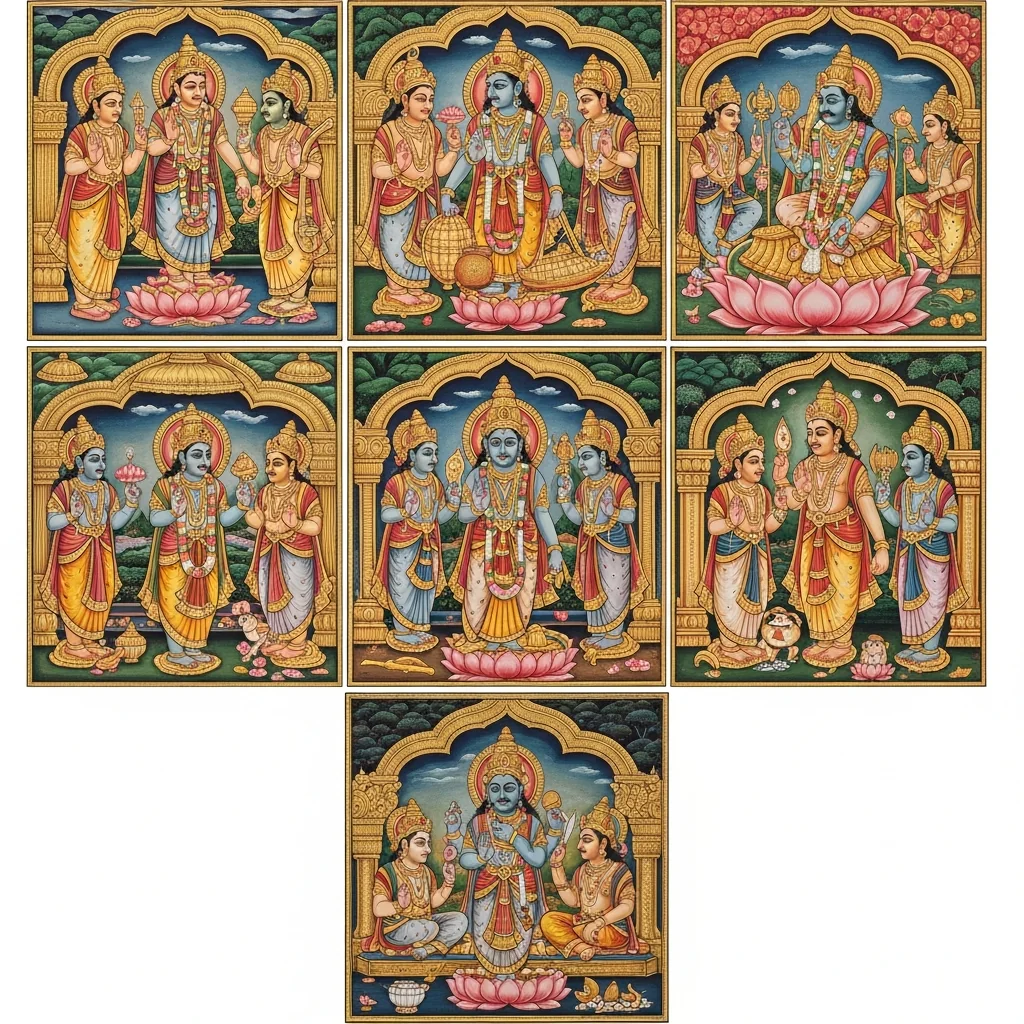
Adhyaya 28
Adhyāya 28 unfolds as a multi-voiced theological discourse on the sanctity of Kaṭāhatīrtha at Śrīveṅkaṭācala. The ṛṣis seek instruction on its renown across the three worlds; Nārada is invoked as an authority, and it is affirmed that even Mahādeva knows its full grandeur. Sacred rivers and famed tīrthas—such as the Gaṅgā—are portrayed as coming to Kaṭāhatīrtha for their own purification, establishing its supreme rank among holy waters. A stern warning follows: the praise of this tīrtha must not be dismissed as mere arthavāda (empty eulogy), for skepticism is deemed spiritually perilous. The chapter then teaches the proper drinking rite (pāna-krama): one should drink while reciting the aṣṭākṣara mantra or the names of Viṣṇu (including triadic naming); if one drinks without mantra, a penitential utterance is prescribed. The teaching culminates in an exemplum. The brahmin Keśava, ruined by vice and violence, incurs brahmahatyā and is hounded by a personified sin; guided by Bharadvāja, he undertakes a pilgrimage sequence—bathing at Svāmipuṣkariṇī, worship of Varāha, darśana of Śrīnिवāsa/Veṅkaṭeśa, and drinking at Kaṭāhatīrtha—by which the brahmahatyā dissolves, confirmed by Veṅkaṭeśa’s divine word. The account closes as an itihāsa-grounded narration faithfully transmitted.
Shlokas
No shlokas available for this adhyaya yet.