Adhyaya 27
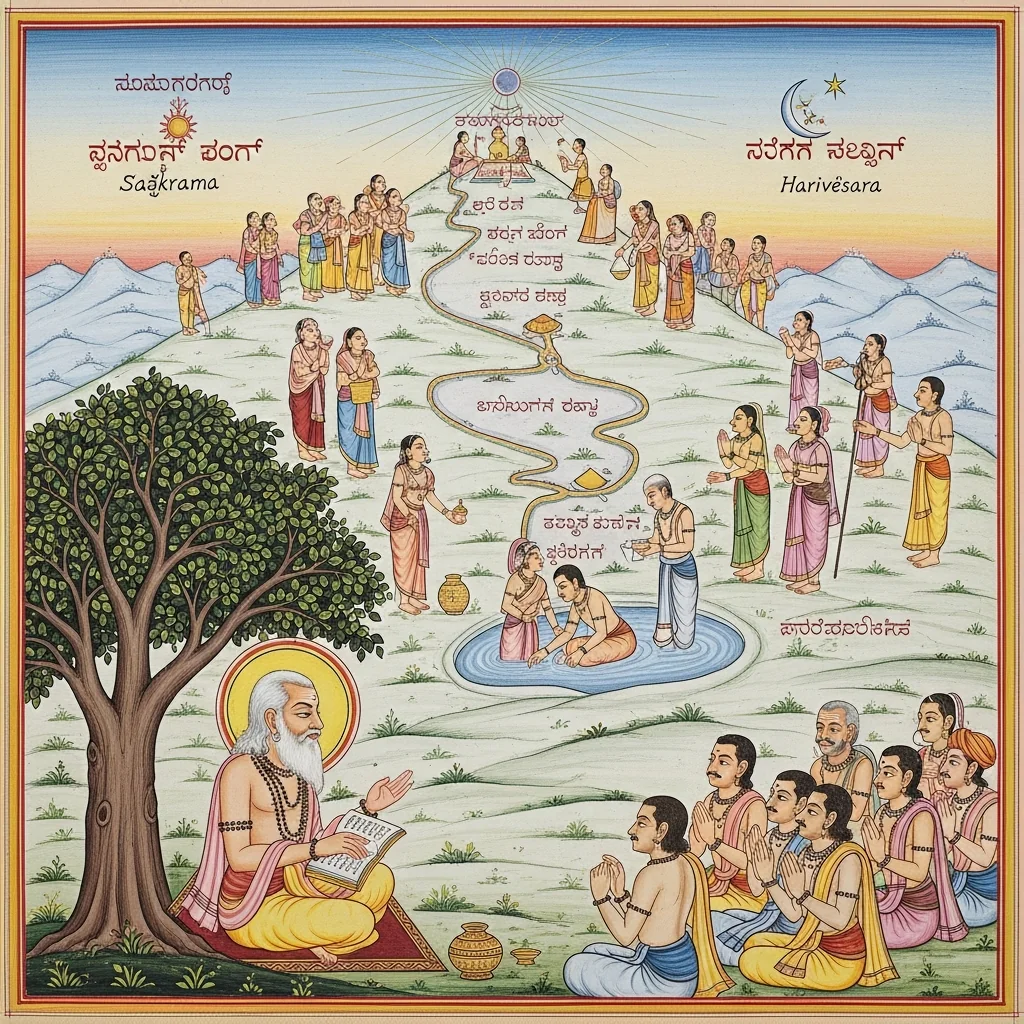
Chapter 27 begins with the sages questioning Sūta about Veṅkaṭādri’s standing as a “mountain of great merit,” asking for a quantified hierarchy of its tīrthas: the total number, the principal ones, and those that bestow dharma-inclination, knowledge, devotion with detachment (bhakti–vairāgya), and liberation (mokṣa). Sūta replies with a structured enumeration—an immense total, a smaller set marked as “principal,” and further classes defined by their ethical and salvific fruits. The chapter then presents a practical pilgrimage calendar for liberation-linked tīrthas on the summit of Veṅkaṭācala, naming Svāmipuṣkariṇī, Viyadgaṅgā, Pāpavināśana, Pāṇḍutīrtha, Kumāradhārikā, and Tuṃboṣṭīrtha. It specifies auspicious bathing times keyed to months, yogas, and the Sun’s position (e.g., Kumbha-māsa with Maghā-yoga; Ravi in Mīna; Meṣa-saṅkrama with Citrā; Ravi in Vṛṣabha with Dvādaśī/Harivāsara; Dhanuḥ-māsa Dvādaśī at dawn), each paired with promised results—royal-sacrifice equivalences, removal of obstacles, sin-destruction, and mokṣa—and with dāna norms such as gifts of gold, cows, Śālagrāma-śilā, and giving according to one’s capacity. Finally, it shifts from place-bound rite to portable practice, extolling attentive listening to Viṣṇu’s purāṇic narrative as supremely efficacious in Kali-yuga, even equating brief focused hearing with the aggregate fruits of sacrifices and donations, and joining it with nāma-saṅkīrtana. It also lays down ethical guidelines for speaker and audience—honor due to the reciter, proper venues, disciplined listening manners, and adverse consequences for disrespect or inattention—before the sages honor Sūta and rejoice in the teaching received.
Shlokas
No shlokas available for this adhyaya yet.