Adhyaya 23
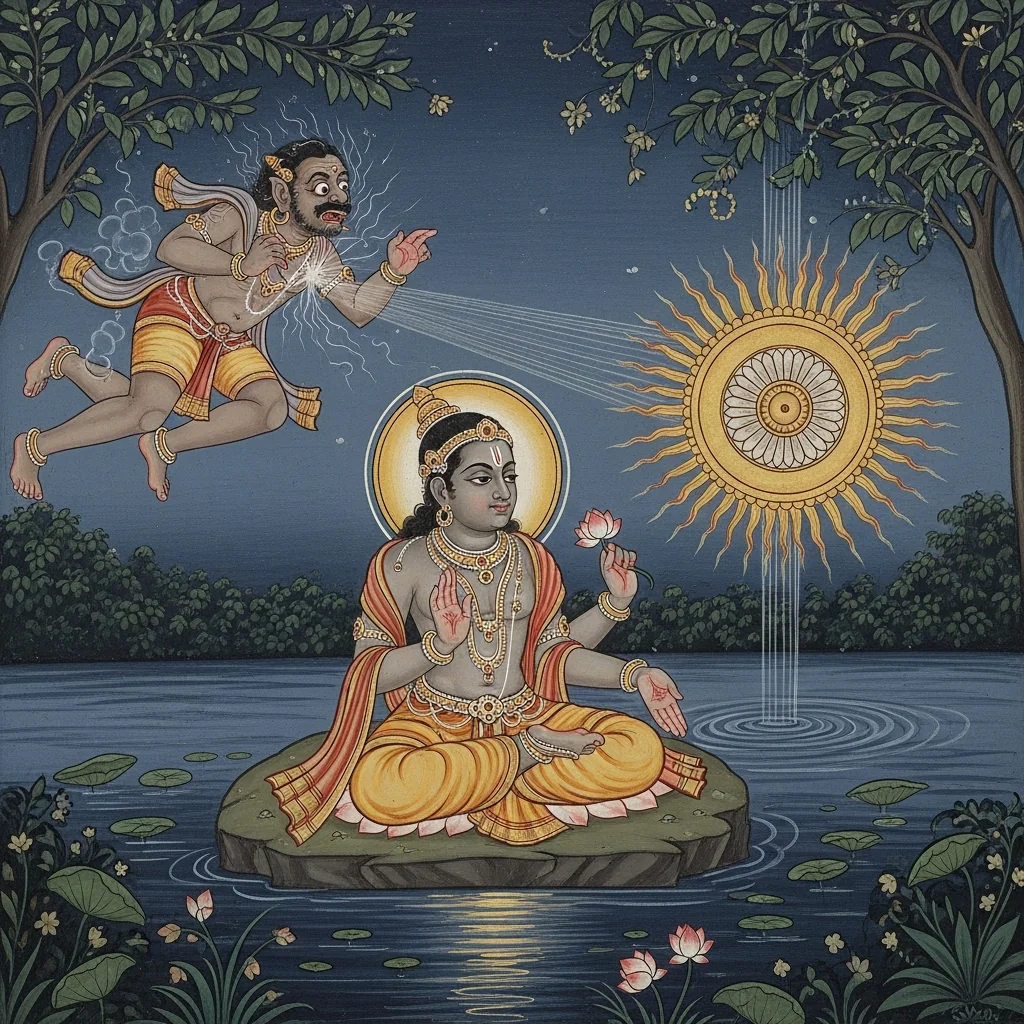
Sūta addresses the sages and proclaims the māhātmya of Cakratīrtha as a teaching centered on purification. Hearing its greatness is said to remove moral taints and turn the devotee’s mind toward Viṣṇu’s abode. The narrative introduces Padmanābha, a disciplined brāhmaṇa-ascetic, who performs long tapas on the bank of Cakrapuṣkariṇī, marked by truthfulness, compassion, restraint, non-attachment, and goodwill to all beings. Pleased, Śrīnivāsa/Veṅkaṭeśvara manifests, receives Padmanābha’s formal stuti praising Him as protector, remover of impurity, cosmic witness, and refuge of devotees, and instructs him to dwell by the tīrtha in unbroken worship. A rākṣasa then threatens the sage; Padmanābha seeks refuge in the Lord. Viṣṇu sends Sudarśana, the divine discus, blazing with fiery brilliance; the demon flees and is slain. Padmanābha praises Sudarśana and asks for lasting protection, and Sudarśana grants the boon of abiding at Cakratīrtha for the welfare of beings, establishing the site’s protective fame. Bathing there is declared mokṣa-oriented and purifying even for one’s descendants; the chapter ends by reaffirming the merit of reciting and hearing, and by exalting Cakratīrtha as incomparable among tīrthas, promising liberation to bathers.
Shlokas
No shlokas available for this adhyaya yet.