Adhyaya 22
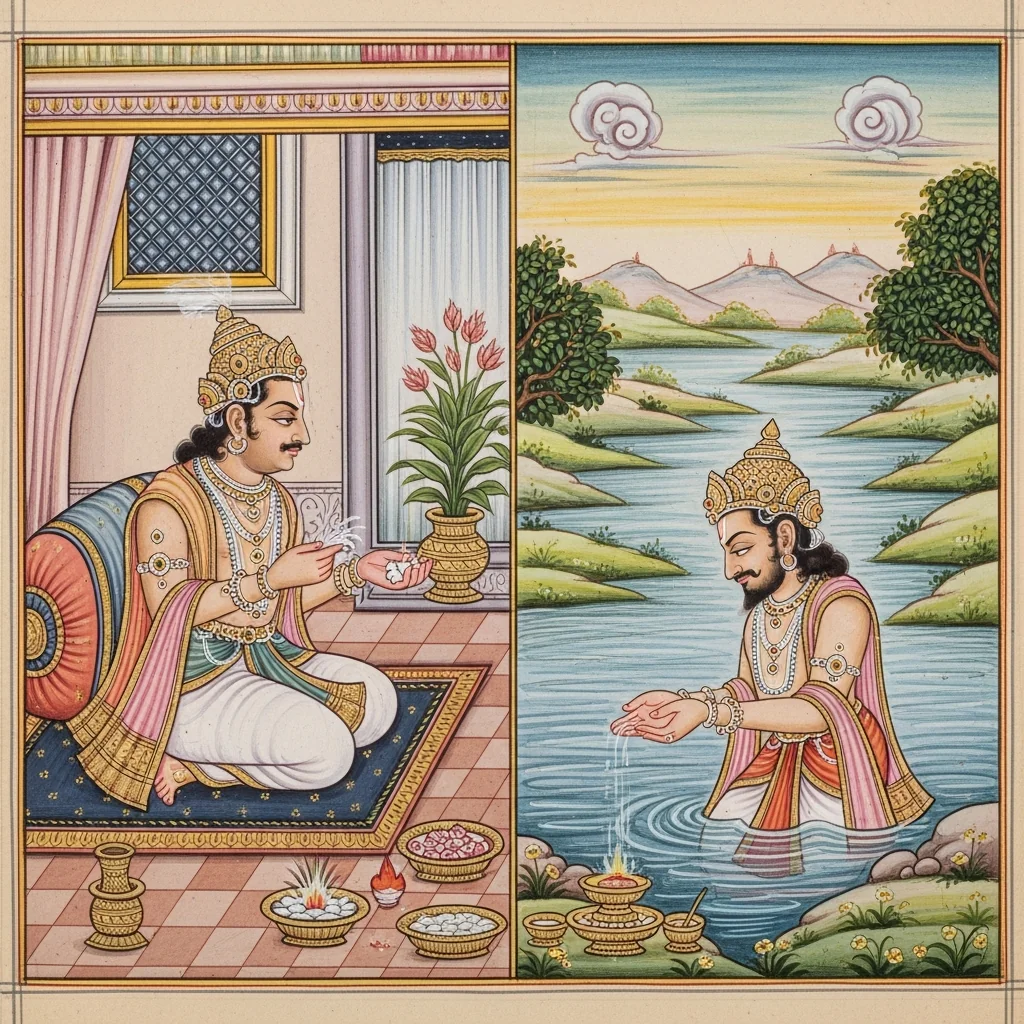
The chapter begins with the ṛṣis asking Sūta who is fit to receive dāna and what times and conditions make giving proper. Sūta sets out a normative order in which the brāhmaṇa is the chief ritual recipient, yet acceptance is restricted to those of proven ethics and discipline. He supplies a long list of exclusions—those hostile to Veda and dharma, deceitful, violent, selling sacred knowledge for gain, or persistently begging—declaring gifts to such persons niṣphala (fruitless). He then explains the etiquette of salutations (abhivādana), noting situations and persons where salutations are discouraged and warning that indiscriminate or procedurally faulty reverence diminishes prior merit. A second section presents the māhātmya of Ākāśagaṅgā/Viyadgaṅgā through an embedded tale transmitted from Nārada to Sanatkumāra. Puṇyaśīla, a virtuous brāhmaṇa, performs annual śrāddha but mistakenly appoints a “vandhyāpati” (husband of a barren woman, treated here as ineligible) as officiant, and his face becomes donkey-like (gārdabha-ānana). Seeking Agastya, he learns the ritual fault and receives stricter rules for śrāddha invitations: choose a qualified householder brāhmaṇa with offspring and discipline; failing that, a close kinsman or oneself. Agastya prescribes atonement by pilgrimage to Veṅkaṭācala—bathing first in Swāmipuṣkariṇī and then, according to tīrtha-vidhi, in Viyadgaṅgā/Ākāśagaṅgā—after which the deformity is said to vanish at once. Sūta concludes by reaffirming the lineage of transmission.
Shlokas
No shlokas available for this adhyaya yet.