Adhyaya 21
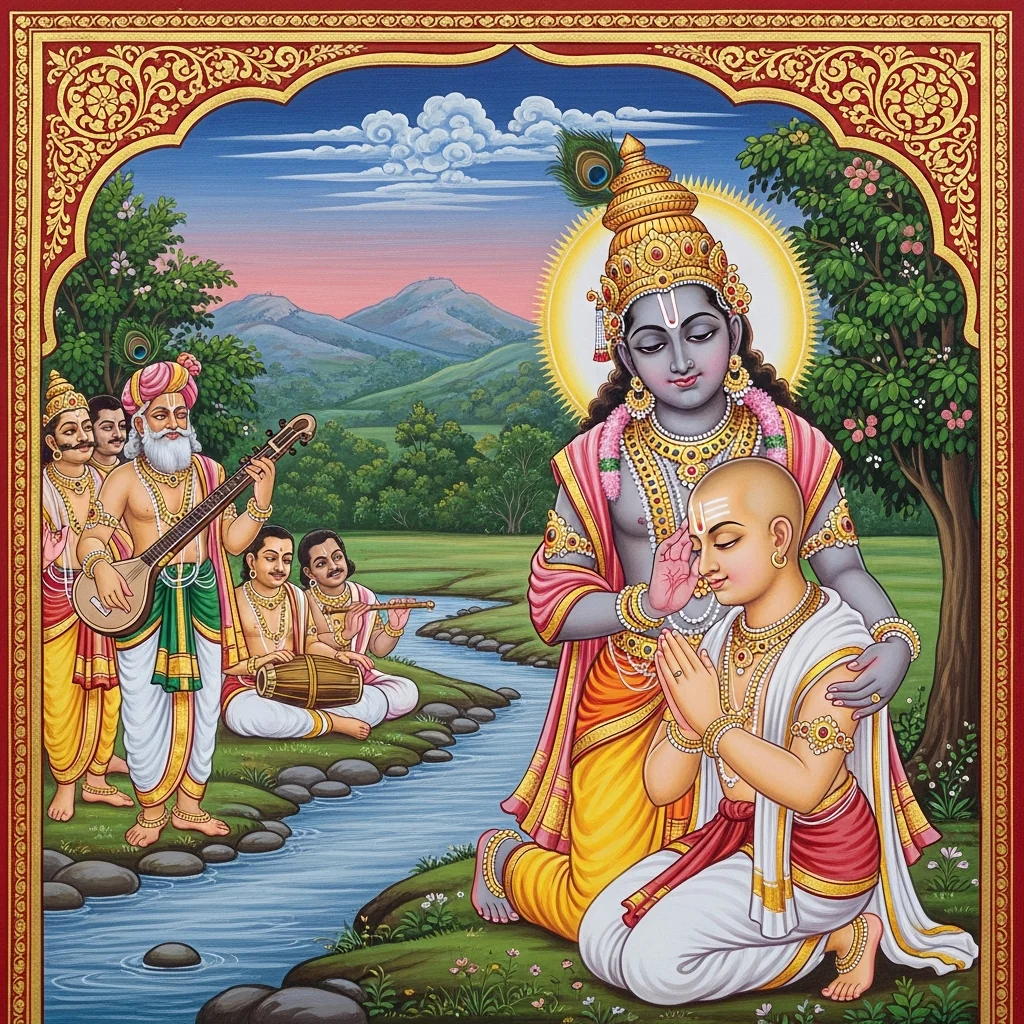
Śrī Sūta, speaking to the sages of Naimiṣāraṇya, narrates the supreme glory of the Ākāśagaṅgā tīrtha and the marks of true bhāgavatas. A brāhmaṇa named Rāmānuja—learned in śāstra, self-controlled, and devoted to Vaikhānasa discipline—undertakes long, season-ordered austerities on Ākāśagaṅgā’s bank: pañcāgni in summer, exposure during the rains, and water-rest in winter, along with aṣṭākṣara mantra-japa and inward meditation on Janārdana. Veṅkaṭeśa/Śrīnivāsa then manifests in a radiant epiphany, bearing conch, discus, and mace, with Śrī Lakṣmī upon His chest, attended by divine retinues, Nārada, and celestial music. Receiving Rāmānuja’s stuti, the Lord embraces him and offers a boon; Rāmānuja asks only for unwavering bhakti, declaring darśana the highest attainment, and the discourse affirms the saving power of the Lord’s Name and sight. The deity specifies a most fruitful bathing time at Ākāśagaṅgā—Mesha-saṅkrānti coinciding with Citrā nakṣatra on the pūrṇimā—promising access to the supreme, non-returning abode. He also explains how to recognize bhāgavatas, listing the qualities of bhāgavata-uttamas: non-harm, freedom from envy, restraint, truthfulness, service to parents, brāhmaṇas, and cows, love of hearing sacred narratives, pilgrimage-mindedness, gifts of water and food, Ekādaśī observance, delight in Hari-nāma, reverence for tulasī, and public works such as tanks, wells, gardens, and temples. Sūta concludes that this is the “uttama” māhātmya of Viyadgaṅgā at Vṛṣādri/Veṅkaṭādri.
Shlokas
No shlokas available for this adhyaya yet.