Adhyaya 19
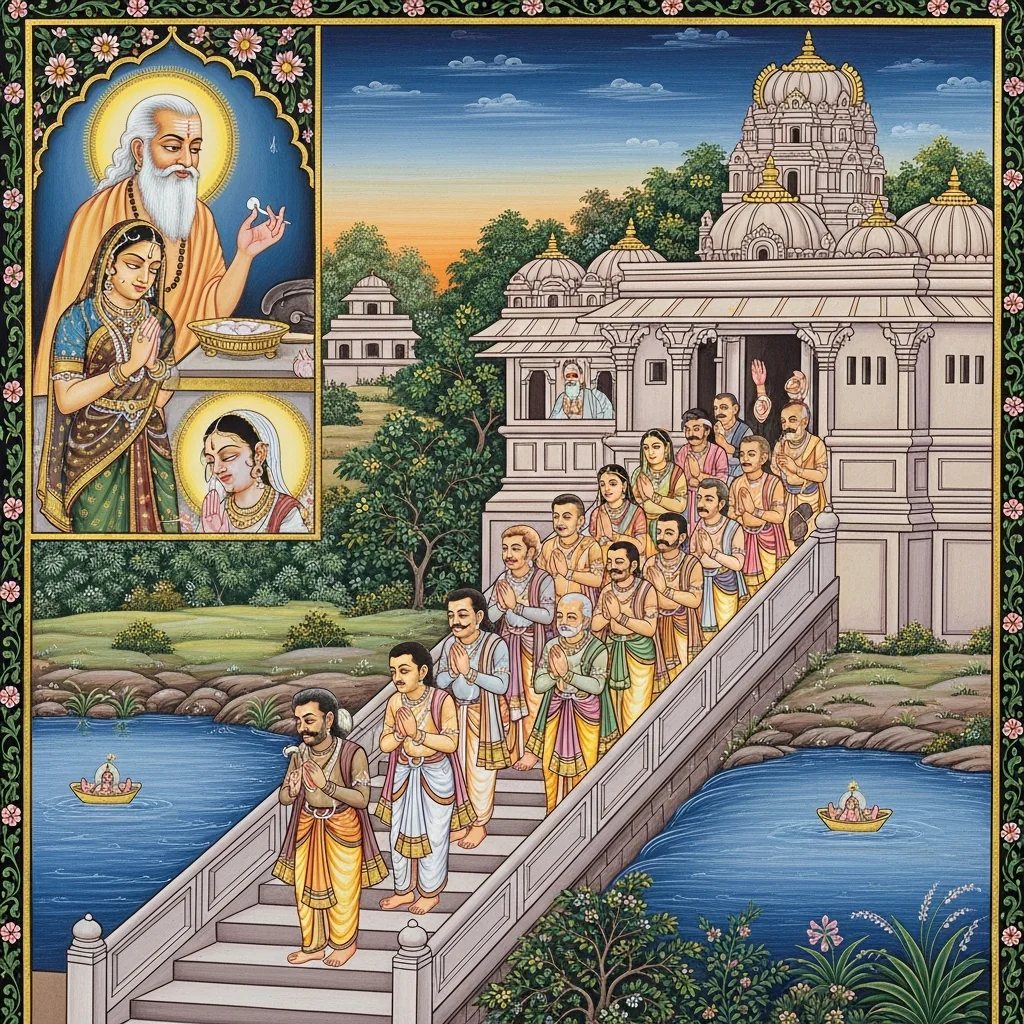
Chapter 19 portrays Veṅkaṭācala as an eternally sanctified realm, filled with countless lakes, rivers, seas, forests, and āśramas, inhabited by sages such as Vasiṣṭha, along with siddhas, cāraṇas, and kinnaras. The hill is depicted as a continuous sacred assembly where major deities abide—Viṣṇu with Lakṣmī and Dharaṇī, Brahmā with Sāvitrī and Sarasvatī, Śiva with Pārvatī, Gaṇeśa and Ṣaṇmukha, Indra and other devas, planetary deities, vasus, pitṛs, and lokapālas. It then lays down a pilgrimage protocol for ascent: the pilgrim verbally seeks Veṅkaṭādri’s forgiveness and prays for the vision of Mādhava, proceeding with gentle steps onto the holy ground. At Svāmipuṣkariṇī one bathes with restraint and offers even a small piṇḍadāna to the ancestors, with the promise of uplift through post-mortem states. The chapter’s focus is the glory of Pāpavināśana tīrtha, famed across worlds: mere remembrance is said to avert the fate of “womb-dwelling,” and bathing north of Svāmi-tīrtha grants ascent to Vaikuṇṭha. Answering the ṛṣis, Sūta narrates a didactic legend: near Himavat in Brahmāśrama, the śūdra Dṛḍhamati seeks advanced rites but is refused initiation by a kulapati brāhmaṇa who cites strict eligibility norms; Dṛḍhamati instead undertakes austerities and builds devotional works. Later, the brāhmaṇa Sumati—through long association—teaches him Vedic rites and performs pitṛ-karmas, which leads to Sumati’s terrible suffering after death and a long chain of rebirths. Agastya reveals the karmic cause and prescribes the sole remedy: a three-day bath at Pāpavināśana on Veṅkaṭācala, destroying the brahmarākṣasa affliction and restoring wellbeing; father and son attain liberation at death. Dṛḍhamati too, after degraded births, drinks and bathes there as a bird and is instantly transformed, ascending in a divine vehicle—reaffirming the tīrtha’s power to purify and to rectify even ethically compromised lives.
Shlokas
No shlokas available for this adhyaya yet.