Adhyaya 17
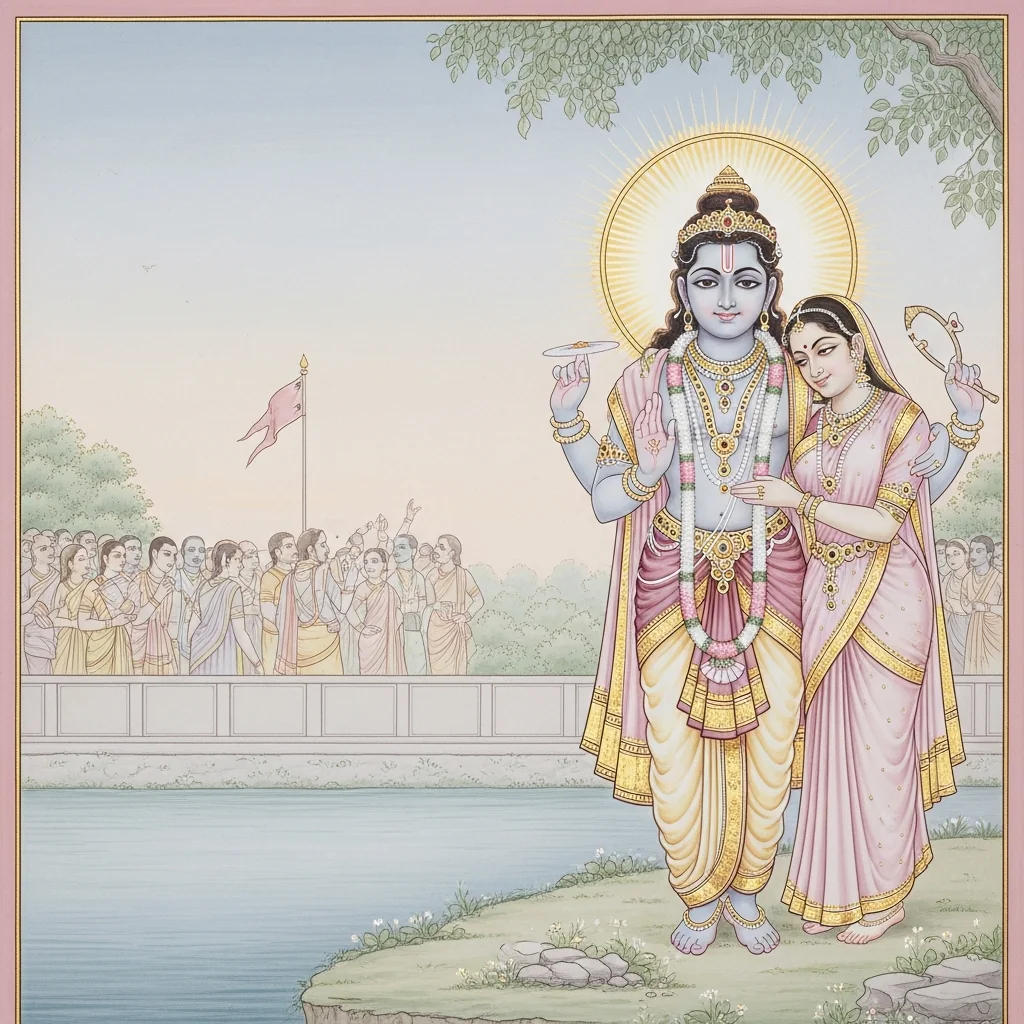
This chapter continues Sūta’s praise of Veṅkaṭādri/Veṅkaṭācala, declaring that all tīrthas—earthly and cosmic—are contained within the Veṅkaṭa mountain, making it a complete sacred microcosm. The Lord is portrayed in classical Vaiṣṇava form, bearing śaṅkha and cakra, clad in pītāmbara, and adorned with the Kaustubha jewel, emphasizing His protective, Veda-grounded sanctity. It then depicts widespread regional participation in the annual service and situates the account in the Bhādrapada festival setting, where ritual attendance brings purification. A key institutional feature is the Brahmotsava: Brahmā is said to have established the dhvaja-ārohaṇa (flag-raising) observance in the Kanyā month, and the yearly festival is presented as a grand gathering of humans, devas, gandharvas, siddhas, and learned dvijas. Through repeated superlative comparisons (Gaṅgā among rivers, Viṣṇu among devas), Veṅkaṭa is affirmed as “uttamottama” among kṣetras. The phalaśruti concludes that hearing this with devotion leads to exalted status in Viṣṇu’s realm. The chapter also introduces Śrīsvāmi-puṣkariṇī as a principal tīrtha, near which the Lord abides, embraced by Lakṣmī and granting boons.
Shlokas
No shlokas available for this adhyaya yet.