Adhyaya 16
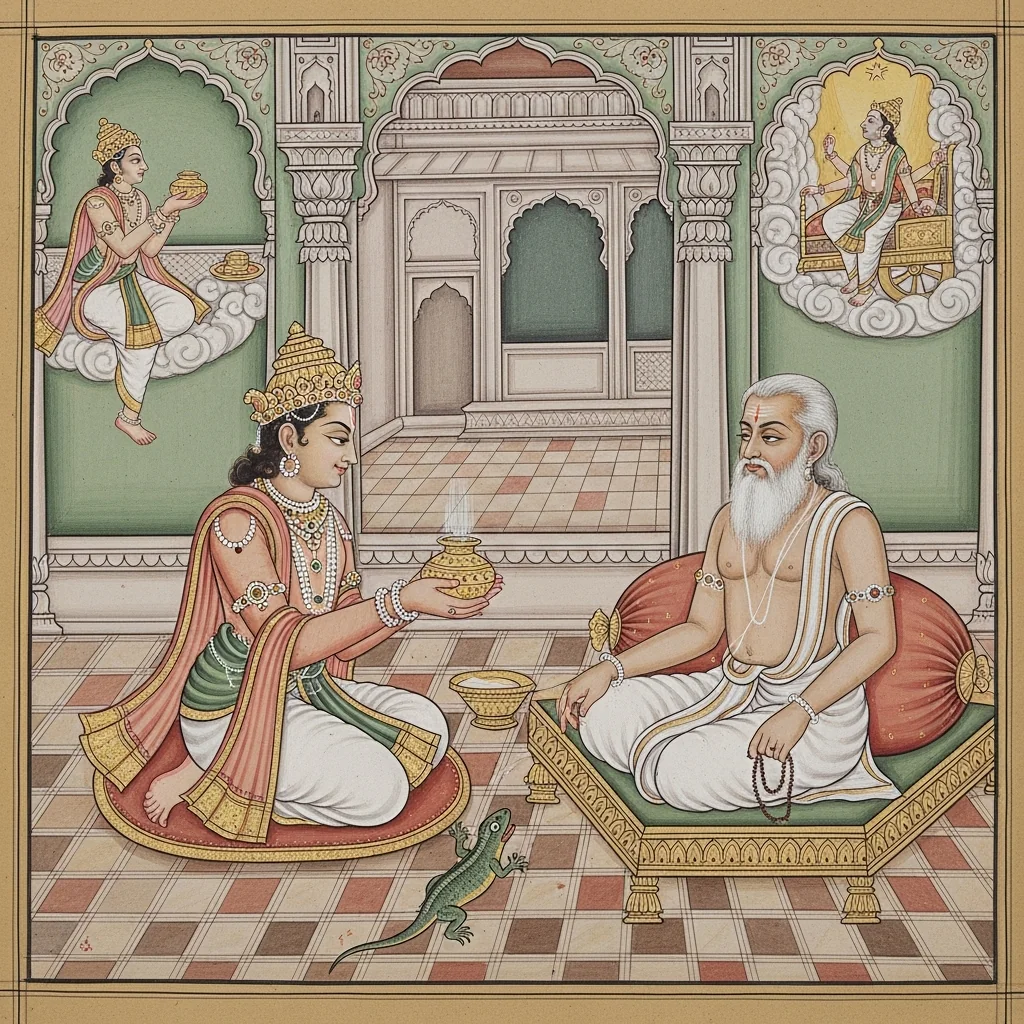
This chapter extols jaladāna—the gifting and provisioning of water—at Veṅkaṭādri as a decisive moral act whose karmic fruit is greatly intensified there. Śrīsūta declares that neglecting water-giving, especially to the thirsty, can lead to painful and adverse rebirth. An illustrative itihāsa follows: King Hemāṅga of the Ikṣvāku line is generous with cows, wealth, and ritual patronage, yet he withholds water, reasoning that it is “easily available” and thus not truly meritorious. He also misplaces honor and gifts, failing in pātra-viveka (discernment of worthy recipients), and neglects learned, disciplined brāhmaṇas. As a result he falls through degraded births, finally becoming a house-lizard (gṛhagodhikā) in Mithilā. When the sage Śrutadeva is received with reverence by the local king, the foot-washing water (pādodaka) splashes; droplets touch the lizard and awaken jāti-smaraṇa, memory of former lives. Hemāṅga confesses, and Śrutadeva explains the causal chain: the omission of jaladāna at Veṅkaṭādri and improper giving. Through transfer of merit and sanctification by water-contact, the sage frees him from the animal state; Hemāṅga ascends to heaven, later gains royal rebirth, and ultimately attains Viṣṇu-sāyujya, the closest union with Viṣṇu. The chapter closes by reaffirming Veṅkaṭādri’s purifying power and jaladāna as Viṣṇuloka-prada, leading to Viṣṇu’s realm.
Shlokas
No shlokas available for this adhyaya yet.