Adhyaya 14
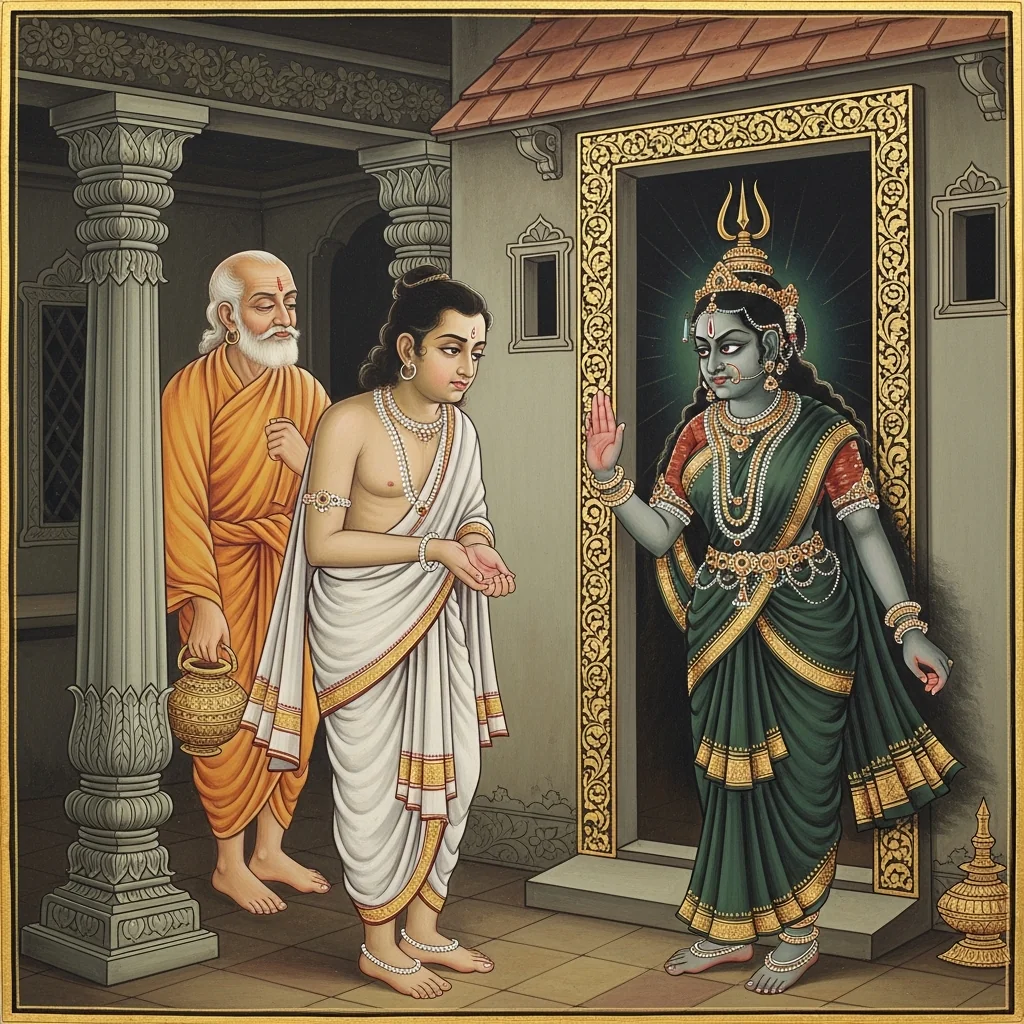
Chapter 14, narrated by Sūta to the sages of Naimiṣāraṇya, presents a didactic itihāsa to proclaim the purificatory power of Svāmitīrtha/Svāmi-puṣkariṇī. The sages ask about Sumati—his lineage, his moral downfall, and the means of his redemption. Sūta says Sumati was the son of Yajñadeva, a learned and devout brāhmaṇa of Mahārāṣṭra. Sumati, however, collapses into grave adharma: he abandons his father and faithful wife, keeps company with a seductive kirātī, turns to theft and intoxication, and finally—disguised for robbery—kills a brāhmaṇa. This is declared a mahāpātaka, and its consequence is personified as the terrifying Brahmahatyā, who pursues him home and warns Yajñadeva that sheltering a patita imperils the whole household, underscoring the weight of transgression and social-ritual exclusion. At the crisis, the sage Durvāsas (a Rudra-aṃśa) arrives; Yajñadeva begs for an expiation. Durvāsas affirms ordinary atonement is nearly impossible, yet prescribes a place-based remedy: bathing at Veṅkaṭādri’s supremely meritorious tīrtha, Svāmi-puṣkariṇī. When Sumati bathes there, an ākāśavāṇī proclaims immediate purification and praises the tīrtha as an “axe to the tree of sin.” The chapter ends with a phalaśruti promising exalted merit to those who hear or recite this account.
Shlokas
No shlokas available for this adhyaya yet.