Adhyaya 11
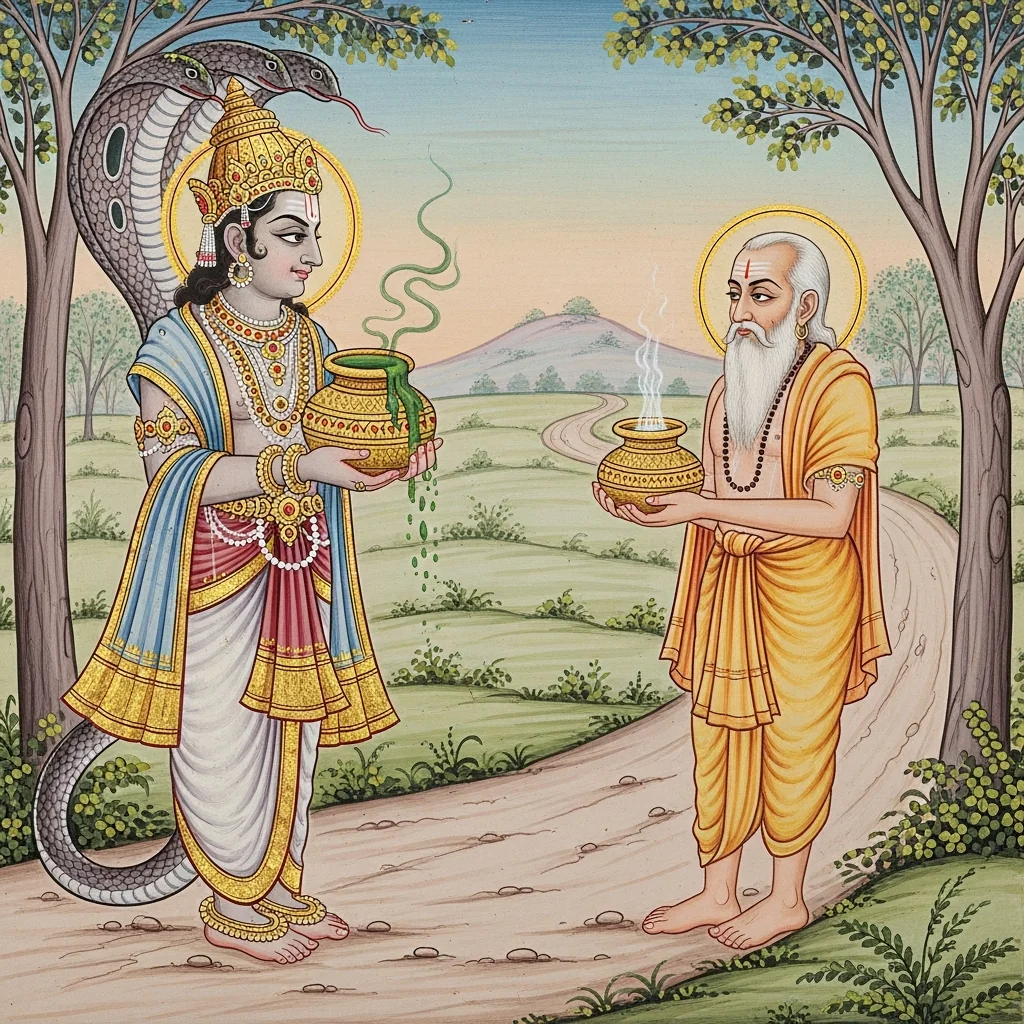
Chapter 11 extols Swāmipuṣkariṇī as a purifying tīrtha through an embedded moral narrative. Sūta declares that Kāśyapa’s bath in Swāmipuṣkariṇī destroys even grave ethical impurities. When the ṛṣis ask how Kāśyapa incurred fault yet attained sudden release, Sūta recounts a connected episode beginning with King Parīkṣit. While hunting, Parīkṣit encounters a silent sage and, angered by the lack of reply, places a dead serpent on the sage’s shoulder. The sage’s son Śṛṅgī curses the king to die within seven days by Takṣaka’s bite. Despite safeguards, Takṣaka fulfills the curse by deception—mingling among brahmin-like figures and hiding in fruit as a worm. Kāśyapa, a mantra-physician able to counter venom, is intercepted by Takṣaka and turned back through a display of power and material inducement; afterward he is publicly censured for failing to save the king. Seeking remedy, Kāśyapa approaches the sage Śākalya, who defines the breach as withholding aid when one has the capacity to save a life from poison, a severe fault with social consequences. Śākalya prescribes expiation: pilgrimage to Veṅkaṭādri, bathe in Swāmipuṣkariṇī with saṅkalpa, worship Varāhasvāmin and then Śrīnivāsa; through darśana and disciplined observance, Kāśyapa’s health, standing, and honor are restored. The chapter ends with a phalaśruti promising exalted status to faithful hearers, linking purification with devotion, intention, and sacred place.
Shlokas
No shlokas available for this adhyaya yet.