Adhyaya 10
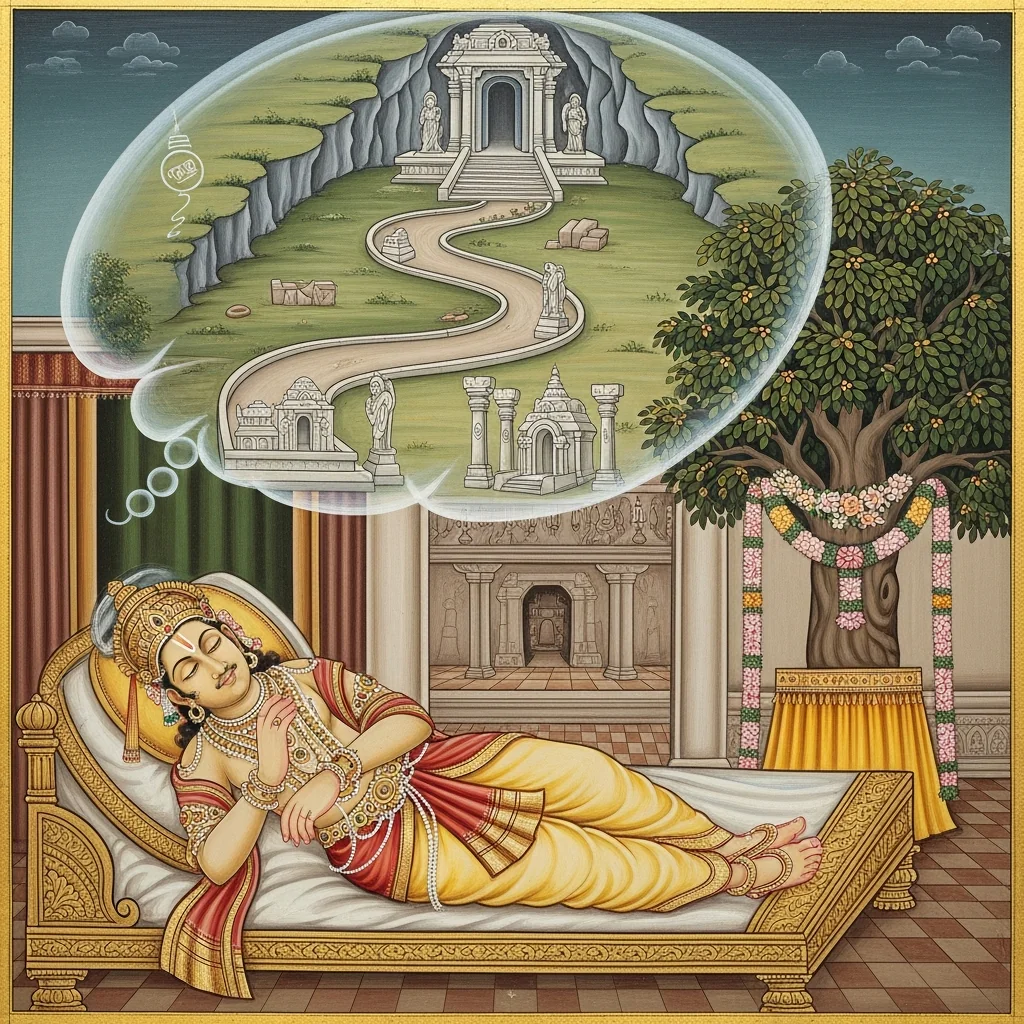
Adhyāya 10 weaves together royal legitimacy, the discovery of sacred presence, and the ordering of worship at Veṅkaṭācala. It opens with Toṇḍamān’s accession, and extols Padmasaras as a purifying, prosperity-bestowing tīrtha, where merit arises through kīrtana, smaraṇa, and snānā. In a parallel account, Vasu, chief among forest-dwellers, beholds a radiant Varāha entering a valmīka; the Lord instructs that the anthill be washed with cow’s milk, the icon on its stone base be lifted and recognized, and worship be established with Vaikhānasa specialists. Toṇḍamān then receives confirmation through a dream-revelation of a bilamārga (tunnel route), follows divine signs (pallava traces), and begins protective works—prākāra walls and gateways—while being charged to preserve the tamarind and campaka trees as lasting marks of the Lord’s presence. A moral-administrative trial follows: his temporary guardianship of a pregnant brāhmaṇī ends in neglect and death, yet Śrīnivāsa prescribes a remedial rite at Aṣṭhi-saras, famed as apamṛtyu-nivāraṇa, and through sacred bathing she is restored to life. The chapter also affirms humble bhakti through Bhīma the potter of Kurvagrāma, whose simple offerings are accepted; when the king visits, Bhīma and his wife attain Vaikuṇṭha. In closing, Toṇḍamān arranges succession, practices austerity, gains divine audience, and reaches sā-rūpya and Viṣṇupada, while the phalaśruti promises exalted fruits for faithful hearing and recitation.
Shlokas
No shlokas available for this adhyaya yet.