Adhyaya 9
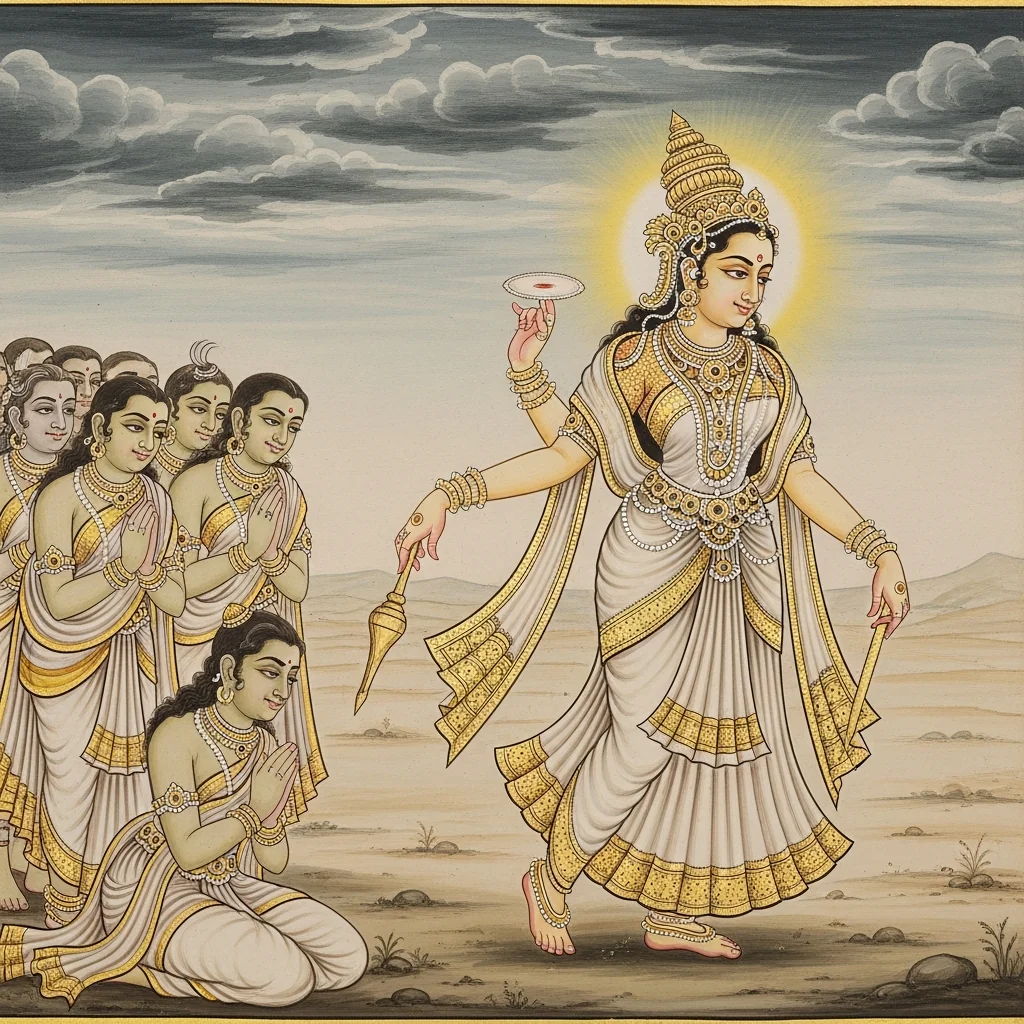
Skanda describes an age of dharma-viparyāsa, a reversal of righteousness driven by the power of Time, when prosperity (Śrī) withdraws from the three worlds and even the divine realms seem diminished. The supports of well-being—food, medicines, dairy, treasures, and comforts—wane, bringing famine and social upheaval. Pressed by hunger, many beings kill animals and eat meat; yet some sages steadfast in saddharma refuse such food even as they die. Elder ṛṣis then teach a Veda-grounded “āpaddharma” (emergency duty) to sustain life in calamity, but the narrative exposes interpretive slippage: ambiguous terms and indirect Vedic speech are taken literally, normalizing violent sacrifice. Ritual killing spreads, including emblematic “great” rites; sacrificial leftovers become a dietary justification, and motives shift toward wealth, household aims, and sheer survival. Downstream come the erosion of social norms, mixed marriages born of poverty and disruption, and the growth of adharma, along with later writings that treat this crisis-ethic as authoritative through tradition. After a long time, the lord of the gods regains prosperity by worshipping Vāsudeva; by Hari’s grace, saddharma is restored, though some still privilege the old emergency norm. The chapter closes by framing the spread of violent sacrifice as historically contingent, tied to times of calamity.
Shlokas
No shlokas available for this adhyaya yet.