Adhyaya 8
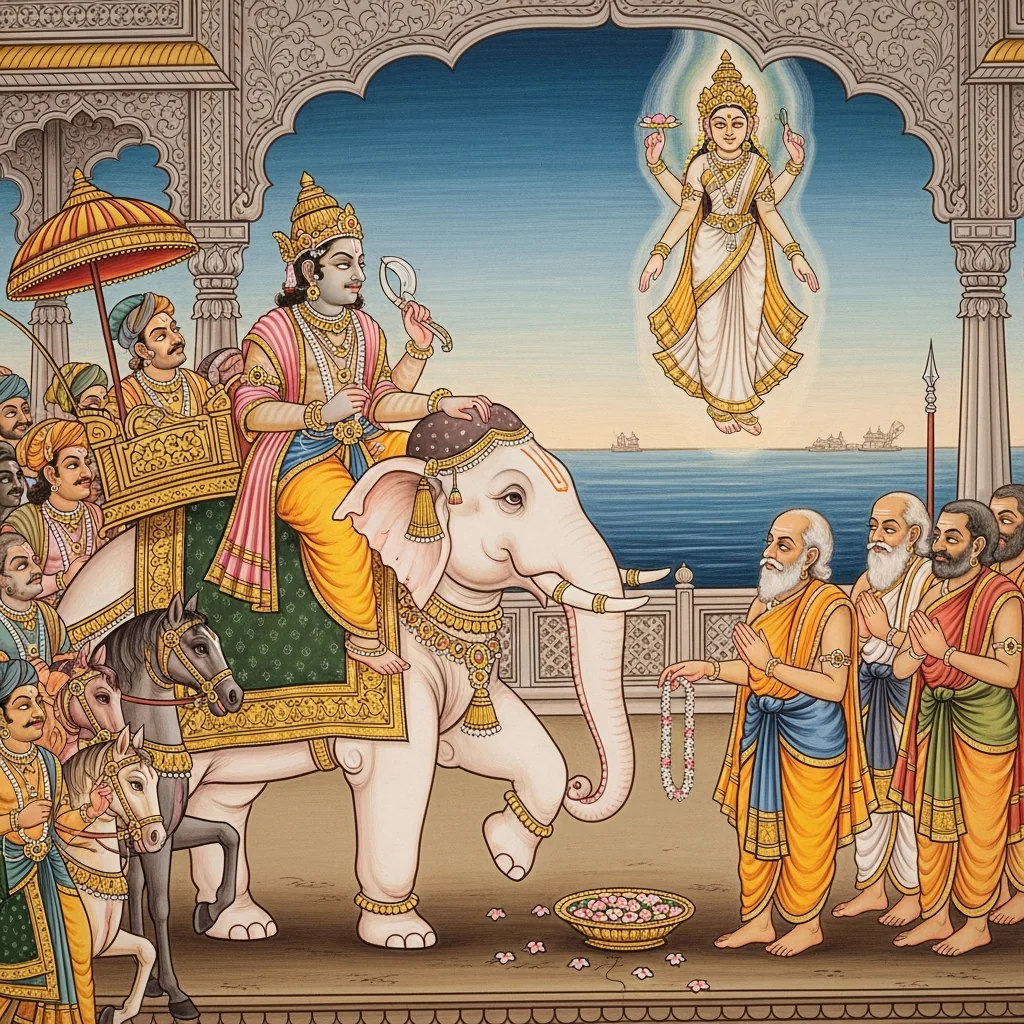
Chapter 8 begins with Sāvarṇi asking why violent sacrificial rites reappear even after sages and gods have restrained them, and how the eternal, pure dharma becomes inverted among beings of earlier and later times. Skanda explains the ethics of decline: kāla (time) unsettles discernment, and kāma, krodha, lobha, and māna—desire, anger, greed, and pride—corrode sound judgment even in the learned; but those who are sāttvata, with impulses worn away (kṣīṇavāsanā), remain unshaken. Skanda then recounts an ancient itihāsa to show how violent ritual tendencies return and to proclaim the greatness of Nārāyaṇa and Śrī. Durvāsā, an ascetic embodying an aspect of Śaṅkara, receives a fragrant garland from a celestial woman. Later he sees Indra in a triumphal procession; through inattentiveness and passion Indra has the garland placed on his elephant, where it falls and is trampled, provoking Durvāsā’s fierce rebuke. Durvāsā curses that Śrī—by whose grace Indra holds sovereignty over the three worlds—will abandon him and withdraw into the ocean, linking disrespect toward ascetic authority with the loss of auspicious power.
Shlokas
No shlokas available for this adhyaya yet.