Adhyaya 6
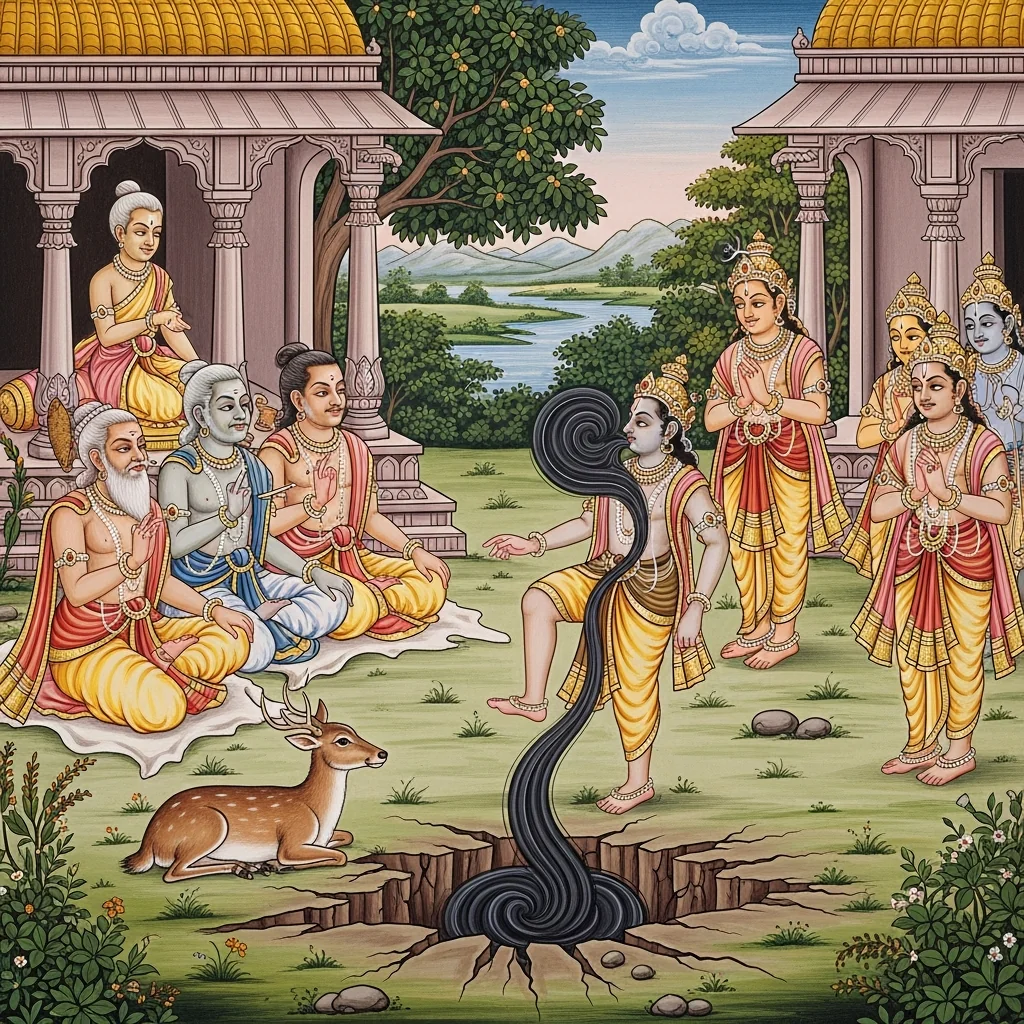
Chapter 6 begins with Sāvarṇi asking Skanda why King Mahān Vasu fell into the earth/underworld, and how his curse and release came about. Skanda answers by recalling an earlier episode: Indra (called Viśvajit) commences an Aśvamedha-like great sacrifice, binding many animals who cry out in distress. Radiant ṛṣis arrive, are duly honored, and then express astonishment and compassion at the violence embedded in the ritual’s expansion. The sages instruct the devas in sanātana-dharma: ahiṃsā is the higher principle, and direct animal slaughter is not the Veda’s true intent. The Veda aims to establish dharma’s “four feet,” not to destroy dharma through harm. They rebuke rajas/tamas-driven misreadings—such as taking “aja” to mean a goat rather than a technical sense of seed/ingredient—and affirm that sāttvika devas are aligned with Viṣṇu, whose worship accords with non-violent sacrifice. Yet the devas refuse the sages’ authority, and the openings of adharma—pride, anger, and delusion—widen. At that moment King Rājoparicara Vasu arrives; devas and sages ask him to judge whether sacrifice should be done with animals or with grains and medicinals. Knowing the devas’ preference, Vasu sides with them and declares that goats/animals should be used; the consequence is immediate: through the fault of speech (vāgdoṣa) he falls from the sky into the earth, though he retains memory by taking refuge in Nārāyaṇa. Fearing the repercussions of violence, the devas release the animals and depart, while the sages return to their hermitages. The chapter stands as a caution on scriptural interpretation, ritual ethics, and the karmic weight of authoritative words.
Shlokas
No shlokas available for this adhyaya yet.